- Product Details
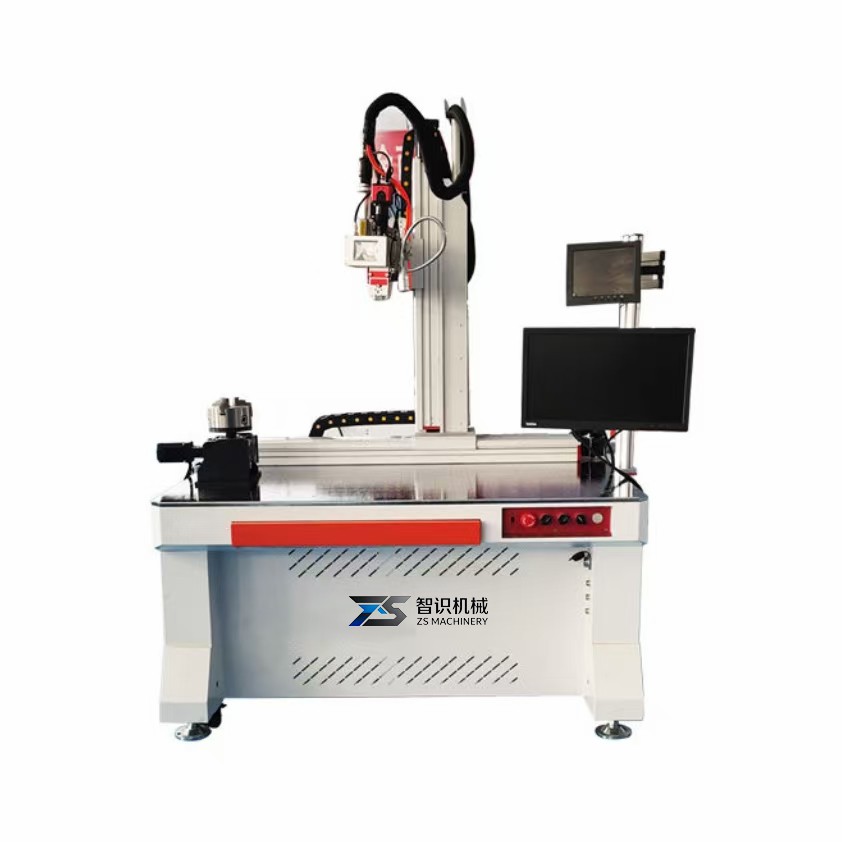
Automatic 4-axis fiber laser welding system with X, Y, Z and rotary-axis control for precise welding of flat, curved, cylindrical and rotational metal components.
The ZS Machinery 4 Axis CNC Laser Welding Machine combines a precision CNC motion system with a fiber laser welding source and a programmable rotary axis. In addition to conventional X, Y and Z movement, the fourth axis continuously rotates the workpiece during welding, allowing the machine to automatically process circumferential, circular and rotational weld seams.
This configuration is particularly useful for pipes, tubes, flanges, rings, shafts, valve components, cylindrical housings, fittings, tanks, containers and other rotational metal parts where a conventional 3-axis welding system may require manual repositioning of the workpiece.With CNC-controlled linear and rotary movement, the system is designed for repeatable welding paths, consistent weld positioning and efficient batch production.
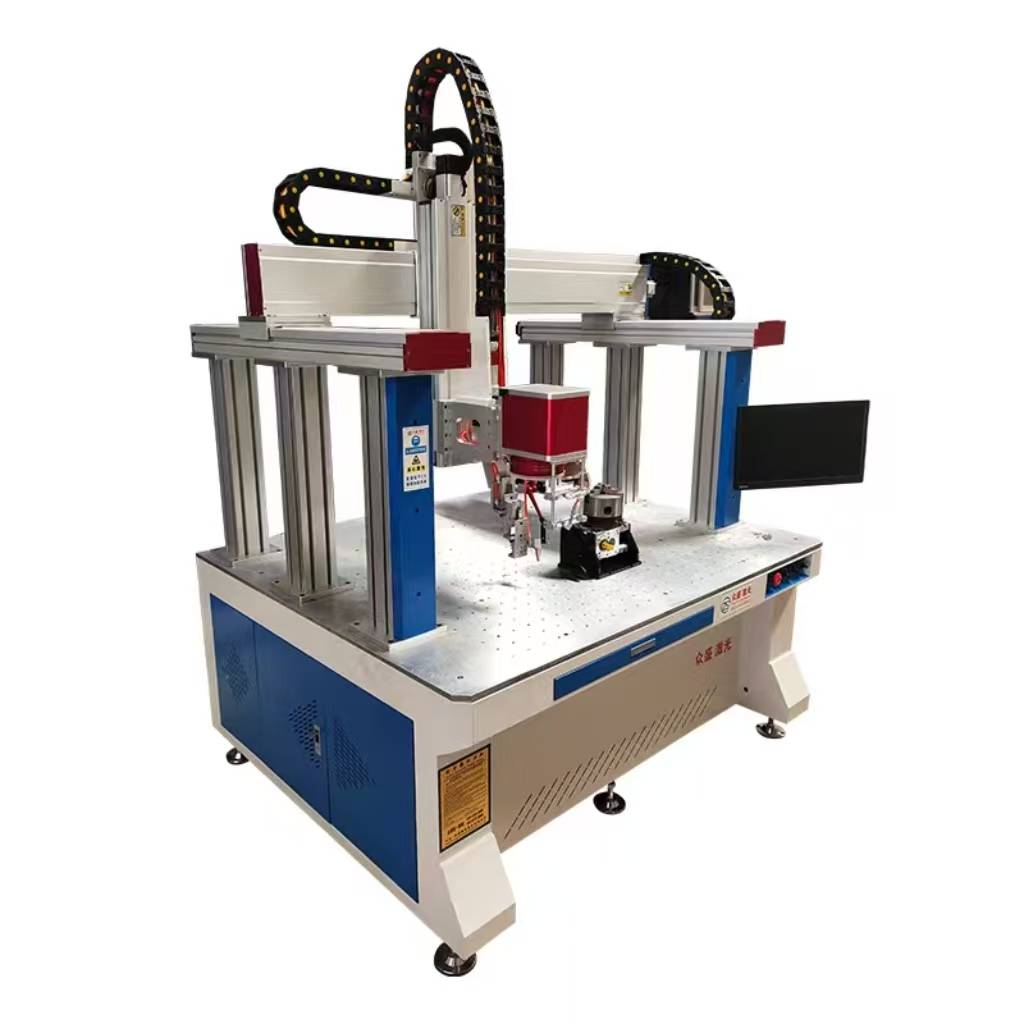
4 axis cnc laser welding machine
Note: The machine in the picture is a gantry structure. The actual appearance can also be a standard three-axis fixture with a rotary axis. The appearance will be determined based on specific requirements.
What Is a 4 Axis CNC Laser Welding Machine?
A conventional 3-axis CNC laser welding machine normally uses three linear axes:
- X axis – horizontal movement
- Y axis – longitudinal or lateral movement
- Z axis – vertical movement or welding-head height adjustment
A 4-axis system adds one more controlled movement:This rotary shaft can be attached to a welding head, allowing the welding head to swing left and right, or back and forth. It can also be used as a rotary shaft fixture. This article focuses on introducing rotary shaft fixture styles.
The rotary axis allows the workpiece to rotate around a defined center while the laser welding head performs the welding process.Therefore, a typical 4-axis configuration can be represented as:X + Y + Z + Rotary.Different products require different rotary shaft tooling, and some special products require specially designed tooling. You can check out our rotary shaft tooling products to learn more.
This fourth axis does not simply increase the number of machine axes. Its main purpose is to give the laser welding system access to rotational and circumferential weld seams that cannot be processed efficiently by a conventional flat-workpiece setup.
Why Add a Rotary Axis to a CNC Laser Welding Machine?
A 3-axis system is well suited to many flat plates, sheet-metal assemblies and two-dimensional welding paths. However, many industrial components are not flat.
Consider a pipe.
A circumferential weld needs to continue around the entire circumference of the pipe. With a conventional fixed workpiece, the operator may need to reposition or rotate the part manually. This introduces additional handling, positioning errors and variations between parts.A rotary axis solves this problem by continuously rotating the workpiece while the laser welding system controls the welding position.
The result is a synchronized process:
Laser welding head → controlled position
Rotary axis → controlled rotation
CNC controller → synchronized welding path
This allows the system to produce continuous circular or circumferential welds with repeatable positioning.Industrial 4-axis laser welding systems commonly use this X/Y/Z + rotary configuration specifically for round and cylindrical components.
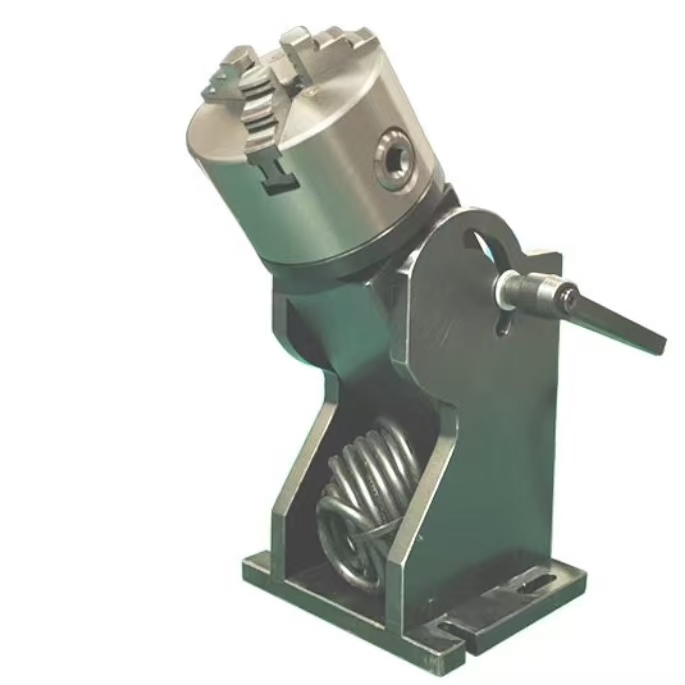
ZS Machinery Rotary Axis
How Does the 4th Rotary Axis Work?
In a 4-axis CNC laser welding machine, the X, Y and Z axes control the position of the laser welding head, while the rotary axis controls the angular position of the workpiece. The CNC controller coordinates these movements so that the laser can follow a programmed weld seam around a round or rotational component.
In a simple circumferential welding application, the laser head can remain positioned over the joint while the rotary axis continuously rotates the workpiece.
For example, when welding a pipe to a flange, the pipe and flange assembly can be clamped in the rotary chuck. Once the welding program starts, the rotary axis rotates the assembly while the laser maintains the required welding position along the joint.
The basic process is:
1. Load the workpiece
The component is positioned and clamped in a rotary chuck or customized fixture.
2. Set the welding position
The X, Y and Z axes move the laser head to the required welding position.
3. Start the welding program
The laser source begins welding according to the programmed parameters.
4. Rotate the workpiece
The rotary axis rotates the workpiece at a controlled speed while the laser follows the joint.
5. Complete the weld
The rotary axis stops at the programmed position after the required welding path has been completed.
For a simple 360° circumferential weld, the rotary axis can continuously rotate the workpiece through one complete revolution. For more complex components, the CNC controller can coordinate rotary movement with X, Y and Z movement to follow different programmed paths.
Horizontal or Vertical Rotary Axis?
The rotary axis can be arranged differently depending on the workpiece and welding application.
Horizontal rotary configuration
The workpiece rotates around a horizontal centerline. This arrangement is commonly used for longer cylindrical components such as pipes, tubes, shafts and cylindrical housings.
Vertical rotary configuration
The workpiece rotates around a vertical centerline. This arrangement can be useful for shorter round components, rings, flanges, covers and other parts where vertical loading is more convenient.
The appropriate configuration depends on the workpiece diameter, length, weight, center of rotation, welding position and loading method.For this reason, the rotary axis should be designed around the actual workpiece rather than selected only by its nominal axis configuration.
Applications Of the 4th Axis
1. 360° Circumferential Welding
The most common application is welding around a cylindrical component.For example:
- Pipe-to-flange welding
- Tube-to-end-cap welding
- Cylindrical housing welding
- Circular ring welding
- Round cover welding
The workpiece rotates while the laser creates a continuous weld around the joint.
This eliminates the need to manually reposition the component for each section of the circumference.
2. Circular Welding
The rotary axis can be used for circular weld seams on components such as:
- Flanges
- Rings
- Circular plates
- Round covers
- Pipe fittings
- Cylindrical housings
For repetitive production, the CNC system can store the welding program and repeat the same motion on subsequent workpieces.
3. Welding Cylindrical Components
Many manufactured parts have cylindrical structures rather than flat surfaces.A rotary axis makes it possible to rotate these components into the correct welding position while maintaining a controlled relationship between the laser beam and the joint.Typical examples include:
- Metal tubes
- Stainless steel pipes
- Aluminum tubes
- Motor housings
- Pump housings
- Cylindrical tanks
- Hydraulic components
- Valve bodies
- Metal sleeves
- Shafts and tubular assemblies
4. Pipe and Tube Welding
Pipe welding is one of the clearest applications for a 4-axis CNC laser welding machine.Depending on the component design, the system can be configured for:
- Pipe-to-pipe joints
- Pipe-to-flange joints
- Tube-to-end-cap joints
- Tube fittings
- Circular seams
- Short tubular assemblies
For manufacturers producing large quantities of similar components, automated rotary welding can reduce repeated manual positioning and improve process consistency.
5.Welding Products with Circular or Rotational Structures
The rotary axis is not limited to simple pipes.It can also be useful for products containing rotational mechanisms or circular structures.For example:
Bearings and Bearing Housings
Components with circular housings or ring-shaped structures may require precise circumferential welding.
Motor and Gear Housings
Certain motor and gearbox housings contain circular joints that can be positioned using a rotary axis.
Pumps and Valves
Cylindrical bodies, covers and pipe connections can benefit from controlled rotational positioning.
Exhaust and Tubular Components
Automotive and industrial exhaust components often contain tubular sections and circular seams.
Metal Containers
Small cylindrical containers, covers and tubular vessels can be rotated for continuous welding.
Ring-Shaped Components
Rings, circular frames and other annular components can be processed using a rotary positioning system.The appropriate rotary fixture depends on the geometry and weight of the component.
4 Axis vs 3 Axis CNC Laser Welding Machine
The key difference between a 3-axis and 4-axis machine is the additional controlled rotational movement.
| Feature | 3 Axis CNC Laser Welding | 4 Axis CNC Laser Welding |
|---|---|---|
| X Axis | Yes | Yes |
| Y Axis | Yes | Yes |
| Z Axis | Yes | Yes |
| Rotary Axis | No | Yes |
| Flat Parts | Excellent | Excellent |
| 2D Welding Paths | Excellent | Excellent |
| Cylindrical Parts | Limited | Excellent |
| Circular Welding | More difficult | Suitable |
| Circumferential Welding | Limited | Suitable |
| Automatic Workpiece Rotation | No | Yes |
| Complex Rotational Parts | Limited | More flexible |
| Batch Production | Suitable | Suitable |
| Typical Applications | Sheet metal, plates, assemblies | Sheet metal + pipes, tubes, rings, rotational components |
A 4-axis machine does not replace every 3-axis application. The main reason to choose the additional axis is when the geometry of the product benefits from controlled rotation.
What Is the Difference Between a Rotary Axis and a Wobble Welding Head?
Adding an oscillation to the welding torch can also add a motion axis, such as in a four-axis CNC laser welding machine where the welding torch oscillation axis is added.This is an important distinction when selecting a laser welding machine.
A wobble welding head changes the movement of the laser beam over the weld area. It can create an oscillating pattern that helps control weld width and process behavior.
A rotary axis, however, changes the position of the workpiece itself.
Therefore:
Wobble head
→ Laser beam oscillates
→ Helps control the weld pattern
→ Can increase effective weld width
Rotary axis
→ Workpiece rotates
→ Enables circumferential and rotational welding
→ Provides controlled positioning around the component
Some machines can use both technologies.For example, our 5-axis and 6-axis laser welding machines have a wider range of applications.
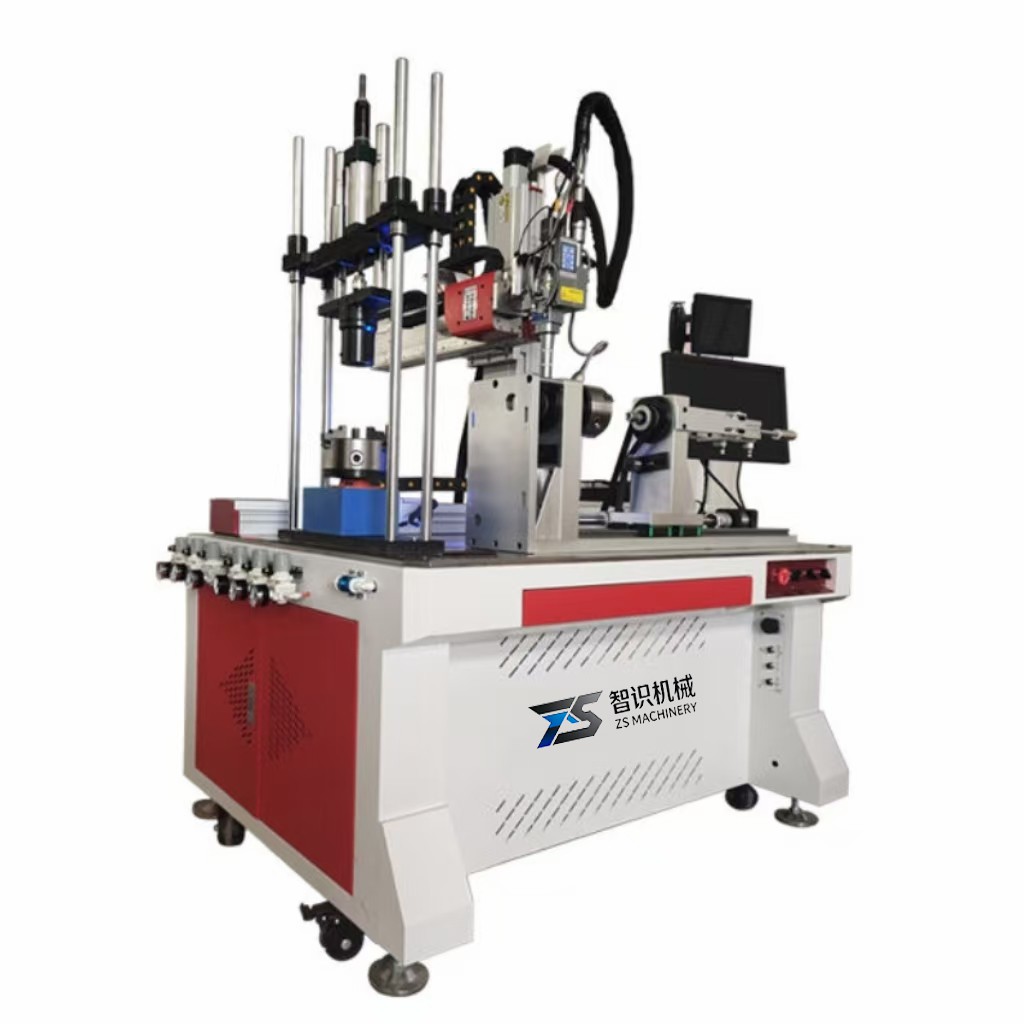
6-axis CNC laser welding machine
Key Advantages of a 4 Axis CNC Laser Welding Machine
Automated Rotary Welding
The rotary axis automatically rotates the workpiece according to the programmed welding path.This is especially useful for repetitive circular and circumferential welds.
Consistent Welding Paths
CNC control allows the same motion program to be repeated across multiple workpieces.This is valuable for batch production where consistent positioning is important.
Reduced Manual Repositioning
Operators do not need to repeatedly rotate or reposition the workpiece manually during a programmed circumferential weld.
Better Access to Rotational Components
The rotary axis can bring different sections of the component into the welding position automatically.
Flexible Production
The system can be configured for different workpieces by changing fixtures, rotary chucks and welding programs.
Integration with Automatic Fixtures
Pneumatic, hydraulic, mechanical or customized fixtures can be integrated according to the product.
Suitable for Batch Production
Once the welding program and fixture are validated, repeated components can be processed with consistent motion.
Materials Suitable for 4 Axis CNC Laser Welding
The machine can be configured for welding many commonly used metals, including:
Stainless Steel
Common applications include:
- Pipes
- Flanges
- Kitchen equipment
- Housings
- Industrial components
- Stainless steel fittings
Carbon Steel
Suitable applications may include:
- Machinery components
- Frames
- Tubular structures
- Pipe assemblies
- Brackets
Aluminum
Aluminum can be welded using a suitable laser source and process configuration.
Applications include:
- Aluminum housings
- Tubular components
- Automotive parts
- Lightweight structures
- Energy-related components
Copper and Brass
Copper and copper alloys have higher reflectivity and thermal conductivity, so laser power, beam characteristics and process parameters need to be selected carefully.
Potential applications include:
- Electrical components
- Connectors
- Terminals
- Copper fittings
- Heat-related components
Titanium and Other Alloys
For demanding materials such as titanium alloys, the welding process should be validated according to material grade, thickness, joint design and shielding requirements.
How to Choose the Right 4 Axis Laser Welding Machine
The correct configuration should be based on the actual product rather than simply choosing the highest laser power.Before selecting a machine, consider the following.
1. What Material Are You Welding?
Stainless steel, carbon steel, aluminum, copper and titanium can require different welding parameters.
2. What Is the Material Thickness?
Laser power should be selected according to the material and thickness together with the required welding speed and joint configuration.
3. What Is the Workpiece Diameter?
The rotary chuck and machine structure must accommodate the maximum workpiece diameter.
4. What Is the Workpiece Length?
Long cylindrical parts may require a longer working area and additional support.
5. What Is the Workpiece Weight?
The rotary axis must have sufficient load capacity for the workpiece and fixture.
6. What Type of Weld Is Required?
Examples include:
- Circumferential welding
- Butt welding
- Lap welding
- Fillet welding
- Circular welding
- Intermittent welding
7. Do You Need Filler Wire?
Some joints can be welded without filler, while others may benefit from automatic wire feeding.
8. Do You Need Automatic Loading?
For high-volume production, the rotary axis can be combined with customized fixtures, automatic loading systems or robotic handling.
4 Axis CNC Laser Welding Machine Applications
The machine can be configured for a wide range of industrial applications, including:
Automotive Components
- Tubular components
- Motor housings
- Brackets
- Exhaust components
- Circular assemblies
Machinery Manufacturing
- Shafts
- Housings
- Frames
- Cylindrical components
- Machine fittings
Pipe and Fitting Manufacturing
- Pipes
- Flanges
- Couplings
- Elbows
- Reducers
- Tee fittings
Hardware Manufacturing
- Metal handles
- Tubular hardware
- Circular fittings
- Metal assemblies
Electrical and Electronics
- Metal housings
- Terminals
- Connectors
- Sensor housings
Pumps and Valves
- Valve bodies
- Pump housings
- Circular covers
- Pipe connections
Energy Equipment
- Battery housings
- Tubular components
- Metal enclosures
- Energy-related assemblies
Why Choose ZS Machinery 4 Axis CNC Laser Welding Machine?
A CNC laser welding machine is a long-term production investment. At ZS Machinery, we focus on building machines that are solid, reliable and practical for continuous industrial use.
Solid Machine Construction
We pay attention to the machine frame, linear motion system, worktable and rotary axis structure to provide a stable foundation for accurate and repeatable welding.
Reliable Components
We use carefully selected laser sources, welding heads, servo systems, guides, controllers and electrical components, focusing on stability, compatibility and serviceability rather than simply reducing the initial cost.
Experienced Laser Solutions
With experience across laser welding, cutting and marking applications, we understand that machine configuration should be based on the actual material, thickness, joint design and production requirements.
Reliable After-Sales Support
Our support continues after delivery, including installation guidance, operator training, remote technical assistance, troubleshooting and spare-parts support.
From machine construction and component selection to application testing and after-sales service, ZS Machinery focuses on providing a dependable laser welding solution for long-term production.
Get a 4 Axis CNC Laser Welding Solution for Your Application
If your products include pipes, tubes, flanges, rings, shafts, cylindrical housings, valve components or other rotational metal parts, a rotary-axis CNC laser welding system can provide a more automated approach to circumferential and circular welding.ZS Machinery can configure the system according to your:
- Material
- Thickness
- Workpiece diameter
- Workpiece length
- Workpiece weight
- Welding type
- Production volume
- Automation requirements
Send us your workpiece drawings, photos or samples to discuss the right 4-axis CNC laser welding configuration for your application.