
- Product Details
Enclosed Laser Welding System for Automotive Plastic Components
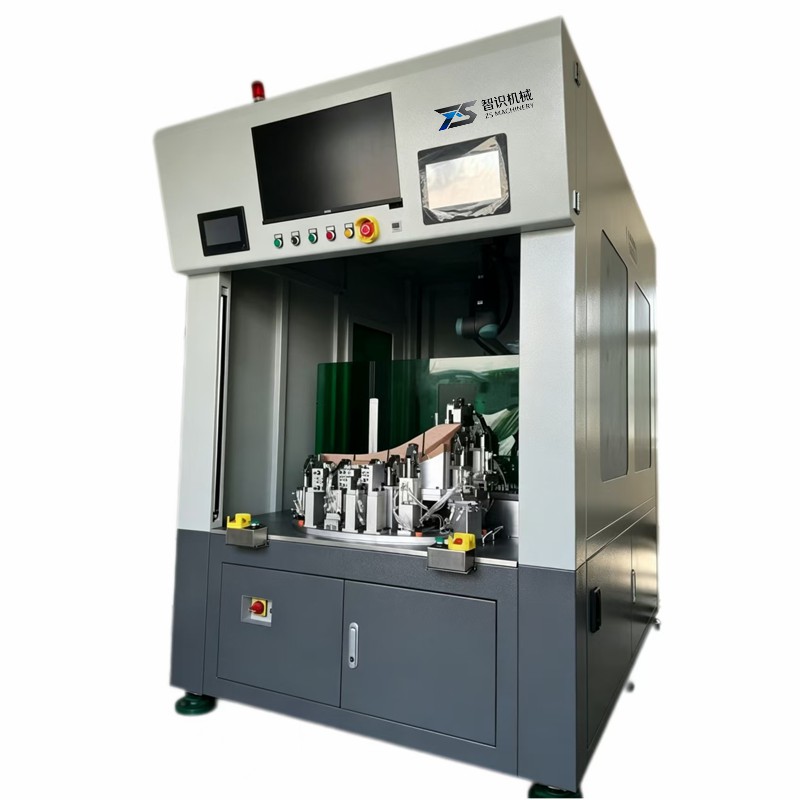
This model Plastic Laser Welding Machine is an enclosed laser welding system designed for precision welding of thermoplastic components, with a particular focus on automotive lighting components such as headlights and tail lights.Unlike general-purpose laser welding equipment, this machine is built around the requirements of plastic component production. The enclosed cabinet integrates the laser welding system, control system, and dedicated workholding fixture into a compact production unit.
A customized fixture accurately positions and clamps the plastic components during welding, helping maintain consistent alignment and welding pressure throughout the process.
The machine is primarily configured for automotive plastic lighting assemblies, but the fixture can be replaced or customized for different products. This allows the same basic plastic laser welding machine platform to be adapted for other thermoplastic components.
Plastic Laser Welding Machine
Plastic Laser Welding for Automotive Lighting Components
Automotive lighting components often consist of multiple plastic parts that need to be joined into a sealed and mechanically stable assembly.Typical examples include:
- Headlight housings
- Tail light housings
- Rear lamp components
- Turn signal components
- LED light assemblies
- Light guides
- Plastic optical components
- Decorative lighting components
For these applications, welding is not simply about joining two plastic parts together.The process may also need to provide:
- Consistent weld quality
- Good appearance
- Accurate component positioning
- Sealing performance
- Minimal deformation
- Low flash generation
- Repeatable production results
Laser welding is well suited to applications where conventional mechanical fastening, adhesive bonding, or other plastic joining methods cannot provide the required combination of appearance, precision, and production consistency.
How Does Plastic Laser Welding Work?
This machine uses a laser transmission welding process to join compatible thermoplastic components.In a typical application, one plastic component is relatively transparent to the selected laser wavelength, while the mating component absorbs the laser energy.The two components are accurately positioned and clamped together by the fixture.
When the laser passes through the transmissive plastic layer, the laser energy is absorbed at the interface. The resulting localized heat melts the plastic at the joint area.Under controlled clamping pressure, the molten materials fuse together and form the welded joint after cooling.The basic process is:
Load Components → Position in Fixture → Clamp → Laser Welding → Cooling → Unclamp → Remove Finished Part
Because the laser energy is concentrated around the joint interface, the process can produce a localized weld without heating the entire component.
Dedicated Fixture for Automotive Plastic Parts
The fixture is one of the most important parts of a plastic laser welding machine.Automotive lighting components often have complex three-dimensional shapes. The housing, lens, reflector, and other components need to remain accurately aligned during the welding process.The dedicated fixture is designed according to the geometry of the customer’s plastic parts.It can be used to:
- Position the upper and lower components
- Maintain the required alignment
- Apply controlled clamping pressure
- Support curved surfaces
- Prevent movement during welding
- Maintain repeatable positioning between production cycles
For example, when welding a car headlight housing, the fixture can be designed around the specific shape of the housing and lens so that the components remain accurately positioned throughout the welding cycle.This is particularly important for automotive production, where the same welding process may need to be repeated thousands of times.
Automotive Plastic Dashboard Welding Sample
One Machine, Different Fixtures
Although this machine is specifically designed around automotive plastic lighting applications, the equipment is not necessarily limited to one plastic product.The welding fixture can be customized or replaced according to the workpiece.With different tooling, the same plastic laser welding platform can be adapted for other thermoplastic components such as:
- Automotive interior components
- Automotive exterior components
- Sensor housings
- Electronic housings
- Electrical connectors
- Fluid reservoirs
- Plastic covers
- Consumer electronics housings
- Small appliance components
- Other injection-molded plastic assemblies
This makes the machine more flexible for manufacturers producing multiple plastic products.The laser welding system remains the same, while the workholding fixture is changed according to the product geometry.
Enclosed Cabinet Design
The machine uses an enclosed cabinet structure to integrate the laser welding process into a controlled working environment.The enclosure provides a dedicated area for:
- Laser welding
- Component positioning
- Fixture operation
- Safety interlocking
- Operator access
An enclosed configuration is particularly suitable for production environments where the machine needs to be integrated into a standardized manufacturing processIt can also be configured with a viewing window, safety door, emergency stop, control panel, and other safety-related components according to the application and applicable requirements.
Why Use Laser Welding for Plastic Components?
Traditional plastic joining methods include adhesive bonding, ultrasonic welding, vibration welding, hot-plate welding, and mechanical fastening.Laser welding offers a different approach by delivering energy directly to the welding interface.
Low Mechanical Stress
The process does not require a tool to physically move across the weld seam, which can help reduce mechanical stress on delicate components.
Localized Heating
Laser energy can be concentrated around the joint area instead of heating the entire component.
This can help reduce unnecessary thermal exposure and deformation when the process is properly developed.
Clean Welding Process
Laser welding does not require adhesive and can produce a clean joint without the visible mechanical features associated with screws or clips.
Suitable for Complex Components
With an appropriately designed fixture and welding path, laser welding can be applied to components with curved or complex joint geometries.
Repeatable Production
Once the fixture, welding path, laser parameters, and clamping conditions are properly established, the process can be repeated consistently for production.
Plastic Materials Suitable for Laser Welding
Plastic laser welding is generally used with compatible thermoplastic materials.Common materials considered for laser welding include:
- PC – Polycarbonate
- PMMA – Polymethyl Methacrylate
- ABS – Acrylonitrile Butadiene Styrene
- PC/ABS
- PA – Polyamide
- PBT – Polybutylene Terephthalate
- PP – Polypropylene
- PE – Polyethylene
- Other compatible thermoplastic materials
However, material compatibility should not be determined only by the material name.Successful laser transmission welding depends on factors such as:
- Polymer type
- Grade and formulation
- Optical transmission
- Laser absorption
- Pigments and additives
- Part thickness
- Joint design
- Clamping pressure
- Laser wavelength
- Welding parameters
For this reason, sample testing is recommended before finalizing the machine and welding process.
Key Features of the Plastic Laser Welding Machine
Enclosed Welding Cabinet
The enclosed design integrates the laser welding system and fixture into a compact production unit.
Dedicated Automotive Fixture
The fixture is designed around the customer’s actual plastic lighting component to provide accurate positioning and controlled clamping.
Customized Tooling
Different fixtures can be developed for different plastic products, allowing the machine to support multiple applications.
Precision Laser Welding
The laser provides localized energy at the welding interface for controlled thermoplastic joining.
Programmable Welding Path
The laser welding path and process parameters can be programmed according to the component geometry.
Production Repeatability
Once the welding process has been developed, the automated system can repeatedly perform the same welding cycle.
Expandable Automation
Vision systems, automatic clamping, loading and unloading, inspection, and other automation functions can be integrated according to production requirements.
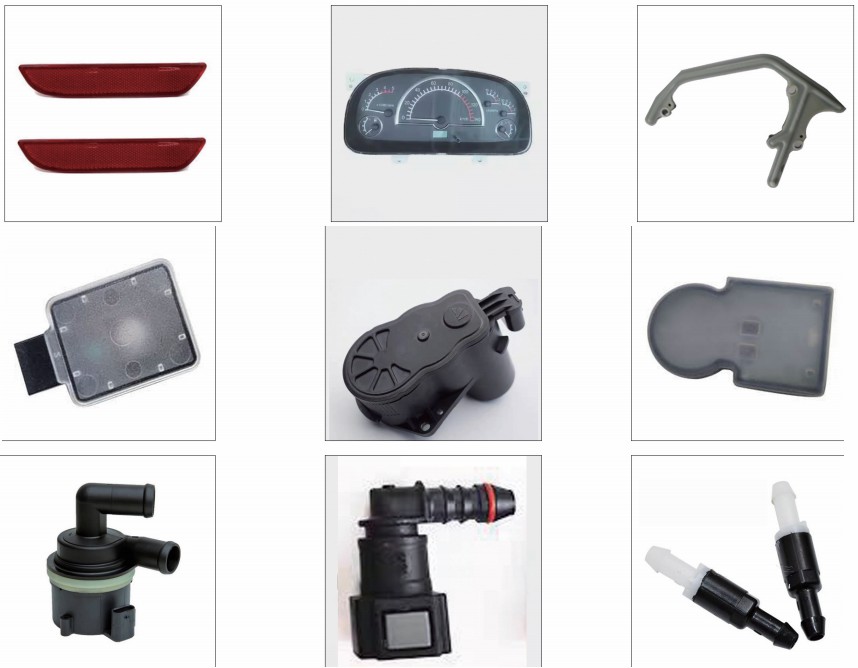
Automotive parts welding samples
How to Choose a Plastic Laser Welding Machine
The right plastic laser welding machine should be selected according to the actual component rather than laser power alone.Before designing the machine, we normally need to understand:
Plastic Material
Provide the exact plastic material and grade whenever possible.Different grades, pigments, and additives can significantly affect laser transmission and absorption.
Component Geometry
The shape and dimensions of the plastic components determine the fixture structure and welding path.
Weld Seam
The required weld seam, width, shape, and accessibility affect the laser and optical configuration.
Welding Requirements
Important requirements may include:
- Weld strength
- Sealing
- Appearance
- Dimensional accuracy
- Leak tightness
- Production cycle time
Production Volume
The required production quantity determines whether the machine should use manual loading, automatic clamping, automatic loading/unloading, or a fully automated production cell.
Why Choose ZS Machinery?
ZS Machinery focuses on customized industrial laser processing equipment rather than using one standard configuration for every application.For plastic laser welding, the fixture and welding process are as important as the laser itself.We can develop the machine configuration around the customer’s actual plastic component, including:
- Laser system
- Welding optics
- Dedicated fixture
- Clamping system
- Welding path
- Control system
- Vision system
- Automation functions
For automotive lighting and other demanding plastic components, sample testing is recommended before final machine production.
Send Your Plastic Components for a Welding Test
Plastic laser welding is highly dependent on the material, optical properties, joint design, and component geometry.
If you are looking for a plastic laser welding machine for automotive headlights, tail lights, or other plastic components, send us:
- Plastic material and grade
- Component drawings
- 3D files, if available
- Component dimensions
- Photos of the parts
- Weld seam requirements
- Required production quantity
- Required cycle time
ZS Machinery can evaluate the application and recommend the appropriate laser system, welding method, fixture, clamping system, and automation configuration.
Send Your Sample → Get a Customized Plastic Laser Welding Solution