
- Product Details
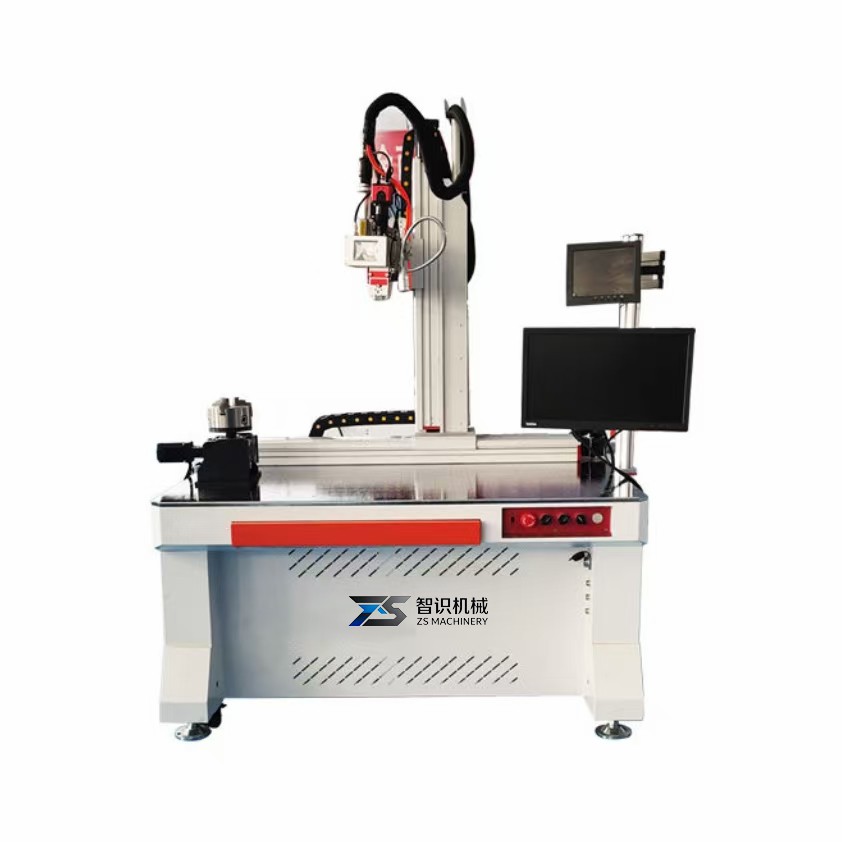
The 3-Axis CNC Laser Welding Machine is designed for manufacturers that need consistent, repeatable laser welding of production parts with defined welding paths and accessible joints.
Using CNC-controlled X, Y, and Z linear motion, the machine positions the laser welding head accurately over the workpiece while a dedicated fixture holds the parts in place. This makes it particularly suitable for repeat-production applications such as sheet metal enclosures, stainless steel equipment, machine housings, cabinets, frames, and other fabricated components.
Available with 1500W, 2000W, or 3000W fiber laser power, the system can be configured according to the material, thickness, joint design, weld quality, and production requirements.
3-axis CNC laser welding machine
What Is a 3-Axis CNC Laser Welding Machine?
A 3-axis CNC laser welding machine uses three linear motion axes:
X-axis – moves the welding head left and right across the worktable
Y-axis – moves the welding head forward and backward across the worktable
Z-axis – moves the welding head up and down to adjust welding height and focal position
The laser welding head moves and welds according to a pre-set welding path, while the workpiece is placed on the worktable or fixed on the worktable by a fixture.The important point is that three-axis motion controls the position of the welding head, not its orientation.Therefore, if you need to change the angle, you can only do so manually.
In a standard configuration with a fixed welding-head orientation, the laser beam approaches the workpiece from a defined direction. Therefore, the actual welding capability depends on the relationship between the weld seam, workpiece geometry, fixture, and laser beam orientation.This makes a 3-axis CNC system particularly effective for workpieces where the required seams can be accessed within the machine’s XYZ working envelope.
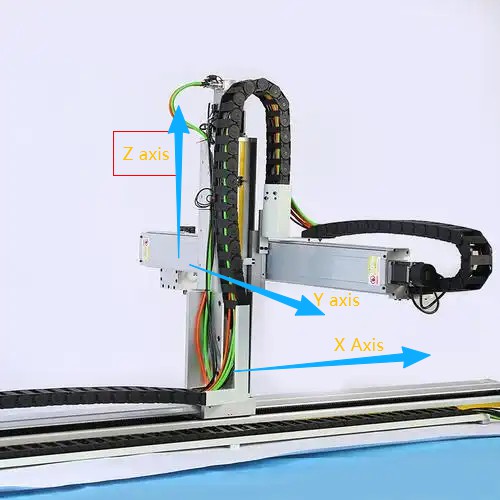
Schematic diagram of XYZ three-axis motion
Where 3-Axis CNC Laser Welding Works Best
A 3-axis system is not intended to replace every multi-axis welding system.Its strength is repeatable positioning for production parts with relatively accessible weld seams.Typical applications include:
Flat and Top-Side Welding
This is the most natural application for a fixed-orientation 3-axis laser welding head.Typical workpieces include:
- Sheet metal panels
- Covers
- Plates
- Electrical enclosures
- Control boxes
- Stainless steel cabinets
- Machine housings
- Equipment panels
Repeatable 2D Welding Paths
The CNC system is well suited to:
- Straight welds
- Rectangular welds
- Perimeter welds
- Repeated corner seams
- Circular or curved paths within the working area
- Repeated lap joints
- Repeated butt joints
Once the welding program and fixture have been validated, the same welding path can be reproduced across production parts.
Parts That Can Be Reoriented by the Fixture
A three-axis machine can also handle certain three-dimensional workpieces when the fixture positions the required joint toward the fixed laser head.
This is an important distinction:
The machine does not necessarily need to move the laser head around every surface if the workpiece can be positioned correctly.
For suitable products, a well-designed fixture can therefore extend the practical application range of a 3-axis system.
Welding Accessibility: What Can a 3-Axis Machine Weld?
The number of axes alone does not define a welding position.For laser welding, we also need to consider:
- Beam orientation
- Joint accessibility
- Workpiece orientation
- Joint geometry
- Focal position
- Fixture design
- Required approach direction
A standard XYZ machine provides three-dimensional positioning, but the welding head maintains a defined orientation unless an additional angular axis or positioning mechanism is incorporated.This orientation can be manually adjusted, for example, by tilting the welding head at a fixed angle, but once the position is determined, it cannot be changed during welding.
Typical Welding Capability
| Welding Requirement | 3-Axis CNC Suitability | Typical Consideration |
|---|---|---|
| Flat / top-side welding | Excellent | Natural application for XYZ motion |
| Straight seams | Excellent | Easy to program and repeat |
| 2D curved seams | Excellent | Suitable within the working envelope |
| Lap joints | Generally suitable | Joint must be accessible to the laser |
| Butt joints | Generally suitable | Requires proper joint alignment and fit-up |
| Corner joints | Application dependent | Beam access and joint geometry are important |
| Horizontal-position welding | Application dependent | Depends on workpiece orientation |
| Vertical-position welding | Geometry dependent | May require workpiece tilting or a different head orientation |
| Overhead welding | Usually requires additional positioning | Workpiece or laser-head orientation must be changed |
| Circumferential welding | Requires rotary positioning | A rotary axis is normally needed for continuous rotation |
| Multi-surface welding | Limited with fixed head | Additional positioning axes can improve accessibility |
| Complex 3D weld paths | Limited | 4-axis, 5-axis, or robotic systems may be more appropriate |
The practical rule is simple:If the weld seam can be brought into the laser head’s working orientation through the XYZ system and fixture, a 3-axis machine may be sufficient. If the laser beam itself needs to change orientation around the workpiece, additional axes become important.This distinction becomes especially important when selecting between 3-axis, 4-axis, and 5-axis configurations.
Why Use a 3-Axis CNC Laser Welding Machine?
Repeatable Welding
The CNC system controls the programmed movement of the laser welding head, allowing the same welding path to be repeated across production parts.
This is useful when manufacturers need consistent weld position and appearance from one workpiece to the next.
Concentrated Heat Input
Laser welding delivers energy into a relatively small area, which can help control heat input and reduce thermal distortion when the process is correctly developed.This is particularly useful for thin sheet metal and precision components where excessive heat can affect dimensional accuracy or surface appearance.
Efficient for Repeat Production
A dedicated CNC machine becomes attractive when the same or similar parts are produced repeatedly.Instead of manually guiding the laser along every seam, the operator can load the workpiece, position it in the fixture, start the programmed cycle, and unload the finished part.
More Controlled Than Manual Welding
The welding path, travel movement, and process parameters can be standardized during process development.This reduces dependence on manual hand movement and provides a more consistent production process.
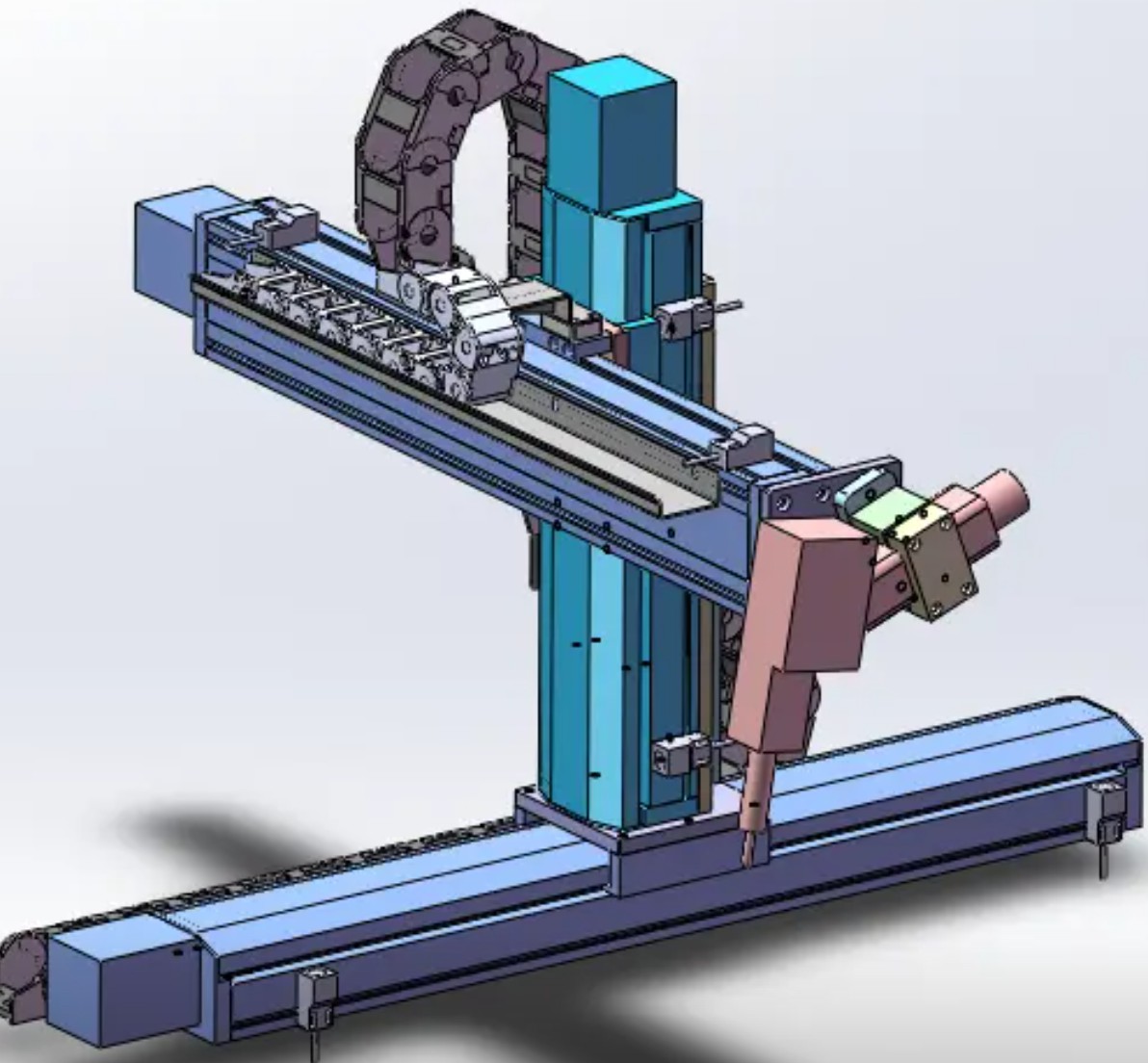
Three-axis welding platform
1500W, 2000W and 3000W Fiber Laser Options
The 3-Axis CNC Laser Welding Machine is available with 1500W, 2000W, and 3000W fiber laser sources. Different power levels provide different levels of heat input and process capacity, allowing the machine to be configured according to the material, workpiece thickness, joint design, and required welding speed.
1500W Fiber Laser
The 1500W configuration is suitable for many thin and medium-thickness metal welding applications. It is commonly considered for stainless steel, carbon steel, aluminum, and other sheet-metal components where controlled heat input and a stable welding process are important.
Typical applications include:
- Electrical enclosures and cabinets
- Stainless steel kitchen equipment
- Machine covers and housings
- Sheet metal components
- Metal frames and brackets
- General fabricated parts
2000W Fiber Laser
The 2000W configuration provides a larger process window than 1500W and can be used when the application requires higher heat input, greater welding speed, or a wider range of material thicknesses.
It is often considered for production parts where both welding penetration and productivity are important.
Typical applications include:
- Medium-thickness sheet metal
- Stainless steel equipment
- Industrial housings and cabinets
- Structural metal components
- Automotive components
- Fabricated machinery parts
3000W Fiber Laser
The 3000W configuration is intended for applications requiring higher laser power and greater welding capacity. It can provide additional process flexibility for thicker materials, larger joints, and production environments where higher welding speeds are required.
Typical applications include:
- Thicker stainless steel and carbon steel components
- Heavy-duty equipment housings
- Larger structural components
- Industrial machinery parts
- Automotive and transportation components
- High-throughput production welding
How to Choose the Laser Power
Laser power should not be selected based on material thickness alone. The appropriate configuration depends on several factors, including:
Material → Thickness → Joint Type → Joint Fit-Up → Welding Speed → Required Penetration → Production Volume
For this reason, 1500W does not simply mean “thin material,” while 3000W does not automatically mean “better.” The correct power level is the one that provides the required weld penetration and production speed within a stable process window.
CCD Welding Monitoring
A built-in CCD welding monitoring system allows the operator to observe the welding area through a dedicated display.
This can help with:
- Workpiece positioning
- Weld seam alignment
- Fixture verification
- Process observation
- Operator monitoring
The monitoring system is particularly useful when the laser welding area is enclosed and direct visual access to the process is limited.
Red-Light Positioning System
A red-light positioning system provides a visible reference for positioning the workpiece before welding.It helps the operator:
- Locate the programmed welding path
- Align the workpiece with the fixture
- Check part positioning
- Reduce setup errors
For repeat production, accurate positioning of the workpiece is important because laser welding requires the beam to remain correctly aligned with the joint.
The Fixture Is Part of the Welding Process
For batch production, the welding fixture is not simply an accessory.It determines how accurately the workpiece is:Located → Clamped → Aligned → Welded → Removed.A good fixture should maintain:
- Consistent part position
- Stable joint alignment
- Appropriate joint gap
- Access to the laser beam
- Repeatable loading
- Efficient unloading
This is especially important for products such as electrical enclosures, cabinets, machine housings, and stainless steel sheet metal assemblies.If the workpiece moves during welding or the joint position changes from part to part, even a precise CNC motion system cannot compensate for poor part positioning.For this reason, machine configuration and fixture design should be considered together.
3-Axis CNC vs. Handheld Laser Welding
Both systems have their place in manufacturing.
| Requirement | 3-Axis CNC Laser Welding | Handheld Laser Welding |
|---|---|---|
| Repeat production | Highly suitable | Suitable |
| Repetitive weld paths | Highly suitable | Operator dependent |
| Consistent weld position | Excellent | Depends on operator |
| Frequent product changes | Moderate | Very flexible |
| Prototyping | Suitable | Highly flexible |
| Complex manual access | Limited | More flexible |
| Dedicated fixture | Usually recommended | Often optional |
| Production automation | Good starting point | Limited |
| Large irregular workpieces | Application dependent | Often easier |
| Consistent cycle | More controllable | More operator dependent |
The choice depends on the production process rather than the machine being universally better.
3-Axis CNC vs. 4-Axis and 5-Axis Welding
The main difference between these configurations is not simply the number of axes.It is how the additional axis changes welding accessibility.
3-Axis
X + Y + Z
Best suited to:
- Flat parts
- Top-side welding
- Repeatable 2D paths
- Accessible joints
- Parts that can be positioned by a fixture
4-Axis
Typically adds a rotary or positioning axis.This can provide additional workpiece orientation and is particularly useful for:
- Cylindrical parts
- Circumferential welding
- Rotary components
- Multi-side workpieces
5-Axis
Adds another positioning or angular degree of freedom.Depending on the machine architecture, this can provide greater flexibility for:
- Multi-surface welding
- Angled joints
- Complex workpiece geometry
- More demanding beam approach directions
The exact capability depends on where the additional axes are located—on the workpiece, fixture, rotary table, or welding head.
For this reason, ZS Machinery selects the axis configuration according to the actual welding geometry rather than simply recommending more axes for every application.
Working travel and machine configuration may vary according to the final equipment specification.
How to Select the Right Configuration
Before selecting a laser welding machine, we recommend evaluating the actual workpiece.
1. Material
Stainless steel, carbon steel, aluminum, copper, brass, titanium, or other materials?
2. Thickness
What are the minimum and maximum material thicknesses?
3. Joint Type
Butt, lap, corner, fillet, or another joint configuration?
4. Weld Location
Can the welding seam be accessed from the available beam direction?
5. Workpiece Dimensions
What are the length, width, height, and weight of the workpiece?
6. Production Volume
How many parts are produced per shift, day, or month?
7. Weld Requirements
Do you require:
- Full penetration?
- Leak-tight welding?
- Cosmetic welds?
- High strength?
- Minimal distortion?
- Reduced post-weld finishing?
8. Fixture Requirements
How will the part be located and clamped?
9. Required Motion
Is XYZ positioning sufficient, or does the welding head or workpiece need additional angular movement?
These questions determine whether a 3-axis configuration is appropriate and which laser power, welding head, fixture, and automation options should be selected.