
CNC Laser Welding in Medical Device Manufacturing
CNC laser welding in medical device manufacturing covers a wide range of precision joining applications, from stainless steel surgical instruments and titanium components to plastic medical capsules, catheters, tubing, diagnostic cartridges, and microfluidic devices.
Unlike general industrial manufacturing, medical-device production often involves small components, thin walls, complex geometries, sensitive materials, sealed structures, and strict requirements for cleanliness and process consistency.
Laser welding is suitable for many of these applications because it can deliver energy precisely to the joint while limiting unnecessary heat input and mechanical deformation.Importantly, laser welding in medical manufacturing is not limited to metals.
Metal laser welding is widely used for surgical instruments, medical tubing, guidewires, sensor components, implantable-device housings, and other precision assemblies.
At the same time, laser plastic welding is increasingly used for medical consumables and plastic components such as transparent capsules, catheter components, diagnostic cartridges, fluidic components, filters, housings, and medical tubing. This makes CNC and automated laser welding a broad manufacturing technology rather than a solution limited to one type of medical product.
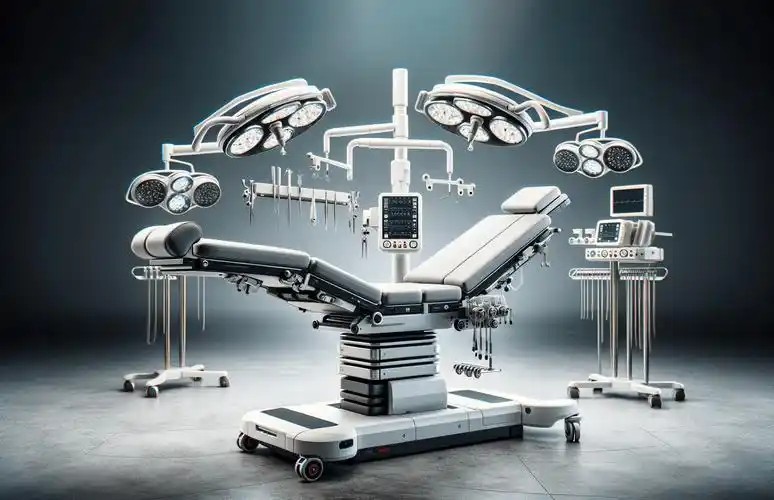
Medical industry components
Why Is Laser Welding Used in Medical Device Manufacturing?
Medical components can have very different requirements depending on their function.A medical product may need to be:
- Precisely assembled
- Leak-tight
- Hermetically sealed
- Clean and particle-controlled
- Resistant to chemicals or sterilization
- Mechanically reliable
- Dimensionally stable
- Suitable for automated production
- Manufactured with consistent process parameters
Traditional joining methods can sometimes introduce unwanted heat, mechanical deformation, adhesives, burrs, or additional processing steps.While laser welding provides a non-contact heat source that can be precisely controlled and directed to the required joining area.
For metal components, this can be useful for small-diameter tubes, wires, housings, surgical instruments, and precision assemblies. While for thermoplastic components, laser welding can create clean, sealed joints without adhesives or mechanical fasteners.
Therefore, laser welding can be considered for both metal medical components and thermoplastic medical products.
Metal Laser Welding Applications in Medical Devices
1. Surgical Instruments
Surgical instruments often contain small metal components that require accurate joining and a clean finished surface.Potential applications include:
- Surgical instrument assemblies
- Instrument shafts
- Small mechanical components
- Endoscopic components
- Tubular structures
- Precision instrument parts
Stainless steel and other medical-grade alloys are commonly used in these applications.Laser welding can provide localized heating and controlled weld geometry, helping manufacturers reduce unnecessary thermal distortion.
For automated production, CNC positioning can control the welding path and allow the same welding sequence to be repeated across large numbers of components.
2. Catheter Components and Guidewires
Catheters and guidewires are highly demanding medical products because many of their components are extremely small.Laser welding can be used for:
- Catheter shafts
- Hypotubes
- Guidewires
- Marker bands
- Pull rings
- Torque cables
- Catheter tips
- Wire-to-tube assemblies
The ability to control the laser beam and welding position precisely is particularly useful when joining thin wires or small-diameter tubing.
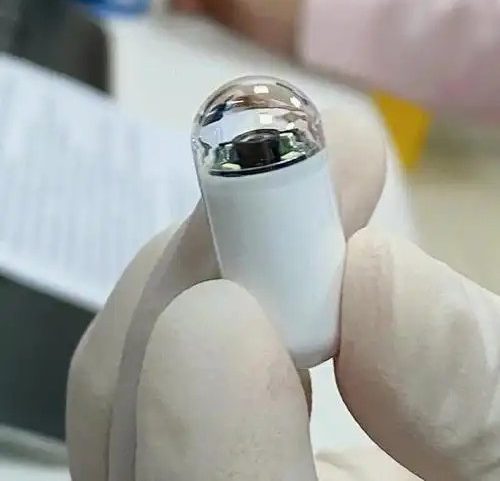
Laser welding of gastroscopy capsules
3. Medical Tubing and Thin-Wall Metal Tubes
Medical tubing can be manufactured from stainless steel, titanium, Nitinol, and other specialized materials.Laser welding can be used for:
- Tube-to-tube assemblies
- Tube-to-wire joints
- Hypodermic tubing
- Small tubular components
- Catheter components
- Medical instrument tubes
For cylindrical parts, a CNC welding system can integrate a rotary axis or rotary fixture to rotate the workpiece while maintaining a controlled welding path.This configuration can be useful for circumferential welding around small tubes and cylindrical components.
4. Nitinol Medical Components
Nitinol is widely used in minimally invasive medical products because of its shape-memory and superelastic properties.Potential applications include:
- Guidewires
- Stent-related components
- Filters
- Catheter components
- Fine-wire assemblies
Laser welding can provide localized heat input for small Nitinol components, but the process must be carefully developed because excessive heat or unsuitable parameters can affect the material’s functional properties.
5. Titanium Medical Components
Titanium and titanium alloys are used in selected medical and implantable applications because of their strength, corrosion resistance, and biocompatibility.CNC Laser welding can be used for:
- Titanium housings
- Implant components
- Medical instrument components
- Precision titanium assemblies
- Sensor housings
For critical medical components, the welding process therefore needs to be developed around the actual material, geometry, and required performance rather than simply selecting a laser by power.
6. Implantable Device Housings and Hermetic Sealing
Hermetic sealing is one of the most demanding applications of medical laser welding.Some implantable electronic devices contain sensitive internal components such as:
- Batteries
- Sensors
- Electronic circuits
- Feedthroughs
- Communication components
The external enclosure must protect these components from moisture and the surrounding environment.Laser seam welding can create a continuous weld around the enclosure while keeping the heat-affected region relatively localized.
Plastic Laser Welding Applications in Medical Devices
Metal welding is only one part of the medical laser welding market.
Plastic laser welding is particularly important for disposable medical products, fluid-handling components, diagnostic devices, transparent medical parts, and microfluidic systems.
Thermoplastics can be joined using laser transmission welding and other laser-based plastic welding techniques. The appropriate process depends on the polymer, optical properties, additives, joint design, clamping conditions, and laser wavelength.This is especially relevant for the types of products shown in your medical welding samples.
7. Capsule Endoscope Housings
Capsule endoscopes are a good example of why laser plastic welding can be valuable in medical-device manufacturing.A capsule endoscope may contain:
- Camera or optical components
- LEDs
- Electronic circuits
- Battery
- Wireless communication components
- Protective polymer housing
The outer housing needs to protect the internal electronics while maintaining a compact and smooth structure.CNC Plastic Laser welding can weld cylindrical and transparent thermoplastic housing components.
8. Transparent Medical Capsules
Transparent plastic components are increasingly important in medical manufacturing because the finished product may need to remain visually transparent for inspection, optical measurement, fluid observation, or functional reasons.Examples include:
- Transparent medical capsules
- Diagnostic containers
- Fluid chambers
- Optical medical components
- Transparent housings
- Laboratory consumables
Traditional plastic welding methods can introduce deformation, flash, or visible weld structures.Laser welding can provide a more controlled joining process with a narrow weld area.
For transparent plastics, however, the laser wavelength and optical properties of the material are critical. Conventional laser transmission welding often requires a transmissive upper layer and an absorbing lower layer, while newer approaches can enable welding of transparent materials using wavelengths and process configurations designed for higher absorption.
Therefore, transparent plastic does not automatically mean that every laser can weld it. The material and laser system must be matched correctly.
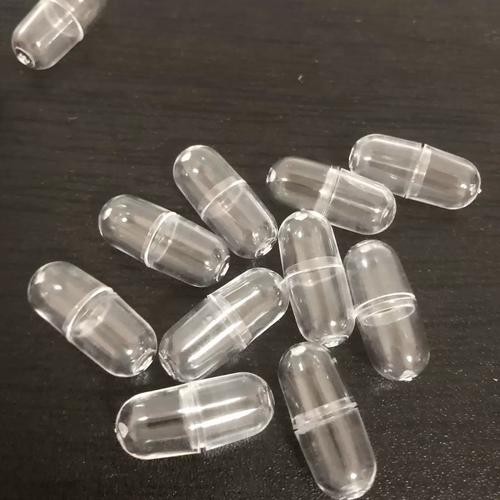
Transparent capsule laser welding finished product
9. Hemodialysis Tubes and Medical Tubing
The hemodialysis tube shown in the product examples is another important plastic medical application.Medical tubing is used in:
- Hemodialysis systems
- IV systems
- Oxygen delivery
- Fluid management
- Diagnostic equipment
- Catheter systems
- Drug delivery systems
Many medical tubes are made from transparent or translucent polymers.Laser welding can be used for selected tube-to-tube, tube-to-connector, and circumferential joining applications.
A major advantage for medical tubing is the possibility of producing clean, leak-tight joints without adhesives or solvents.For cylindrical tubing, a laser welding machine can combine controlled laser movement with rotary positioning to produce a consistent circumferential weld.
10. Catheter Plastic Components
Catheters can contain both metal and plastic components.Plastic laser welding can be considered for:
- Catheter shafts
- Tubing sections
- Connectors
- Tips
- Multi-layer tube assemblies
- Fluid channels
- Small plastic housings
The ability to weld small cylindrical plastic components is one reason laser plastic welding has become relevant to medical manufacturing.For catheter production, the welding process must account for polymer compatibility, wall thickness, transparency, additives, joint geometry, and required mechanical or sealing performance.
11. Diagnostic Cartridges
Diagnostic cartridges are another important application for plastic laser welding.A diagnostic cartridge may contain:
- Microchannels
- Fluid chambers
- Reaction chambers
- Optical windows
- Ports
- Sealing structures
These components may need to control very small quantities of liquid while preventing leakage or contamination.CNC Laser welding can join thermoplastic components without introducing adhesives into the fluid path.
12. Microfluidic Medical Components
Microfluidics is one of the most interesting applications for medical plastic laser welding.Microfluidic products can contain extremely small channels through which liquids or biological samples move.Applications include:
- Lab-on-a-chip devices
- Diagnostic cartridges
- Blood-analysis systems
- Point-of-care testing devices
- Fluidic manifolds
- Microfluidic chambers
The welding process must preserve the geometry of the internal channels.Excessive heat, deformation, flash, or particles can interfere with fluid flow and affect the function of the finished product.Laser welding provides a localized joining process and can be used to seal complex thermoplastic geometries.
13. Medical Filters
Plastic filters are widely used in medical and fluid-handling products.Laser plastic welding can be used for selected:
- Filter housings
- Membrane assemblies
- Fluid filters
- Blood-processing components
- Diagnostic filtration components
A key requirement is often a clean and leak-tight joint without introducing adhesive or unwanted particles into the fluid path.Medical laser plastic welding literature identifies filtering elements and liquid containers among applications for thermoplastic laser welding.
14. Medical Fluid Containers and Reservoirs
Medical devices frequently contain small plastic chambers or reservoirs used to store or transport fluids.Applications can include:
- Drug-delivery components
- Fluid reservoirs
- Medical containers
- Diagnostic containers
- Sample chambers
- Irrigation components
Laser welding can join thermoplastic components while maintaining a clean appearance and controlled sealing area.
Materials Used in Medical Plastic Laser Welding
Medical plastic laser welding requires more than simply identifying a material as “plastic.”Common thermoplastics used in medical products can include:
- PC
- PMMA
- ABS
- PC/ABS
- PP
- PE
- PA
- PBT
- TPU
- TPE
- PVC
However, not every grade of these materials is automatically suitable for laser welding.The formulation, fillers, pigments, additives, optical transmission, laser absorption, and joint design can all affect the process.
For example, transparent polymers can transmit certain laser wavelengths rather than absorb them. This is why the laser wavelength and material combination must be evaluated before selecting the equipment.For medical products, additional requirements such as biocompatibility, cleanliness, sterilization compatibility, and regulatory requirements may also influence material selection.
Therefore, to determine whether laser welding is suitable for your product, it’s best to consult our technical team so we can discuss and research the feasibility together and conduct sample testing.
Why Laser Plastic Welding Is Attractive for Medical Products
Plastic laser welding offers several characteristics that can be valuable in medical manufacturing.
Clean Joining Process
Laser welding can eliminate the need for adhesives or solvents in applications where the joint design and materials are suitable.
Low Mechanical Stress
Because the laser is a non-contact heat source, the process can reduce mechanical loading compared with some contact-based joining methods.
Hermetic and Leak-Tight Joints
For suitable material combinations and joint designs, laser welding can create sealed joints for fluid-handling components and housings.
Suitable for Small Components
Laser systems can be configured for small and precise components, including miniature medical devices and microfluidic structures.
Good Appearance
Laser welding can produce a narrow and controlled weld seam with limited visible deformation when the process is properly developed.
Automation
Plastic laser welding can be integrated with:
- Precision fixtures
- CNC positioning
- Rotary axes
- Vision systems
- Automatic loading
- Automatic unloading
- Process monitoring
- Production-line automation
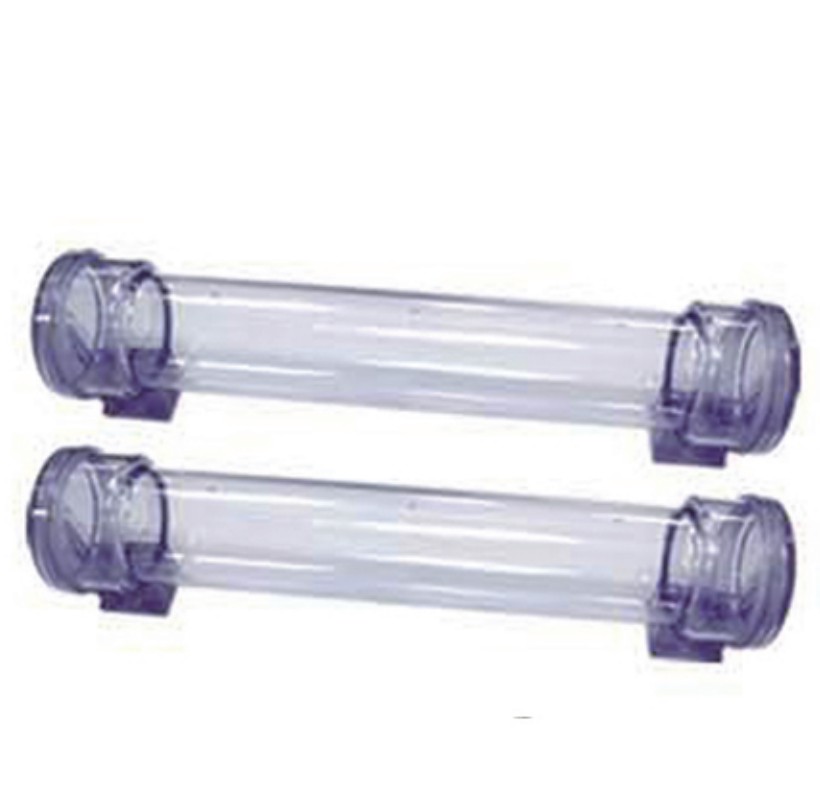
Finished welded hemodialysis tubes
CNC and Automated Laser Welding Systems for Medical Devices
A medical laser welding system can range from a relatively simple precision welding machine to a highly automated production cell.Depending on the application, the system may include:
- Laser source
- Welding head
- CNC motion system
- Rotary axis
- Precision fixture
- Clamping system
- Vision alignment
- Automatic feeding
- Automatic unloading
- Process monitoring
- Weld inspection
- Data recording
- Safety enclosure
- Enclosed clean welding cell when required
For a simple tube or housing, a 3-axis system may be sufficient.
For cylindrical components, a rotary axis can be added.
For complex three-dimensional components, multi-axis positioning or robotic movement may be appropriate.
For high-volume medical plastic production, customized tooling and automated loading/unloading can be integrated into the welding cell.
The correct configuration depends on the product rather than simply selecting the most complicated machine.
Process Control and Quality in Medical Laser Welding
Medical manufacturing requires more than producing a weld that looks acceptable.Depending on the product, manufacturers may need to evaluate:
- Weld strength
- Leak tightness
- Hermeticity
- Dimensional accuracy
- Weld penetration
- Surface condition
- Internal channel geometry
- Particle generation
- Thermal effects
- Material compatibility
- Process repeatability
For plastic components, the welding process may also need to ensure that the joint does not deform internal channels or introduce unwanted material into the fluid path.While For implantable or fluid-handling products, leak testing and other inspection methods can be particularly important.
Professional medical laser welding systems can incorporate process monitoring and documentation to improve repeatability and traceability.
How to Choose a Laser Welding Machine for Medical Devices
The first question should not be:
“How many watts do I need?”
Instead, manufacturers should first define the product and welding process.
Important questions include:
1. Is the Product Metal or Plastic?
Metal and thermoplastic welding require different laser systems and process approaches.
2. What Material Is Being Welded?
For plastics, the exact polymer grade, additives, transparency, and optical properties matter.
3. Is the Material Transparent?
If transparent plastic is involved, the laser wavelength and welding method become particularly important.
4. What Is the Part Geometry?
A flat component may need a different system from a tube, capsule, or three-dimensional component.
5. Does the Part Need to Be Sealed?
Fluid-handling products, diagnostic cartridges, medical tubing, and implantable housings may require leak-tight or hermetic joints.
6. What Is the Production Volume?
Prototype production and mass production have very different automation requirements.
7. What Level of Automation Is Required?
The machine may range from operator-loaded CNC welding to a fully automated production cell.
8. What Fixtures Are Required?
For small medical components, fixture accuracy can be just as important as laser accuracy because the two parts must remain correctly aligned throughout the welding process.
Of course, the simplest way is to send your product to ZS Machinery, and we can help you make a preliminary assessment.
Why Choose ZS Machinery for Medical Device Laser Welding?
Medical-device manufacturing can involve very different products, from stainless-steel surgical instruments to transparent plastic capsules and medical tubing.For this reason, ZS Machinery does not treat medical laser welding as a single machine application.We can provide different laser welding configurations according to the material, component geometry, joint requirements, and production process.
Our solutions can cover:
- Metal CNC laser welding
- Plastic laser welding
- Transparent plastic laser welding
- Tube and cylindrical welding
- Rotary-axis laser welding
- Precision welding
- Multi-axis laser welding
- Automated laser welding
- Customized medical-device welding systems
For plastic medical products such as capsules, transparent housings, diagnostic components, catheter-related parts, and medical tubing, the system can be designed around the required laser wavelength, material properties, tooling, clamping, welding path, and production requirements.
For metal medical components, the system can be configured with the appropriate laser source, welding head, CNC motion system, rotary axis, fixture, shielding, and process-control functions.
Most importantly, the final machine configuration should be based on the actual sample, material, joint design, required sealing performance, and production target.
For medical applications, ZS Machinery can evaluate the customer’s actual product and develop the corresponding laser welding solution rather than relying on a standard machine configuration for every application.
Conclusion
CNC laser welding in medical device manufacturing is much broader than precision welding of metal components.It covers two major areas: metal laser welding and plastic laser welding.
Metal applications include surgical instruments, catheter components, guidewires, Nitinol parts, titanium components, sensor housings, and hermetically sealed implantable-device enclosures.
Plastic applications include capsule endoscopes, transparent medical capsules, hemodialysis tubing, catheter components, diagnostic cartridges, microfluidic devices, medical filters, fluid containers, and plastic medical housings. These applications are well documented in industrial medical laser-welding applications.
The important point is that medical laser welding is not defined by laser power alone. Material properties, transparency, component geometry, joint design, fixtures, laser wavelength, motion control, sealing requirements, process monitoring, and production volume all influence the final system.
For this reason, ZS Machinery approaches medical laser welding as a complete application-specific solution, covering both metal and plastic products and providing CNC, rotary, multi-axis, and automated configurations according to the actual manufacturing requirements.