
CNC Laser Welding in the HVAC and Refrigeration Industry
The HVAC and refrigeration industry relies on a wide range of metal and plastic components, including heat exchangers, condenser assemblies, evaporators, compressor housings, refrigerant-related components, sheet metal enclosures, and plastic control components. These products often require accurate joining, consistent manufacturing quality, and reliable performance throughout their service life.
CNC laser welding offers a controlled and repeatable joining solution for suitable HVAC and refrigeration components. For metal parts, it can be used in applications such as heat exchanger plate sealing, compressor housing welding, selected tube assemblies, and sheet metal fabrication. For compatible thermoplastic parts, CNC laser plastic welding can join housings and functional components without applying mechanical force directly to the joint through a conventional welding tool.
The right solution depends on the product structure, material, wall thickness, joint design, sealing requirements, and production volume. Depending on these factors, manufacturers may use a 4-axis, 5-axis, or 6-axis CNC laser welding machine, a robotic laser welding system, or a dedicated automated welding cell.
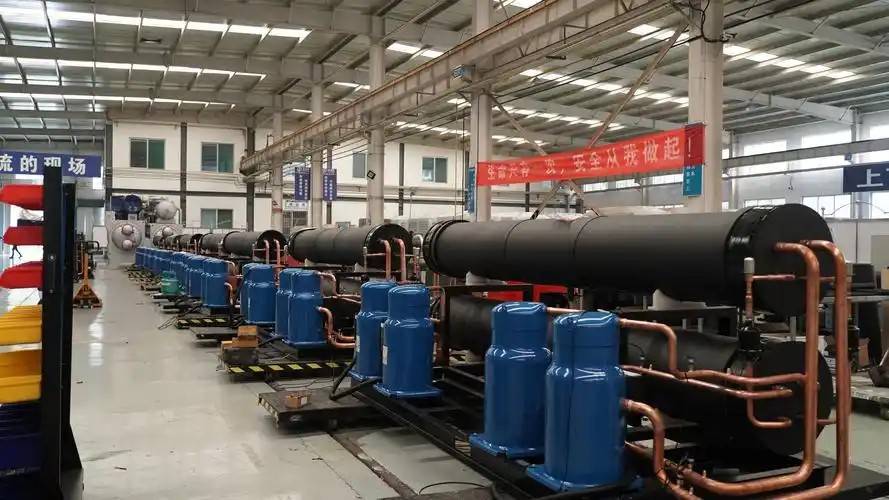
HVAC and Refrigeration Industry
Why Use CNC Laser Welding in HVAC and Refrigeration Manufacturing?
HVAC and refrigeration products often contain multiple joined components. Depending on the product, these joints may need to provide structural strength, dimensional accuracy, pressure resistance, or leak-tight performance.
Laser welding delivers concentrated energy to a localized area, allowing the process to be controlled around a defined welding path. For suitable materials and joint designs, this can help reduce unnecessary heat input and limit distortion compared with processes that distribute heat over a larger area.
CNC control also makes it possible to program welding paths and repeat them across batches of similar workpieces. When combined with dedicated fixtures, rotary axes, or robotic handling, the process can be integrated into automated production.
Key potential benefits include:
- Controlled heat input: Useful for suitable thin-wall metal components and precision assemblies.
- Repeatable welding paths: CNC programming helps maintain consistency between production cycles.
- Reduced thermal distortion: Localized heating can help preserve the geometry of appropriately designed sheet metal parts.
- Consistent seam formation: Suitable process parameters and stable joint fit-up help produce repeatable welds.
- Automation potential: Fixtures, positioners, vision systems, and material handling can be integrated where required.
- Flexible production: CNC and robotic systems can be configured for different product sizes and welding geometries.
These benefits are application-dependent. For pressure-containing or refrigerant-carrying components, weld integrity must be validated through appropriate inspection and leak or pressure testing. Laser welding should not be assumed to replace conventional brazing or other established joining processes for every HVAC component.
Metal HVAC and Refrigeration Components Suitable for Laser Welding
Metal applications are an important part of this industry. Common materials include stainless steel, carbon steel, galvanized steel, aluminum, and selected copper alloys. However, material compatibility and process parameters must be evaluated for each application.
1. Heat Exchangers
Heat exchangers transfer heat between fluids or between a fluid and the surrounding environment. They are used in air conditioning systems, refrigeration equipment, industrial cooling systems, and other thermal management applications.
Laser welding can be used for specific heat exchanger designs, particularly where components require continuous sealing seams, precise joints, or automated welding paths.
Potential applications include:
- Pillow plate heat exchangers
- Double-layer heat transfer plates
- Selected plate and panel assemblies
- Heat exchanger housings and covers
- Specific metal tube-to-header joints
- Selected industrial heat transfer components
For example, pillow plate heat exchangers can be manufactured by laser-welding the edges or patterned areas of two metal sheets before the enclosed space is expanded to form heat transfer channels. Dedicated automated laser welding systems are available for this type of production.
Not every heat exchanger uses laser welding. Conventional tube expansion, brazing, soldering, or other joining processes remain common, depending on the heat exchanger design.
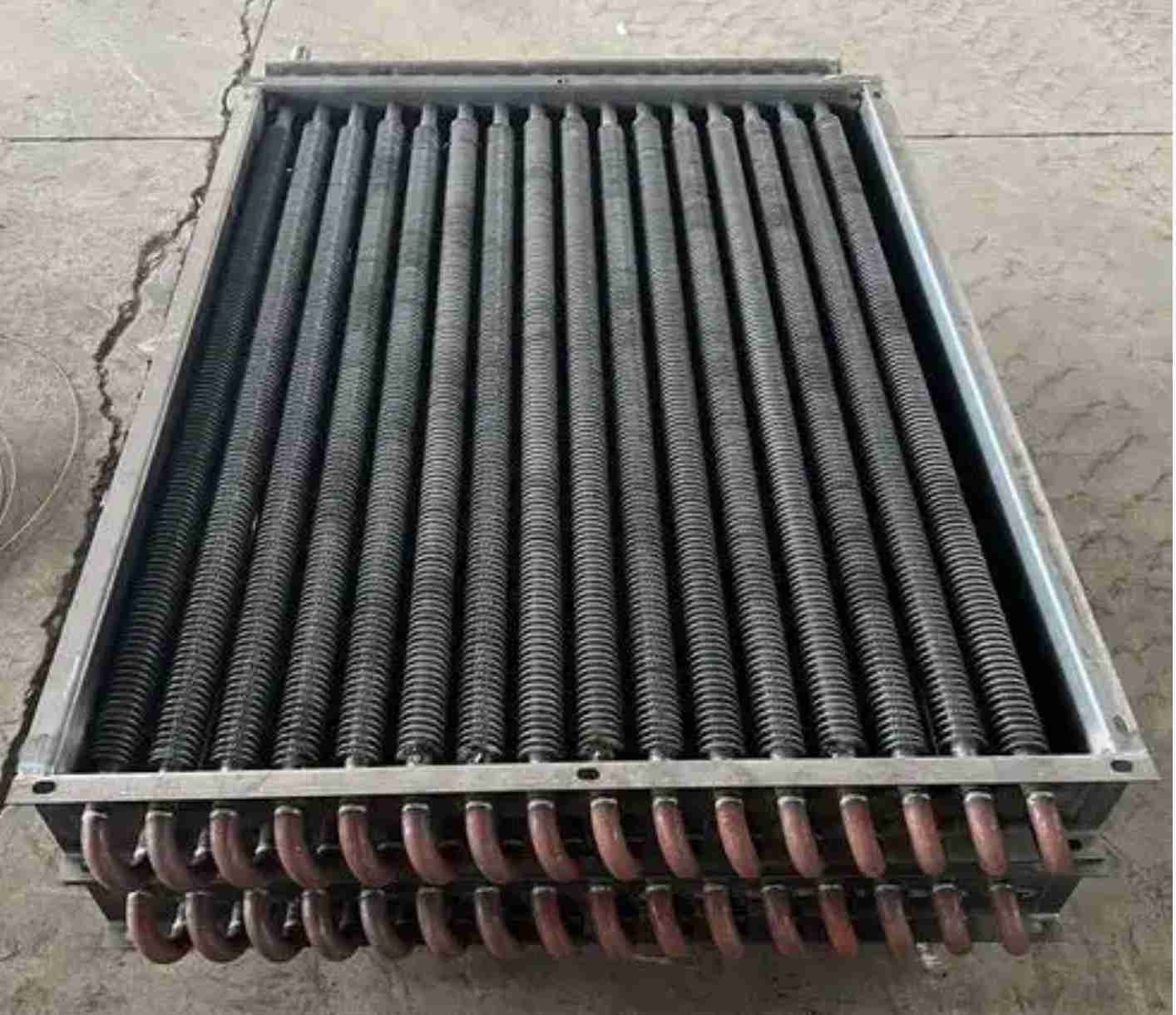
Heat Exchangers
2. Condensers
Condensers are used in air conditioners, refrigerators, freezers, and industrial refrigeration systems. Their construction varies by equipment type and may include tubes, headers, fins, frames, and metal housings.
Laser welding may be suitable for selected metal joints, housings, and specially designed condenser assemblies.
Potential applications include:
- Selected tube-to-header connections
- Metal condenser housings
- Sheet metal end covers
- Structural brackets and supports
- Specialized plate-type or panel-type heat exchanger assemblies
Many conventional copper-tube and aluminum-fin condenser coils rely on tube expansion, brazing, or other established manufacturing processes. The welding method should therefore be selected according to the actual condenser structure rather than assuming that the complete coil is laser-welded.
3. Evaporators
Evaporators absorb heat from the surrounding air or another medium and are widely used in refrigeration and air conditioning systems.
Laser welding equipment has been developed for specific evaporator manufacturing applications, including selected tube-to-header joints and metal assemblies that require controlled welding and repeatable positioning.
Potential applications include:
- Selected evaporator tube-to-header joints
- Metal evaporator housings
- Sheet metal covers and structural components
- Specialized metal heat exchanger assemblies
- Selected refrigerant-related metal components
The suitability of laser welding depends on the evaporator design, material combination, joint accessibility, and required sealing performance.
4. Refrigeration Compressor Housings
Compressor housings are important components in refrigeration and air conditioning systems. Certain designs use joined upper and lower metal shells, creating a circumferential seam that must meet structural and sealing requirements.
Laser welding has been investigated and implemented for specific compressor housing designs, including the joining of upper and lower shells. Dedicated production equipment can integrate a laser source, welding head, workpiece positioning, and automated movement.
Potential applications include:
- Compressor upper and lower shell welding
- Selected compressor cover joints
- Metal housing assemblies
- Selected brackets and mounting components
Because compressor housings may contain refrigerant under operating pressure, the welding process must be validated for the specific design. Joint fit-up, material thickness, seam geometry, process monitoring, and leak testing are especially important.
5. HVAC Pipes and Refrigeration Tubes
HVAC and refrigeration systems use copper, aluminum, steel, and other compatible tubing for different functions. However, tube materials and connection methods vary substantially.
Laser welding may be suitable for selected metal tube assemblies where the material combination, joint geometry, and required performance are compatible with the process.
Potential applications include:
- Selected metal tube-to-fitting joints
- Tube-to-header assemblies
- Pipe fittings and connectors
- Selected metal manifolds
- Refrigeration equipment tube assemblies
- Metal pipe connections in specialized equipment
For copper tubing, conventional brazing remains widely used. Laser welding should be considered only after evaluating the specific copper alloy, tube dimensions, joint design, heat input, and sealing requirements.
6. Copper Tube Assemblies
Copper is widely used in HVAC and refrigeration because of its thermal conductivity and corrosion characteristics in suitable service conditions.
Potential laser welding applications include specially designed copper tube connections, selected copper-alloy components, and assemblies where a localized heat source and controlled welding path are advantageous.
However, copper reflects laser energy strongly and conducts heat rapidly. These characteristics make copper welding more demanding than welding many common steels. Laser source characteristics, wavelength, power density, joint preparation, and process parameters must be matched to the application.
For standard copper tube connections, brazing may remain the more appropriate manufacturing method.
7. HVAC Sheet Metal Components
Air conditioners, ventilation equipment, chillers, refrigeration cabinets, and industrial cooling systems contain many fabricated sheet metal parts.
These components are often suitable for CNC laser welding when they require accurate corners, seams, brackets, or structural connections.
Typical products include:
- HVAC sheet metal housings
- Air conditioning equipment enclosures
- Chiller cabinets
- Ventilation equipment housings
- Machine covers
- Mounting brackets
- Metal frames
- Control cabinets
- Refrigeration equipment panels
For small and medium-sized parts, a CNC laser welding machine with a customized fixture can provide repeatable welding. Larger housings and structures may benefit from a robotic laser welding system with a larger working envelope.
Plastic Laser Welding for HVAC and Refrigeration Components
HVAC and refrigeration equipment also contains plastic components used for electrical protection, airflow management, sensing, control, and water management.
For suitable thermoplastics, CNC laser plastic welding can join two compatible parts along a defined seam. In transmission laser welding, one component allows the laser wavelength to pass through while the other absorbs the energy near the joint. The resulting heat melts the joining surfaces, which are brought together under controlled clamping pressure.
The material’s optical properties, formulation, colorants, joint geometry, and clamping arrangement all influence whether the process is suitable.
1. Plastic Sensor Housings
HVAC systems use sensors to measure conditions such as temperature, humidity, and other operating parameters.
Depending on the sensor design, laser plastic welding may be suitable for joining compatible plastic housing halves or sealing selected electronic sensor enclosures.
The process can create a controlled joining seam without the need for a conventional adhesive at the joint. Whether the finished assembly meets its required environmental or sealing rating must be verified through testing.
2. Thermostat and Control Component Housings
Thermostats, control units, and other electronic components may contain plastic housings that protect internal electronics.
Potential applications include:
- Thermostat housing halves
- Plastic control module housings
- Selected electrical control enclosures
- Sensor module covers
- Electronic component housings
Laser plastic welding can be considered when the housing material and joint design are compatible with the process and the assembly requires a consistent joining seam.
Not every thermostat or electrical enclosure is laser-welded; screws, clips, ultrasonic welding, and other joining methods may be more appropriate for particular designs.
3. Airflow and Ventilation Components
Some HVAC products use plastic parts to guide airflow or connect sections of an air distribution system.
Depending on the design and material, potential laser plastic welding applications may include selected:
- Plastic air duct components
- Airflow guide assemblies
- Ventilation component housings
- Plastic covers and functional enclosures
These applications require the component geometry and joint accessibility to be evaluated. Large duct sections or parts made from incompatible plastics may be better suited to other joining methods.
4. Condensate Drain and Water Management Components
Air conditioning equipment often includes condensate collection and drainage components. Some products use molded thermoplastic parts for water collection, routing, or related functions.
Laser plastic welding may be an option for compatible molded components where a controlled joint is needed.
Possible examples include selected plastic water collection housings, drainage assemblies, and fluid-handling enclosures.
The suitability of the process depends on the polymer grade, joint design, required water tightness, and the geometry of the finished assembly. Leak testing is necessary where the component must retain or transport water without leakage.
5. Plastic Fan and Motor Housings
Certain ventilation and HVAC assemblies use plastic housings around fan or motor-related components.
Where the design consists of compatible thermoplastic parts, laser welding may be considered for selected housing joints and covers. The process must be assessed against the component’s operating temperature, vibration, mechanical loading, and service requirements.
This is an application to evaluate rather than a universal recommendation: many fan and motor assemblies use mechanical fastening, snap fits, or other joining methods.
6. Refrigeration Equipment Plastic Housings and Covers
Refrigerators, freezers, and other refrigeration equipment can include plastic covers, electrical housings, sensor enclosures, and functional molded components.
Laser plastic welding may be suitable for selected assemblies that require a controlled, repeatable joint and have compatible material and optical properties.
The application should be confirmed using actual component samples rather than assuming that every plastic part in a refrigeration product can be laser-welded.
CNC Laser Welding Machine Types for HVAC Applications
Different HVAC and refrigeration components require different levels of movement and automation. The most appropriate machine depends on the number and orientation of the welding seams, workpiece dimensions, and production requirements.
4 Axis CNC Laser Welding Machine
A 4 Axis CNC Laser Welding Machine combines XYZ movement with a rotary axis for workpiece positioning.It is suitable for relatively compact metal components that require rotary positioning or welding around a cylindrical or round structure.
Potential applications include:
- Selected cylindrical metal housings
- Round covers and fittings
- Tube assemblies
- Small metal enclosures with rotary welding requirements
- Repetitive components mounted on rotary fixtures
The suitability of a 4-axis system depends on whether its available rotary movement can reach all required joints.
5 Axis CNC Laser Welding Machine
A 5 Axis CNC Laser Welding Machine adds a welding-head swing axis to XYZ movement and a rotary workpiece axis. This allows the workpiece to rotate while the welding head changes orientation.It can be suitable for HVAC metal components with multiple welding angles, complex seams, or different joint orientations.
Potential applications include:
- Selected heat exchanger assemblies
- Metal housings with multi-angle seams
- Refrigeration equipment covers and structures
- Pipe fittings and related assemblies
- Customized sheet metal components
For projects that require the welding head to approach different surfaces, a 5-axis system can provide more flexibility than a basic XYZ platform. Actual accessibility depends on the machine’s axis travel, fixture design, and component geometry.
6 Axis CNC Laser Welding Machine
A 6 Axis CNC Laser Welding Machine provides additional rotary positioning capability for workpieces that require more complex orientations.It may be suitable for components with multiple welding surfaces, curved structures, or joints that are difficult to reach with simpler axis configurations.
Potential applications include:
- Complex metal housings
- Selected heat exchanger components
- Multi-angle tube and fitting assemblies
- Customized refrigeration components
- Irregular three-dimensional metal parts
The actual six-axis arrangement should be checked against the machine’s mechanical design. Axis count alone does not guarantee that every seam can be reached.
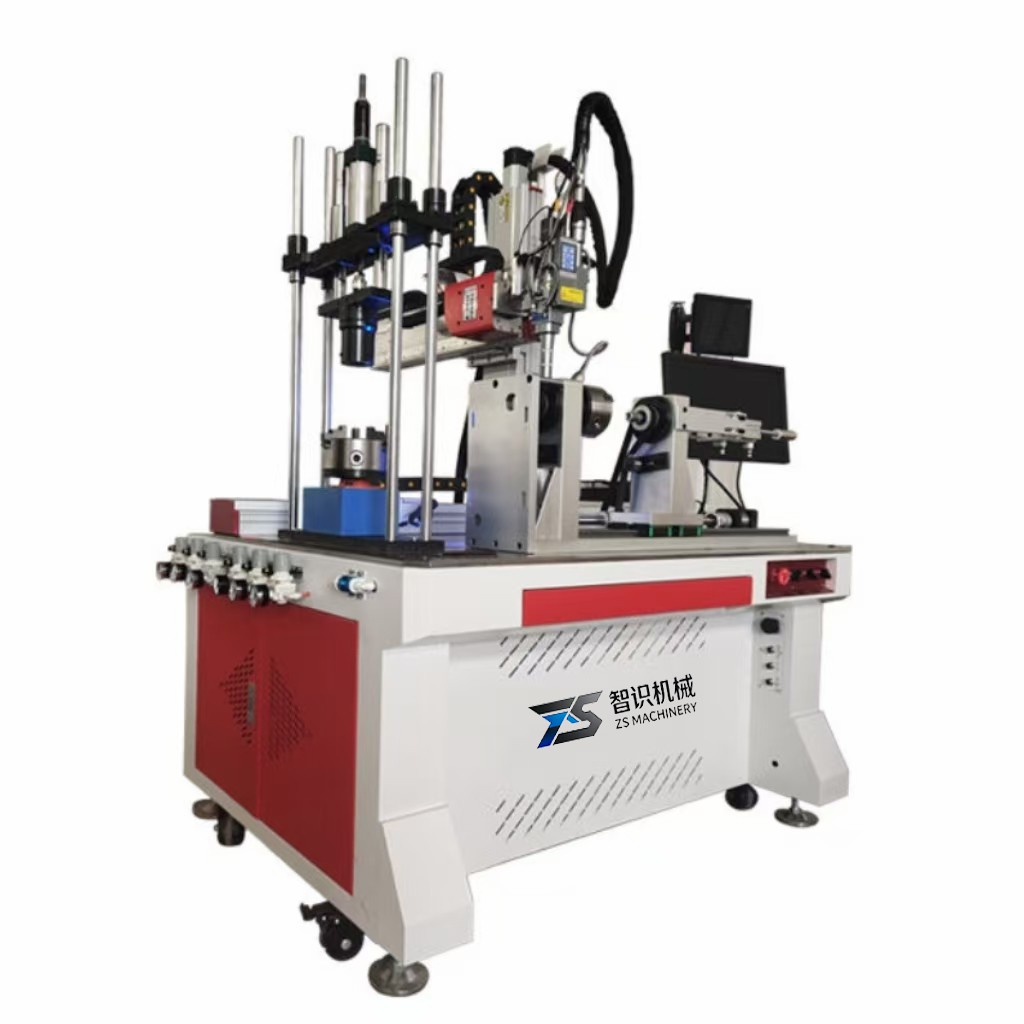
6-axis CNC laser welding machine
Robotic Laser Welding System
For large workpieces, complex assemblies, or production lines requiring flexible automation, a robotic laser welding system may be more appropriate.
A six-axis industrial robot can move the welding head around the workpiece. A positioner, rotary table, customized fixture, vision system, or automatic handling equipment can be added according to the application.
Potential applications include:
- Large HVAC equipment housings
- Chiller and refrigeration cabinet structures
- Large metal frames
- Complex heat exchanger structures
- Repetitive welding of larger metal assemblies
- Automated production of customized components
Robotic systems are especially worth evaluating when the product is too large for a fixed CNC working platform or requires welding from multiple directions.
CNC Laser Plastic Welding Machine
Plastic laser welding uses a different joining process from metal laser welding. The machine must be configured for the polymer materials, optical characteristics, joint design, and required clamping method.
A CNC plastic laser welding system may be suitable for compatible plastic sensor housings, control enclosures, molded covers, and other functional components.
Depending on the product, the system can incorporate dedicated fixtures, an enclosed working area, programmed movement, and process monitoring. Material samples should be tested before confirming the production configuration.
Supporting Batch Production and Automation
HVAC and refrigeration manufacturers often produce repeated component designs in batches. Once the welding fixture, program, and process parameters have been validated, CNC or robotic welding can help repeat the same joining sequence across successive workpieces.
A typical production workflow may include:
Component Preparation → Fixture Loading → Workpiece Positioning → Programmed Welding → Inspection and Leak Testing → Unloading
Depending on production requirements, additional equipment may include:
- Customized workholding fixtures
- Rotary or tilting positioners
- Automatic loading and unloading
- Vision-based positioning
- Welding seam tracking
- Process monitoring
- Automated inspection and data recording
Not every application requires a fully automated production line. For smaller batches or frequently changing product designs, a flexible CNC machine with a suitable fixture may be more practical. For high-volume production, a dedicated automated cell may provide better cycle-time consistency.
How to Choose a CNC Laser Welding Machine for HVAC and Refrigeration
Selecting the right system starts with the actual component rather than the industry name alone.
Material and Component Structure
Confirm whether the workpiece is stainless steel, carbon steel, galvanized steel, aluminum, copper alloy, or thermoplastic.
For plastic components, identify the exact polymer grade and whether the two joining parts have suitable optical properties. For metal components, assess the material combination, thickness, joint fit-up, and access to the welding seam.
Welding Joint and Sealing Requirements
Determine whether the joint is a butt joint, lap joint, corner joint, circumferential seam, or another configuration.
For components that carry refrigerant or fluid, the required leak-tight performance is a critical design input. The welding process must be validated with appropriate testing; a visually sound seam alone does not establish pressure integrity.
Workpiece Size and Welding Angles
Small housings may be suitable for a CNC platform, while larger equipment structures may require a robotic system.
If the component has multiple welding orientations, evaluate the required axis configuration and fixture movement before choosing a machine.
Production Volume
For small batches and customized products, a flexible CNC system can provide programmable movement without requiring a dedicated production line.
For repeated high-volume products, fixtures, automatic handling, process monitoring, and dedicated welding stations can be considered to improve repeatability and production flow.
Sample Testing and Process Validation
Before finalizing a machine configuration, provide product drawings, material specifications, wall thickness, joint details, sealing requirements, and expected production volume.
Sample welding can help determine whether laser welding is suitable and establish the necessary process parameters, fixtures, and inspection procedures.
CNC Laser Welding Solutions from ZS Machinery
ZS Machinery provides CNC laser welding and robotic laser welding solutions for suitable metal components, as well as CNC laser plastic welding systems for compatible thermoplastic assemblies.
Depending on the product, the available solution may include:
- 4 Axis CNC Laser Welding Machine
- 5 Axis CNC Laser Welding Machine
- 6 Axis CNC Laser Welding Machine
- Robotic Laser Welding System
- CNC Laser Plastic Welding Machine
- Customized Welding Fixtures and Positioners
- Automated Welding Cells
The final machine configuration depends on the component dimensions, material, joint geometry, welding angles, sealing requirements, and production volume. Not every application listed in this article is suitable for every machine, and some HVAC components may be better manufactured using brazing, tube expansion, resistance welding, or another established process.
Conclusion
CNC laser welding has potential applications across the HVAC and refrigeration industry, particularly in selected heat exchanger components, compressor housings, metal tube assemblies, sheet metal structures, and compatible plastic housings.
For metal components, the choice may range from 4-axis and 5-axis CNC systems to 6-axis CNC machines and robotic welding cells. For suitable thermoplastic components, CNC laser plastic welding offers another option for controlled and repeatable assembly.
The key is to select the process according to the actual product, material, joint design, and required performance rather than assuming that one welding method fits every HVAC application.
Contact ZS Machinery
Looking for a laser welding solution for an HVAC or refrigeration component?
Send ZS Machinery your product drawings, material and thickness details, joint requirements, component dimensions, and production volume. We can help evaluate whether CNC metal laser welding, robotic laser welding, or CNC laser plastic welding is suitable for your application.