- Product Details
One Fixture, Multiple Welding Applications
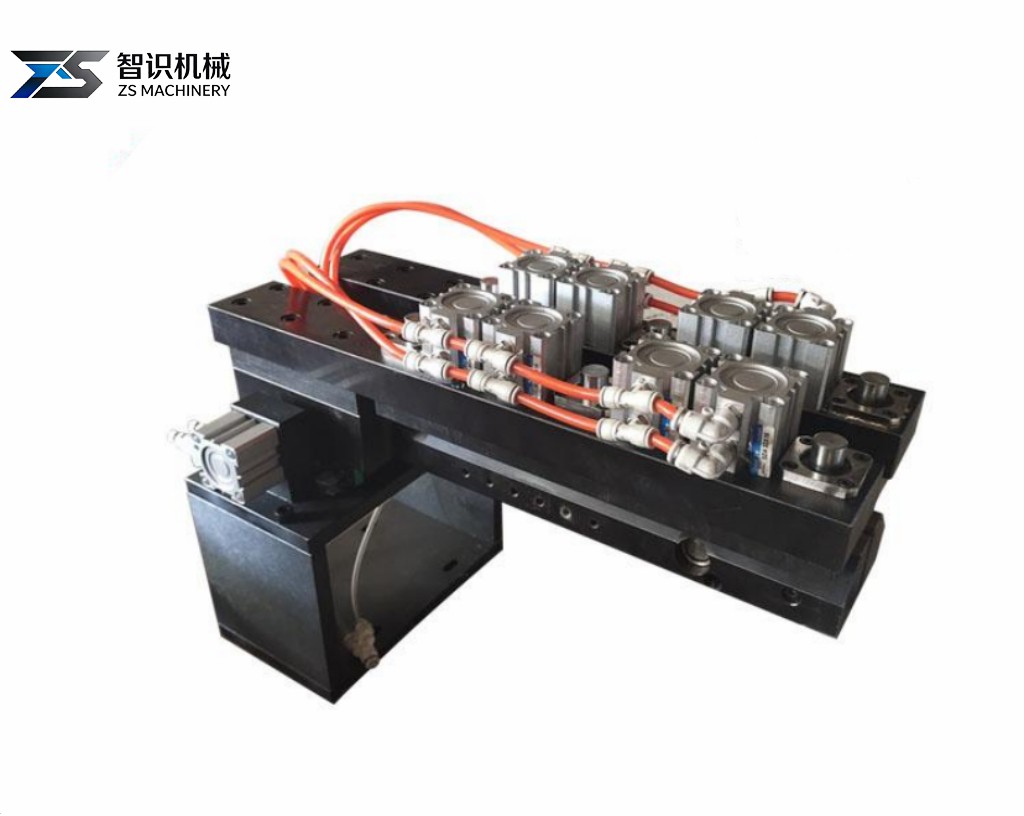
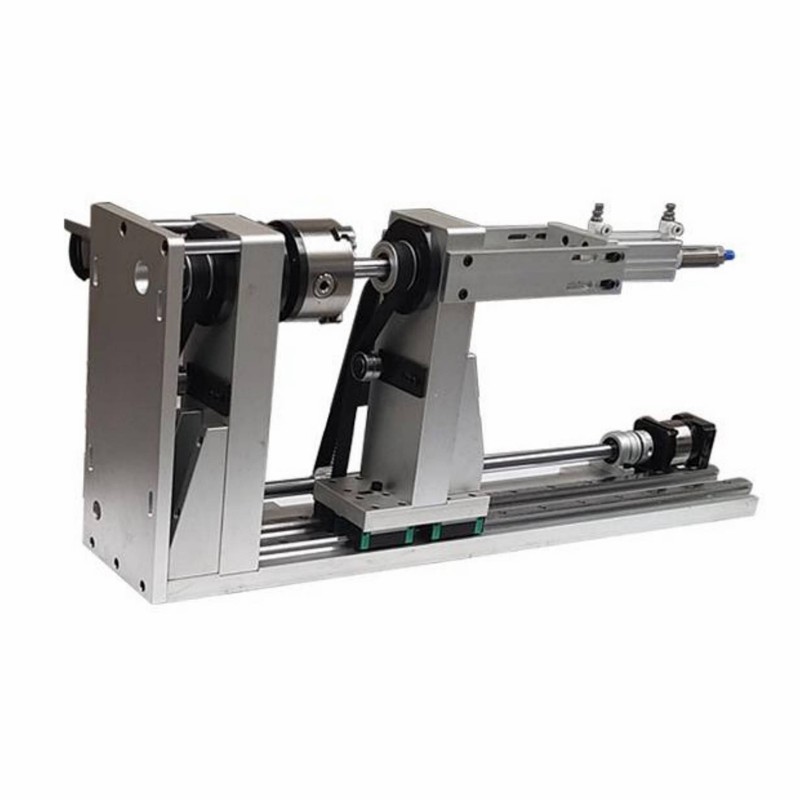
The Multifunctional CNC Laser Welding Fixture from ZS Machinery is designed for CNC laser welding applications that require flexible workpiece positioning, rotation, and synchronized linear movement. By combining multiple functions in one mechanical assembly, this fixture provides a versatile solution for manufacturers who need to weld different types of metal components in batch production.
Unlike a conventional rotary-axis fixture designed primarily for rotating workpieces around a fixed axis, this multifunctional design supports both horizontal and vertical installation. In the horizontal configuration, the workpiece can rotate while moving along a linear direction. When installed vertically, the unit can function as a rotary-axis fixture for suitable rotational welding applications.
This flexibility allows manufacturers to adapt one fixture to different workpiece geometries and welding requirements, potentially reducing the need to purchase separate fixtures for individual applications.
Equipped with a planetary gearbox and an optional servo motor, the fixture can be integrated into a suitable CNC laser welding platform for programmed welding operations. With an effective diameter of 360 mm and two center-distance options of 230 mm and 280 mm, it is designed for manufacturers seeking a more flexible approach to automated laser welding.
Multifunctional welding fixture
Key Features of the Multifunctional Welding Fixture
1. Multiple Functions in One Fixture
The fixture integrates workpiece rotation, synchronized linear sliding in the horizontal configuration, and vertical installation. These features provide more flexibility than a conventional rotary-axis arrangement with a single installation configuration.
Depending on the workpiece and welding path, manufacturers can select the appropriate mounting orientation and use the fixture to support different production tasks.
2. Synchronized Sliding and Rotation
When installed horizontally, the fixture supports coordinated linear sliding and rotary movement. This combination is useful for applications where the workpiece must change both its axial position and angular position during welding.
For example, certain curved metal components, cylindrical parts, and products with multiple circumferential welding positions may benefit from this combined movement.
The actual motion sequence depends on the CNC system configuration, the programmed welding path, and the fixture’s mechanical setup.
3. Vertical Installation for Rotary-Axis Welding
The fixture can also be installed vertically and used as a rotary-axis fixture on a CNC laser welding platform.
This configuration is suitable for workpieces that need to rotate around a vertical axis during welding, including suitable circular components, ring-shaped parts, and other rotationally symmetric products.
Instead of limiting the fixture to one mounting orientation, the design allows manufacturers to select a configuration according to their workpiece geometry and welding requirements.
4. Planetary Gearbox with Optional Servo Motor
The fixture uses a planetary gearbox as part of its drive configuration. A servo motor can be selected as an option according to the required control and integration requirements.
For CNC laser welding applications, the drive configuration should be matched to the required rotation speed, positioning performance, workpiece inertia, and motion-control system.
The final motor and control configuration can be determined according to the application and the requirements of the CNC laser welding machine.
5. Designed for Batch Production
For manufacturers welding the same or similar products repeatedly, fixture flexibility can help reduce setup changes when moving between compatible applications.
After the workpiece has been properly positioned and the welding program established, the CNC laser welding system can execute the programmed motion sequence repeatedly.
This approach can reduce repetitive manual positioning and help manufacturers establish a more consistent welding process across production batches.
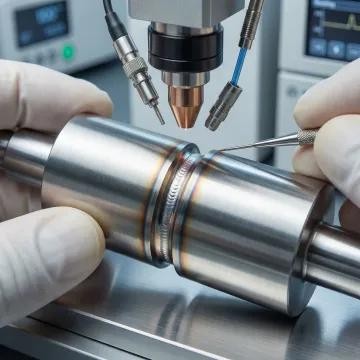
Horizontal placement of welding workpiece
How Does the Multifunctional Welding Fixture Work?
The fixture supports different operating configurations according to the required welding operation.
Horizontal Configuration: Sliding and Rotation
In the horizontal configuration, the fixture supports synchronized linear sliding and rotation.
This arrangement is suitable for selected workpieces that require a combination of linear and rotary movement. Depending on the product design, the motion can help position circumferential welds, curved seams, or multiple welding locations within the working range of the laser welding head.
Typical applications include cylindrical components, curved metal parts, tubular assemblies, and selected products with multiple welding positions.
Vertical Configuration: Rotary-Axis Welding
When installed vertically, the fixture can function as a rotary axis for CNC laser welding.
The workpiece is secured using an appropriate clamping arrangement and rotated according to the programmed welding sequence. The laser welding head and the CNC platform must be configured to provide the required access to the joint.
This setup is particularly useful for suitable ring-shaped components, circular covers, flanges, and other parts requiring circumferential welding.
The fixture’s suitability depends on the workpiece dimensions, clamping method, load characteristics, and accessibility of the welding joint.
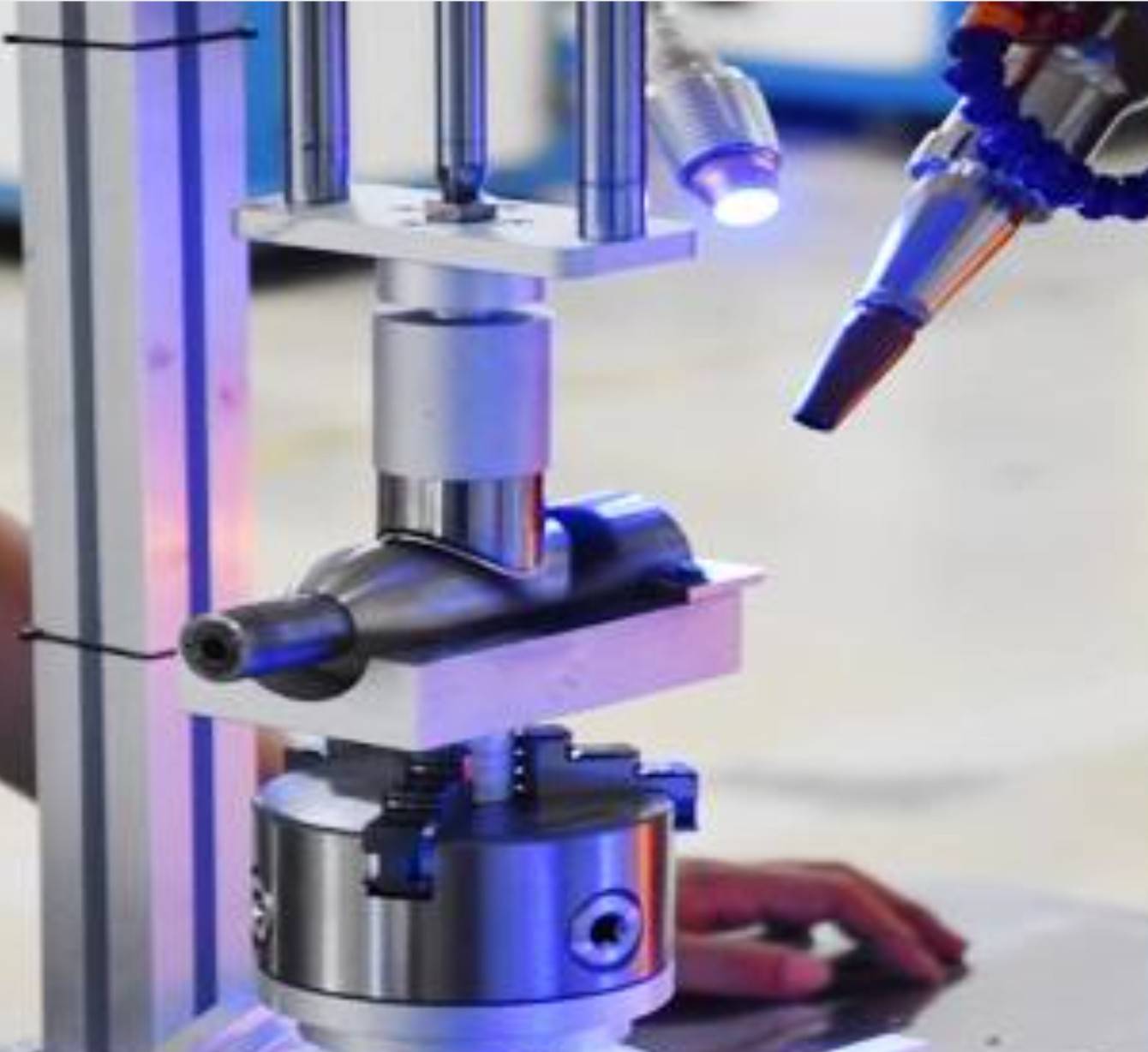
Vertical placement of welding workpieces
Applications of the Multifunctional CNC Laser Welding Fixture
The fixture is intended for a range of CNC laser welding applications where rotary movement, linear positioning, or alternative mounting orientations can improve workpiece handling.
1. Curved Metal Components
Curved metal parts may require welding along an arc-shaped edge or at different positions around a curved surface.
Potential applications include:
- Curved stainless steel components
- Arc-shaped metal brackets
- Curved structural parts
- Metal components with circular or curved seams
- Customized curved metal assemblies
For suitable parts, combining rotary movement with linear sliding can help position the workpiece along the required welding path.
Whether a specific curved component can be processed depends on its geometry, clamping requirements, and the motion range available from the complete CNC system.
2. Circular and Ring-Shaped Components
Circular and ring-shaped components frequently require circumferential welding or repeated welding at defined angular positions.
Typical examples include:
- Metal rings
- Circular connectors
- Ring-shaped structural components
- Circular housings
- Flange assemblies
- Ring-shaped reinforcement components
The rotary function allows the workpiece to move through the required welding positions while the laser welding system follows the programmed process.
For batch production, this can reduce the need for repeated manual repositioning and help maintain consistent welding conditions.
3. Pipe Fittings and Tubular Assemblies
The fixture can also be evaluated for selected pipe fittings and tubular components, including:
- Short metal tubes
- Pipe connectors and fittings
- Cylindrical metal housings
- Tube-to-ring assemblies
- Sleeve-type components
- Tubular parts with circumferential seams
Rotary movement is useful when a welding seam extends around the circumference of a component. The horizontal configuration may provide additional flexibility when the welding operation also requires linear positioning.
For long tubes or heavy cylindrical workpieces, additional supports may be necessary. Workpiece length, weight, balance, and clamping conditions must be evaluated before selecting the fixture.
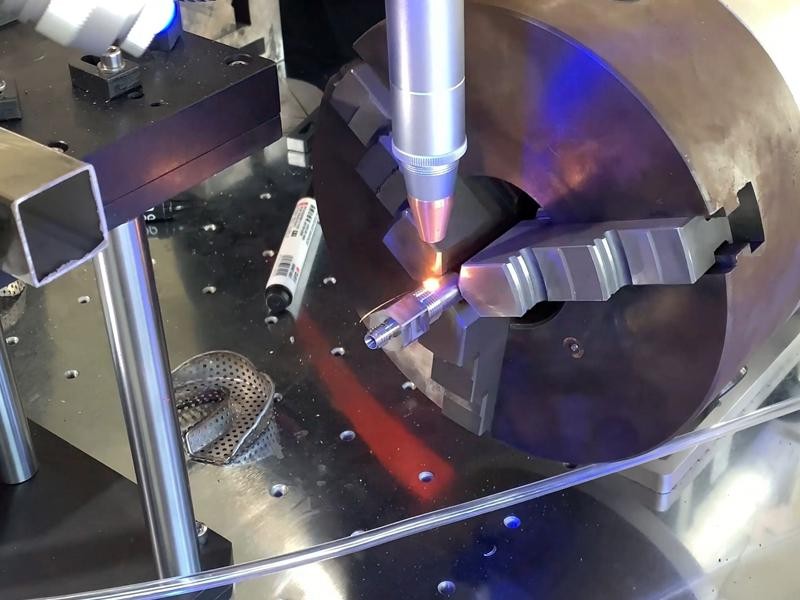
Horizontal placement of welding workpiece (2)
4. Shafts and Cylindrical Components
Suitable shaft-type and cylindrical components may require circumferential welding or welding at multiple axial positions.
Examples include:
- Shaft and sleeve assemblies
- Cylindrical metal components
- Parts with multiple circumferential seams
- Selected tube-and-shaft assemblies
- Cylindrical components with welded end connections
The combination of rotary movement and linear sliding can help position different welding locations without relying entirely on manual adjustment.
For longer shafts, however, the fixture must be evaluated together with the required support arrangement to control deflection and vibration.
5. Flanges, Housings, and Circular Covers
The vertical rotary-axis configuration may be suitable for certain circular components, such as:
- Metal flanges
- Circular end covers
- Ring-shaped connectors
- Circular housings
- Round mounting components
- Selected sealing-joint assemblies
For parts requiring continuous circumferential welding, rotation can bring the joint through the laser welding zone according to the programmed sequence.
Applications involving airtight or liquid-tight joints require additional process validation and appropriate leak testing. The fixture supports positioning and movement, but the final joint quality depends on the welding process and application requirements.
Multifunctional Welding Fixture vs. Conventional Rotary Axis
A conventional rotary-axis fixture is a practical choice for applications where the main requirement is rotating a workpiece around a fixed axis.However, manufacturers producing different types of components may need additional movement or a different mounting arrangement. Depending on the design, this may require separate fixtures or mechanical modifications.
The multifunctional fixture offers more configuration options by combining horizontal sliding and rotation with the ability to install the unit vertically.
| Feature | Conventional Rotary-Axis Fixture | Multifunctional Welding Fixture |
|---|---|---|
| Workpiece rotation | Yes, depending on configuration | Yes |
| Horizontal installation | Depends on the design | Supported |
| Synchronized linear sliding in horizontal configuration | May require an additional mechanism | Supported |
| Vertical installation | Depends on the design | Supported |
| Workpiece compatibility | Primarily determined by its rotary and clamping arrangement | Offers more installation and movement options |
| Batch production | Suitable for repeatable welding tasks | Suitable for compatible applications involving different workpiece types |
| Fixture requirements | May require separate arrangements for different products | May reduce the need for separate fixture assemblies |
The main advantage is configuration flexibility, not universal compatibility. Different workpieces may still require dedicated clamps, locating blocks, or customized tooling. The multifunctional design provides more ways to position and move workpieces, while the final fixture arrangement must still match each product.
How to Choose the Right Configuration
To determine whether this multifunctional fixture is suitable for your laser welding application, several factors should be considered.
Workpiece geometry: Determine whether the component is circular, cylindrical, curved, or irregularly shaped.
Welding seam location: Identify whether the weld is circumferential, curved, axial, or distributed across multiple positions.
Required movement: Establish whether the application needs rotation alone or a combination of rotation and linear sliding.
Workpiece dimensions and weight: Check the effective diameter, center distance, clamping space, load characteristics, and required support.
Production requirements: Consider the number of parts produced per batch, the required cycle time, and the frequency of product changeovers.
CNC compatibility: Confirm that the fixture’s mechanical configuration, drive system, and control requirements are compatible with the intended CNC laser welding platform.
Providing workpiece drawings, photographs, or samples can help determine the most appropriate configuration and whether customized clamping tooling is required.
Contact ZS Machinery for a Suitable Welding Fixture
ZS Machinery provides CNC laser welding machines and customized welding automation solutions for manufacturers seeking more flexible and repeatable production processes.
Our multifunctional welding fixture is designed for applications that benefit from rotary movement, synchronized linear sliding, and alternative mounting configurations. It can help manufacturers handle compatible workpieces using one adaptable fixture design instead of relying exclusively on separate rotary-axis arrangements.
If you are considering this fixture for your CNC laser welding machine, please send us your workpiece drawings, photos, dimensions, material information, and welding requirements.
Our team can evaluate the application and help determine whether the horizontal sliding-and-rotation configuration or the vertical rotary-axis configuration is more suitable for your production needs.
Contact ZS Machinery to discuss your workpiece and find a suitable fixture configuration for your CNC laser welding application.