
CNC Laser Welding in the Automotive Industry
CNC laser welding in automotive industry has become an important joining technology for manufacturing a wide range of vehicle components. From automotive body and chassis parts to exhaust systems, heat exchangers, EV battery components, motor parts, and electronic housings, laser welding can provide precise and repeatable joining for both traditional and electric vehicles.
Depending on the application, automotive CNC laser welding systems can use a CNC positioning table, rotary axis, galvanometer scanner, and robotic arm. This makes laser welding suitable for almost everything from simple sheet-metal assemblies to large, complex three-dimensional components.As for the material,laser welding are particularly useful for various materials such as carbon steel, high-strength steel, stainless steel, aluminum, copper, and compatible engineering plastics.
In this guide, we will look at the applications, components, materials, benefits, and equipment options for CNC laser welding in the automotive industry, including both conventional automotive manufacturing and emerging EV applications.
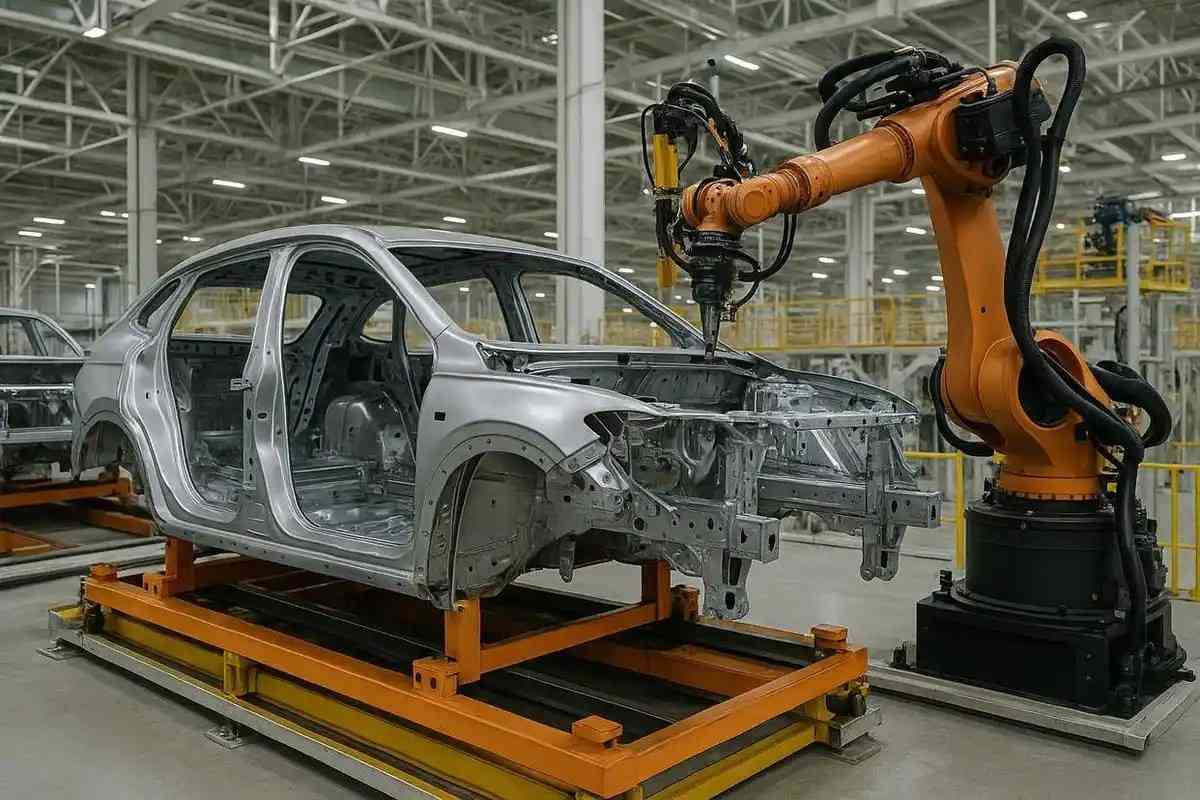
Robot laser welding for automotive Body-in-White
What Does CNC Laser Welding Mean in Automotive Manufacturing?
CNC laser welding refers to an automated laser welding process in which the movement of the laser beam, welding head, workpiece, or robotic system is controlled according to a programmed path.In automotive manufacturing, this can take several forms.
1.A relatively simple component may be welded on a 3-axis or 4-axis CNC laser welding machine, where the welding head moves along programmed X, Y, and Z coordinates and a rotary axis positions cylindrical or circular workpieces.
2.For larger or more complicated components, a robot laser welding system can provide a much larger working area and flexible access to different welding positions.
3.For high-volume production, the laser may also be integrated with a galvanometer scanner, remote welding head, automatic fixture, vision system, seam tracking system, rotary positioner, conveyor, or other production-line equipment.
Therefore, “CNC laser welding” should not be understood as one specific machine structure. It is better understood as a category of controlled and automated laser welding systems.The appropriate system depends on the geometry, size, material, joint design, production volume, and required welding accuracy of the automotive component.
Why Is Laser Welding Popular in Automotive Manufacturing?
Automotive manufacturing combines several challenging requirements that make laser welding attractive.
High Welding Speed
Automotive production often involves large numbers of components and repeated welds. A laser beam can move rapidly along programmed weld paths, and remote laser welding systems can position the beam quickly over multiple weld locations.
For high-volume applications, this can reduce nonproductive movement between welds and increase laser utilization. Remote and on-the-fly welding technologies are particularly suited to applications such as body-in-white and other high-throughput automotive components.
Low and Concentrated Heat Input
Laser welding concentrates energy into a relatively small area. This can reduce the size of the heat-affected region and minimize thermal distortion compared with processes that introduce more heat into the surrounding material.It is especially useful for automotive sheet metal and components requiring tight dimensional control.
The advantage becomes increasingly important as manufacturers use high-strength steels and lightweight aluminum alloys. These materials can be more sensitive to distortion and process conditions than conventional mild steel.
Narrow and Precise Welds
A focused laser beam can create narrow weld seams and can be accurately positioned using CNC motion, robotic positioning, or scanner optics.This allows manufacturers to place welds where conventional welding access may be difficult and can help maintain compact component designs.
High Repeatability
Once the welding parameters and motion program have been properly developed, an automated laser welding system can repeatedly follow the same welding path.This is particularly important for automotive components produced in large quantities, where consistency between parts is critical.
Reduced Post-Weld Distortion
Because the laser can concentrate energy into the joint, the surrounding material can experience less thermal exposure.For body panels, brackets, housings, battery components, and precision assemblies, controlling distortion can simplify downstream assembly and help maintain dimensional tolerances.
Easy Integration With Automation
Laser welding is well suited to automated production.A complete automotive laser welding cell can combine:
- Laser source
- Welding head
- CNC motion system
- 6-axis robot
- Rotary positioner
- Automatic fixture
- Wire feeder
- Vision system
- Seam tracking
- Weld monitoring
- Part detection
- Safety enclosure
- PLC and production-line communication
This makes laser welding suitable for both dedicated production machines and flexible robotic manufacturing cells.
Automotive Components Suitable for CNC Laser Welding
CNC laser welding can be applied to a surprisingly broad range of automotive components.The following applications represent some of the major areas where automated laser welding is relevant.
1. Automotive Body-in-White
Body-in-white (BIW) is the structural body assembly before painting and before many interior, glass, and trim components are installed. This is one of the most established automotive applications for laser welding.CNC Laser welding can be used for different sheet-metal joints and structural components, including:
- Body panels
- Door structures
- Door rings
- Roof components
- Side structures
- Pillars
- Cross members
- Floor components
- Body substructures
- Reinforcement components
- Tailgate components
- Trunk structures
- Structural brackets
For large welding areas, Robot Laser Welding is generally used on the production line. For smaller batches of parts, platform-type CNC laser welding is more suitable. For suppliers of these parts, laser welding can significantly improve production efficiency.
2. Automotive Doors, Hoods and Trunk Components
Doors, hoods, trunk lids, tailgates, and related structural assemblies contain multiple sheet-metal components that must be accurately joined.Typical applications include:
- Car door frames
- Door inner panels
- Door reinforcements
- Door rings
- Hood structures
- Hood reinforcements
- Trunk lids
- Tailgate structures
- Roof components
- Rain channels
- Inner and outer panel assemblies
Laser welding is particularly useful when the component requires a controlled weld seam and limited thermal deformation.
3. Automotive Chassis and Structural Components
Laser welding can also be used for selected chassis and structural components where controlled heat input and dimensional accuracy are important.Potential applications include:
- Chassis brackets
- Cross members
- Structural reinforcements
- Suspension components
- Subframe components
- Mounting brackets
- Structural housings
- Reinforcement plates
- Seat mounting structures
- Battery support structures
These components can be manufactured from carbon steel, high-strength steel, stainless steel, aluminum alloys, or combinations of materials.The appropriate laser welding process depends heavily on material grade, thickness, joint geometry, accessibility, and required mechanical properties.
For structural automotive parts, process development is particularly important because the weld must satisfy the mechanical requirements of the finished component rather than simply producing a visually acceptable seam.
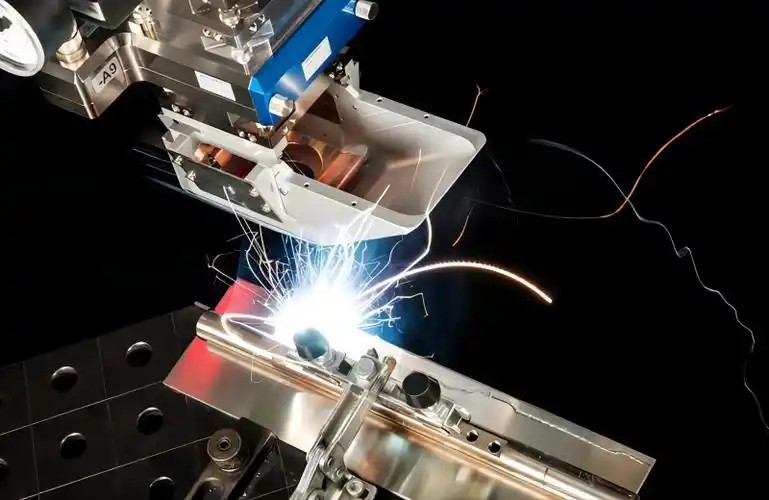
CNC Laser Wedling Car patrs
4. Automotive Seat Frames
Automotive seat frames contain numerous metal components that need to be assembled accurately and repeatedly.Examples include:
- Seat frames
- Seat rails
- Seat brackets
- Seat supports
- Reinforcement components
- Structural tubes
- Mounting brackets
Laser welding can provide narrow welds with controlled heat input, which is useful for components where excessive thermal deformation could affect assembly accuracy.Automated laser welding systems can also be integrated with fixtures and robotic handling to process multiple weld locations.
5. Automotive Exhaust Systems
Exhaust components are another practical application for automated laser welding.Typical components include:
- Exhaust pipes
- Exhaust tubes
- Mufflers
- Exhaust resonators
- Catalytic converter components
- Exhaust brackets
- Heat shields
- Exhaust housings
Many exhaust components are made from stainless steel or other heat-resistant alloys.Laser welding can be used for tube-to-component and sheet-metal joints where controlled penetration and a relatively narrow heat-affected zone are desirable.
6. Automotive Heat Exchangers and Thermal Management Components
Modern vehicles contain numerous thermal-management components.These include:
- Radiators
- Condensers
- Evaporators
- Heat exchangers
- Cooling plates
- Cooling channels
- Refrigerant components
- Battery cooling plates
- Cooling pipes
- Thermal management housings
Laser welding can be attractive for heat exchanger manufacturing because many components contain thin metal sections and require controlled, continuous joints.
For electric vehicles, thermal management becomes even more important because the battery, electric motor, inverter, and other electronic systems all require controlled operating temperatures.Laser welding is used in battery cooling systems and related components, including cooling plates, pipes, and other thermal-management structures.
7. EV Battery Trays and Battery Enclosures
The growth of electric vehicles has significantly expanded the role of laser welding in automotive manufacturing.The battery pack is not simply a collection of battery cells. It contains structural components, electrical connections, cooling systems, covers, sealing interfaces, and protective structures.Important laser welding applications include:
- Battery trays
- Battery enclosures
- Battery pack housings
- Battery covers
- Battery frames
- Module housings
- Cooling plates
- Cooling channels
- Internal structural components
- Battery protection structures
For example, a battery tray may be manufactured from formed aluminum or other sheet-metal components and welded into a sealed structural enclosure.Laser welding can help achieve strong and controlled seams while limiting thermal deformation.
8. Battery Cells, Busbars and Electrical Connections
Laser welding is also used at the electrical connection level of EV batteries.Typical applications include:
- Battery busbars
- Battery terminals
- Cell connectors
- Tabs
- Current collectors
- Power connections
- Soft connectors
- Copper connections
- Aluminum connections
- Copper-to-aluminum connections
Since most electric vehicle batteries today are lithium-ion batteries, which are highly heat-sensitive and have small weld joints, galvanometer-type lithium-ion battery welding machines are generally used for welding these products because they offer better thermal control than ordinary laser welding machines.
9. Electric Motor Components
Laser welding is also relevant to electric motor manufacturing.Potential applications include:
- Motor housings
- Stator components
- Rotor components
- Hairpin conductors
- Copper strands
- Busbars
- Shunts
- Cable connectors
- Electrical terminals
A single vehicle can contain both large structural laser welds and highly precise electrical welds.The machine architecture for these applications can therefore be very different.A large robotic welding cell may be suitable for motor housings or structural assemblies, while precision scanner-based systems may be more appropriate for electrical connections.
10. Automotive Powertrain Components
Laser welding is also used for selected powertrain components.Examples include:
- Gears
- Transmission components
- Shafts
- Housings
- Drive components
- Powertrain brackets
- Rotating components
Powertrain welding can place particularly strict requirements on spatter and distortion.For precision components such as gears, unwanted spatter or excessive heat-affected zones can negatively affect component performance.For cylindrical components, rotary-axis CNC systems can provide a practical solution.The workpiece can be rotated while the laser head remains positioned at the appropriate welding location.
11. Automotive Brackets and Small Structural Components
Automotive manufacturing uses thousands of brackets and supporting components.Examples include:
- Mounting brackets
- Sensor brackets
- Pipe brackets
- Exhaust brackets
- Motor brackets
- Battery brackets
- Electronic module brackets
- Seat brackets
- Chassis brackets
- Reinforcement brackets
These parts are often relatively small but may be produced in large quantities.
A CNC laser welding system can provide programmable positioning and repeatable weld paths, making it suitable for dedicated fixtures and automated production.
12. Automotive Plastic Components
Laser welding in automotive manufacturing is not limited to metals.Plastics are used extensively throughout modern vehicles because they can provide low weight, corrosion resistance, electrical insulation, design flexibility, and cost advantages.Automotive plastic components can include:
- Headlight housings
- Tail light housings
- Sensor housings
- Electronic housings
- Fluid reservoirs
- Air filter housings
- Intake components
- Covers
- Interior components
- Exterior trim components
- Cooling-system components
For suitable thermoplastics, laser plastic welding can join two molded components without screws, adhesives, or traditional mechanical fastening.
Through-transmission laser welding is one important approach. One plastic component transmits the selected laser wavelength while the other absorbs it. The absorbed energy generates localized heat at the interface, allowing the materials to melt and form the weld.
This process is particularly attractive for automotive components requiring:
- Clean welds
- Minimal flash
- Low particulate generation
- Controlled deformation
- Complex weld geometries
- High repeatability
- Sealing performance
- Automated production
For example, laser polymer welding is used for automotive applications such as tail lights, while other plastic automotive components can be processed depending on the material combination and optical properties.
This type of application normally requires a dedicated plastic laser welding machine, rather than simply using the same machine configuration designed for metal welding.
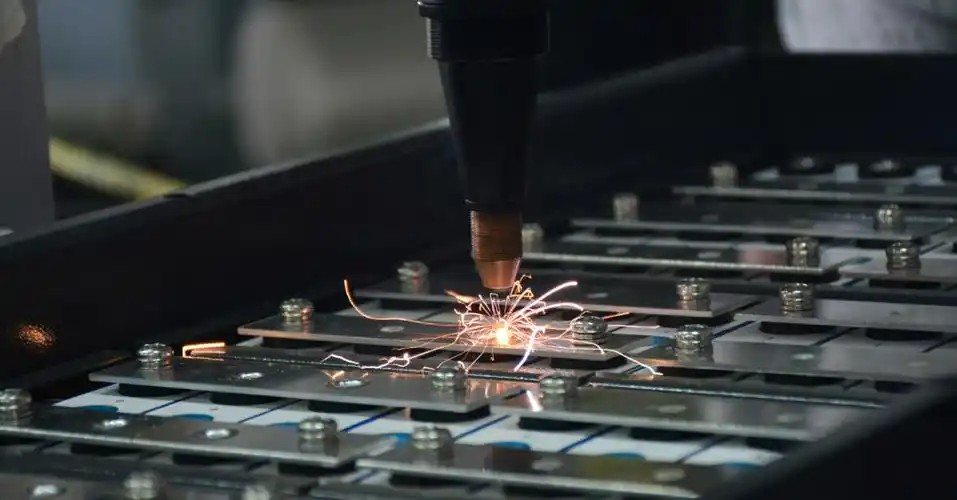
CNC laser welding of automotive power batteries
CNC Laser Welding Systems Used in Automotive Manufacturing
Automotive components vary greatly in size, shape, material, and welding requirements, so different CNC and automated laser systems can be configured for different applications.
3-Axis CNC Laser Welding Machine
A 3-axis system uses X, Y, and Z movement and is suitable for relatively simple parts, flat components, housings, brackets, and repeatable welding patterns.
4-Axis CNC Laser Welding Machine
A 4-axis system adds a rotary axis for cylindrical and circular components. It is suitable for tubes, pipes, shafts, exhaust components, flanges, and other automotive parts requiring circumferential welding.
5-Axis CNC Laser Welding Machine
A 5-axis system provides additional positioning flexibility for components with more complex geometries and multiple welding angles. It can be used when a standard 3-axis or 4-axis configuration cannot provide sufficient access to the joint.
6-Axis Robot Laser Welding Machine
A 6-axis robotic laser welding system provides a large working envelope and flexible access to complex three-dimensional components. It is suitable for larger automotive parts, complex assemblies, and automated production lines.
CNC Plastic Laser Welding Machine
Automotive manufacturing also includes many plastic components, such as headlight and tail light housings, sensor housings, and electronic enclosures. Dedicated CNC plastic laser welding machines can be configured for suitable thermoplastic components and complex welding paths.
Laser Cladding and Repair Systems
Laser processing can also be used for automotive tooling and component repair. CNC laser cladding systems can deposit material onto worn or damaged surfaces of molds, dies, shafts, and other components, providing a controlled method for dimensional restoration and surface repair.
Automated Laser Welding Cells
For high-volume automotive production, individual machines can be integrated into complete automated cells combining laser sources, robots, CNC systems, fixtures, rotary positioners, vision systems, sensors, and automatic loading and unloading.
The right system depends on the part geometry, material, thickness, welding path, production volume, and level of automation required.
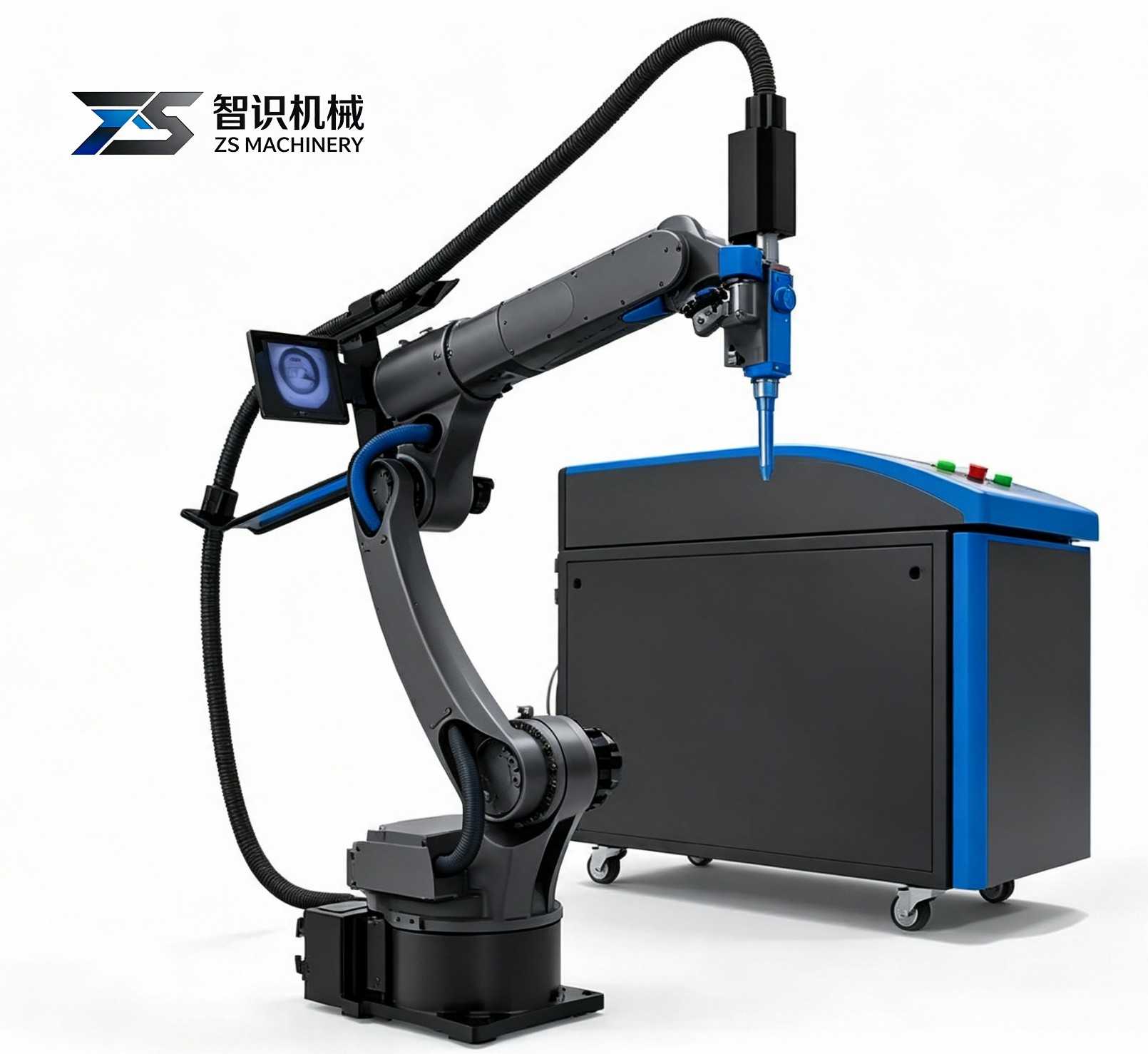
6 axis robot laser welding machine
CNC Laser Welding vs. Robotic Laser Welding in Automotive Applications
CNC platform welding and robotic welding should not be treated as competing technologies in every application.They solve different production requirements.
| Requirement | CNC Laser Welding Machine | 6-Axis Robot Laser Welding |
|---|---|---|
| Flat components | Excellent | Excellent |
| Small/medium parts | Excellent | Good |
| Cylindrical parts | Excellent with rotary axis | Excellent |
| Large components | Limited by machine size | Excellent |
| Complex 3D parts | Limited | Excellent |
| Multiple welding angles | Limited | Excellent |
| Long working range | Limited by travel | Excellent |
| Dedicated production | Excellent | Excellent |
| Flexible production | Good | Excellent |
| Fixture integration | Excellent | Excellent |
| Production-line integration | Good | Excellent |
The important point is that CNC control is not limited to a conventional XY table.
A robot is itself a computer-controlled multi-axis positioning system. In practical automotive manufacturing, the best architecture depends on the component.
Materials Used in Automotive Laser Welding
Automotive laser welding covers a wide range of materials.
Carbon and Mild Steel
Used in:
- Body structures
- Brackets
- Frames
- Exhaust components
- Seat frames
- Chassis components
High-Strength and Ultra-High-Strength Steel
Used extensively in modern lightweight vehicle structures.
Laser welding can provide controlled heat input, but the process must be developed according to the specific steel grade and joint requirements.
Stainless Steel
Common applications include:
- Exhaust components
- Tubes
- Housings
- Heat exchangers
- Brackets
- Fluid-handling components
Aluminum
Important in:
- Battery trays
- Battery housings
- Lightweight structures
- Heat exchangers
- Motor housings
- Cooling components
Aluminum welding requires careful control of process parameters and joint preparation.
Copper
Copper is particularly important in electric vehicles.
Applications include:
- Busbars
- Motor windings
- Electrical terminals
- Power electronics
- Battery connections
Copper presents specific laser-welding challenges because of its high reflectivity and thermal conductivity.
Aluminum-Copper
Aluminum-copper joints are increasingly relevant to EV battery and electrical systems.
These are more technically demanding than welding the same material to itself because of differences in material properties and the potential formation of intermetallic phases.
Process parameters, beam characteristics, joint geometry, and sometimes wavelength selection must therefore be considered carefully.
Engineering Plastics
Suitable thermoplastics can be laser welded for automotive:
- Lighting components
- Sensor housings
- Electronic housings
- Fluid components
- Interior components
- Exterior components
The plastics must be compatible with the selected laser welding process, and the material’s optical properties, additives, fillers, and joint design must be evaluated before production.
The materials mentioned above can generally be welded using laser welding with different configurations and models.Please consult us for specific model selection.
How To Choose the Right Automotive Laser Welding Machine?
There is no single automotive laser welding machine that is ideal for every component.The machine should be selected according to the actual production application.Important factors include:
Workpiece Size
A small sensor housing may require a precision laser welding station, while a vehicle chassis component may require a large robotic cell.
Material
Steel, aluminum, copper, and thermoplastics require different laser processes and parameter ranges.
Material Thickness
Thin sheet metal, battery foils, medium-thickness structural parts, and thick components require different welding strategies.
Joint Type
Common automotive joints include:
- Butt joints
- Lap joints
- Fillet joints
- Circumferential joints
- Overlap joints
- Tube-to-flange joints
- Tube-to-end-cap joints
Welding Geometry
2D welding can often be handled by CNC positioning.Complex 3D components may benefit from six-axis robotics.Cylindrical components may benefit from a rotary axis.
Production Volume
Prototype and low-volume production may use a flexible CNC system.
High-volume automotive production may justify robotics, scanner welding, automatic loading, vision, monitoring, and production-line integration.
Quality Requirements
Some components require primarily structural strength.
Others require:
- Airtightness
- Watertightness
- Electrical conductivity
- Low electrical resistance
- Low spatter
- Cosmetic appearance
- Dimensional accuracy
- Traceability
The welding system should therefore be designed around the final component requirements.
The Role of Fixtures in Automotive CNC Laser Welding
The laser source receives most of the attention, but the fixture is equally important in automated automotive welding.Laser welding generally requires accurate control of the joint position and part fit-up.A fixture can:
- Position components
- Maintain joint alignment
- Control part movement
- Apply clamping force
- Prevent deformation
- Define repeatable loading positions
- Improve production consistency
This becomes particularly important for thin sheet metal, battery trays, plastic housings, and complex assemblies.
For plastic laser welding, the fixture can be even more critical because the components must be pressed together consistently along the weld path. Suitable receptacles and clamping systems are important for reproducible polymer welding.
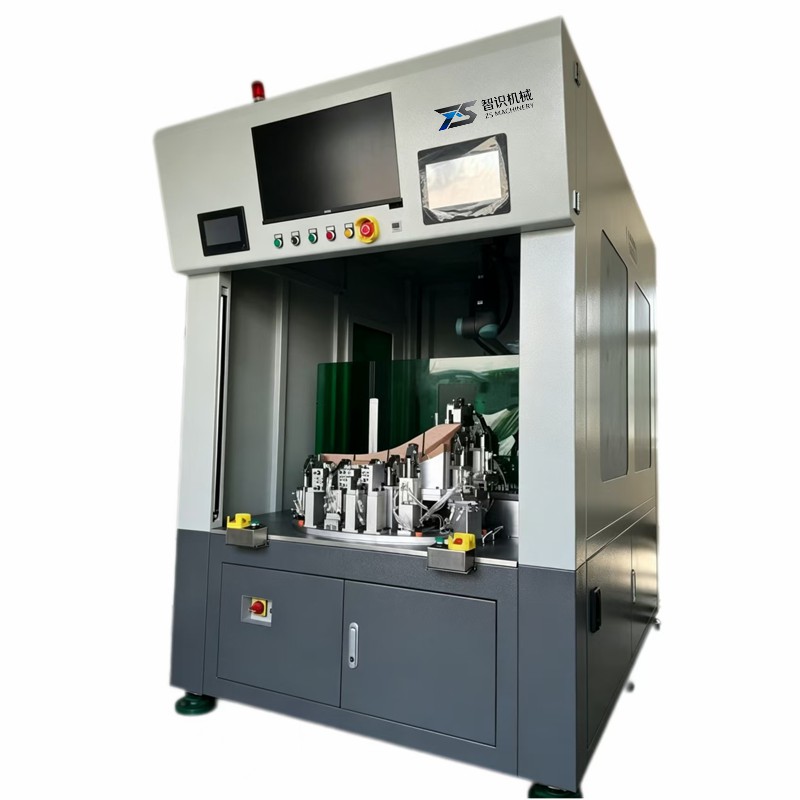
Plastic Laser Welding Machine
Vision and Weld Monitoring for Automotive Production
Automotive production increasingly requires more than simply moving the laser along a programmed path.Modern laser welding systems can integrate:
- CCD cameras
- Machine vision
- Seam tracking
- Laser position sensors
- Weld monitoring
- Temperature monitoring
- Process data collection
- Automatic parameter adjustment
These technologies can help compensate for part-position variation and improve process consistency.
For high-value components such as batteries and power electronics, process monitoring can also help identify welding problems before defective components move further through production.
The specific monitoring system should be selected according to the application and quality requirements.
The Future of CNC Laser Welding in Automotive Manufacturing
The future of automotive CNC laser welding is likely to move toward increasingly intelligent and autonomous production. As AI, machine vision, robotics, and real-time process monitoring continue to develop, laser welding systems may become capable of analyzing components, identifying welding paths, automatically adjusting process parameters, and detecting weld defects during production.
Instead of simply following a pre-programmed welding path, future CNC laser welding systems could increasingly understand the workpiece, plan the welding process, perform the weld, inspect the result, and optimize the next cycle with minimal human intervention.
In the longer term, the combination of AI and CNC robotics could lead to highly autonomous automotive welding cells that can automatically handle welding, quality inspection, process adjustment, and production data management. This could make laser welding more flexible and intelligent while reducing the need for continuous manual operation.
Conclusion
CNC laser welding provides a flexible and precise solution for a wide range of automotive manufacturing applications, from structural components and exhaust systems to EV batteries, electronic parts, and plastic components. The right system should be selected according to the material, component design, welding requirements, and production needs.
ZS Machinery provides CNC and robotic laser welding solutions for automotive manufacturers and component suppliers, including multi-axis CNC systems, rotary-axis welding, robot laser welding, plastic laser welding, and customized automated welding solutions. We can help evaluate your application and configure a suitable system based on your specific production requirements.
Welcome to contact us at any time to get your own welding solutions.