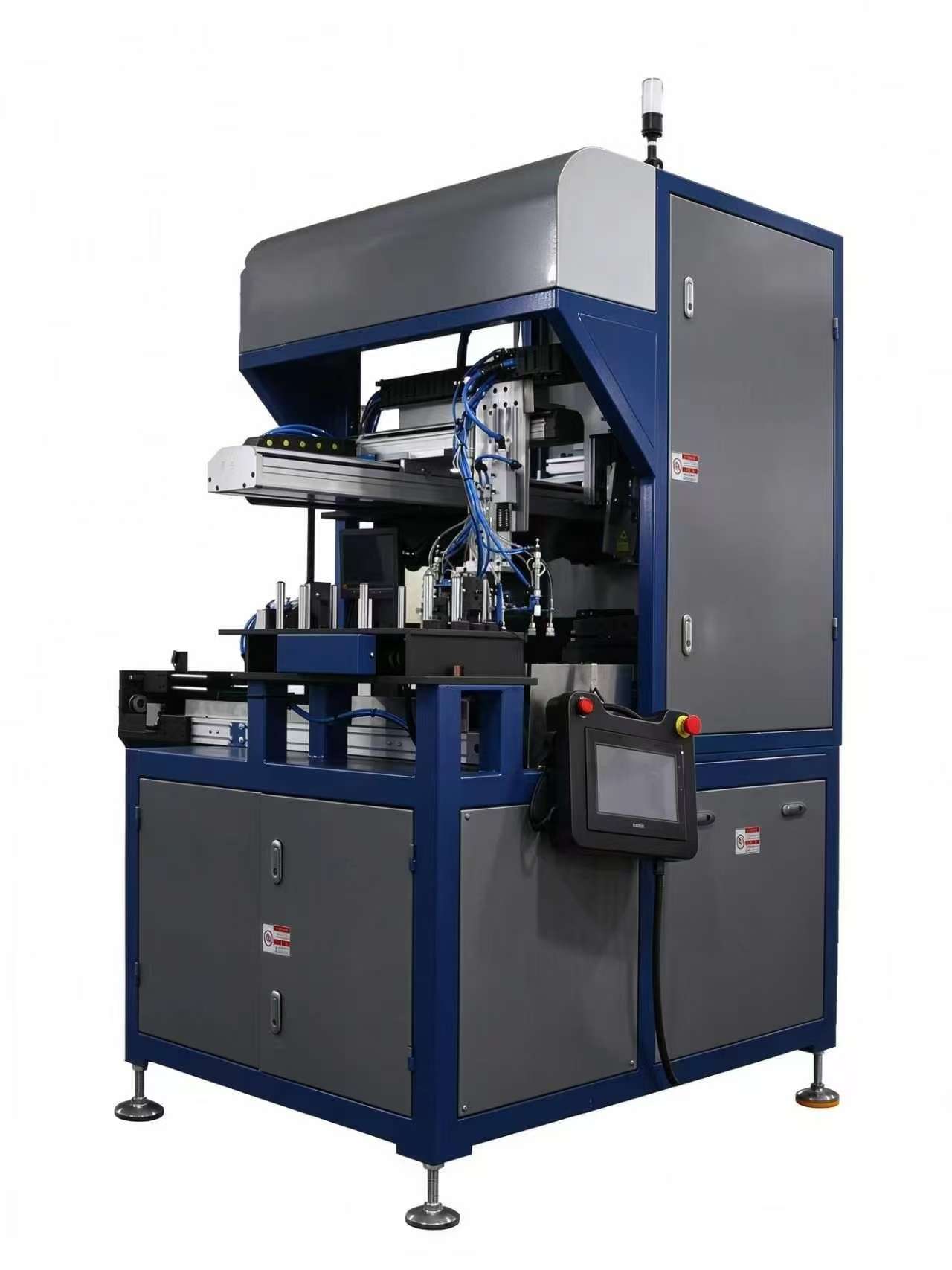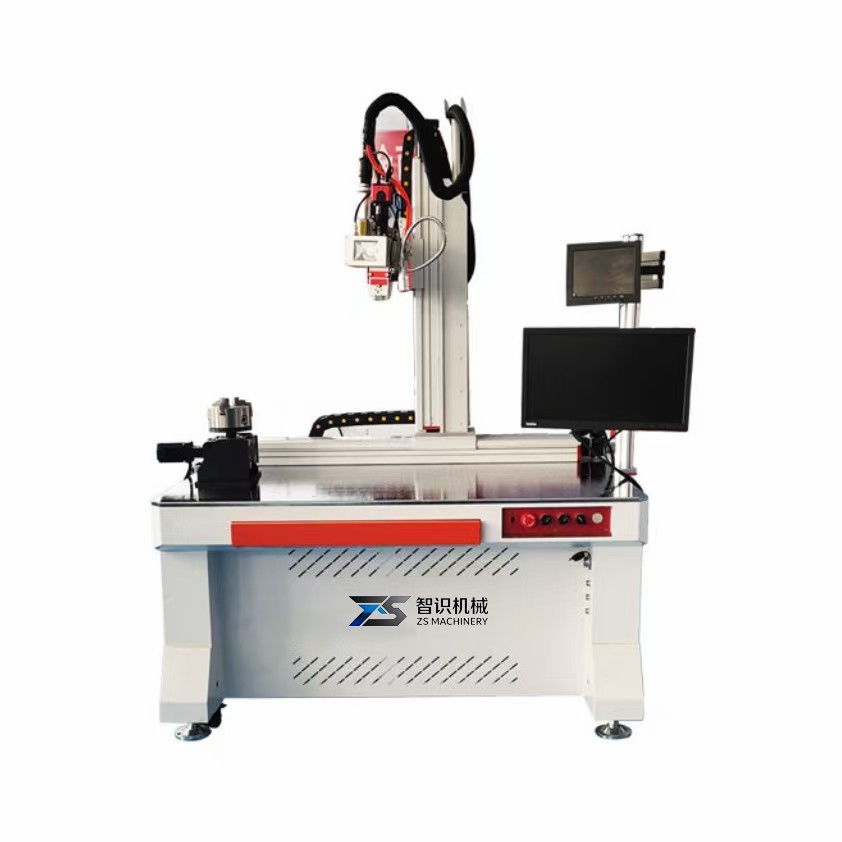
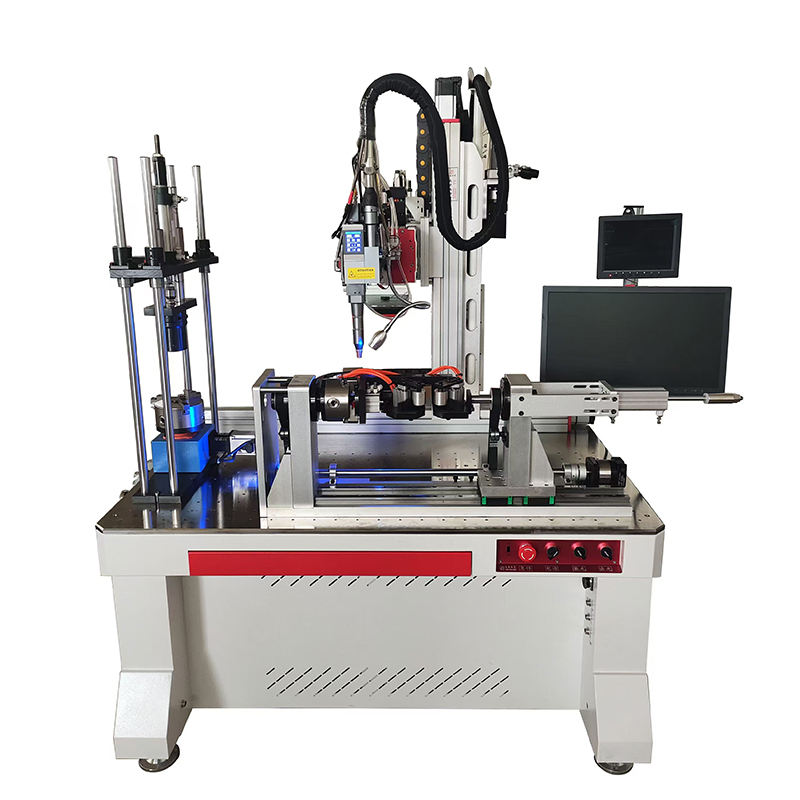
6 Axis CNC Laser Welding Machine
Specifications
| Parameter | Specification |
|---|---|
| Machine Type | 6 Axis CNC Laser Welding Machine |
| Axis Configuration | X + Y + Z + Welding Head Swing + 2 Rotary Axes |
| Linear Axes | X / Y / Z |
| Welding Head Axis | Welding Head Swing Axis |
| Rotary Axes | Horizontal Rotary Axis + Vertical Rotary Axis |
| Laser Type | Fiber Laser |
| Laser Power | 1500W / 2000W / 3000W |
| Welding Head | Laser Welding Head |
| Light Spot | Multi-Mode Adjustable Light Spot |
| Control System | Intelligent CNC Control System |
| Display | HD Touchscreen |
| Drive System | Servo Motors |
| Cooling System | Water Cooling |
| Cooling Protection | Temperature Control & Flow Protection |
| Workholding | Customized Rotary Fixtures / Chucks |
| Gas System | Shielding Gas System |
| Optical Protection | Protective Lens |
| Application | Pipes, Tubes, Flanges, Diaphragms, Instrument Housings, Fittings and Cylindrical Components |
Exact machine dimensions, axis travel, rotary specifications, fixture size and other configuration details can be customized according to the workpiece and welding requirements.
- Product Details
The 6 Axis CNC Laser Welding Machine is a multi-axis laser welding system designed for components that require not only XYZ positioning, but also welding-head orientation and multi-directional workpiece rotation.The machine combines three linear axes, one welding-head swing axis, and two rotary axes. The XYZ axes provide three-dimensional positioning, while the welding-head swing axis allows the laser welding head to adjust its orientation in both left-right and front-back directions as one controlled axis.
The two rotary axes provide additional flexibility by allowing the workpiece to rotate in two different directions. One rotary axis is arranged horizontally, while the other is arranged vertically, allowing different types of cylindrical, circular and irregular components to be positioned for welding.
This configuration is particularly suitable for the pipe, tube, instrumentation, pressure measurement and precision metal component industries, where many products contain circular welds, circumferential joints, small cylindrical parts, flanges and diaphragm structures.
6 axis cnc laser welding mahcine
What Is a 6 Axis CNC Laser Welding Machine?
A 6 Axis CNC Laser Welding Machine adds one more controlled rotary axis to the 5-axis configuration.The basic structure is:
6 Axis = X + Y + Z + Welding Head Swing Axis + Horizontal Rotary Axis + Vertical Rotary Axis
The three linear axes control the position of the welding head in the X, Y and Z directions.
The welding-head swing axis controls the orientation of the welding head. It allows the welding head to swing in both left-right and front-back directions as part of one controlled CNC axis.
The two rotary axes provide additional workpiece rotation. Depending on the machine configuration, one rotary axis can rotate the workpiece horizontally while the other provides vertical-axis rotation.
This gives the machine a much wider range of motion than a conventional 3-axis CNC welding machine.
Why Add Two Rotary Axes?
A single rotary axis is useful for many cylindrical products, but some components have more complex geometries or require welding from different directions.With two rotary axes, the workpiece can be repositioned and rotated in multiple directions without requiring the operator to manually reposition it.This is particularly useful for:
- Pipe fittings
- Flanges
- Diaphragms
- Instrument housings
- Pressure transmitter components
- Cylindrical fittings
- Tube assemblies
- Round connectors
- Small pressure components
- Valve components
- Circular covers
- Cylindrical metal housings
- Precision machined parts
For small components with several circular or angled welding seams, multi-axis positioning can significantly simplify the welding process.
How Does the 6 Axis CNC Laser Welding Machine Work?
The machine coordinates all six controlled axes according to the programmed welding process.
1. Load and Fixture the Workpiece
The workpiece is positioned in one of the fixture.For pipe fittings, flanges, diaphragms and cylindrical components, the fixture can be designed according to the actual product geometry.
2. Set the Welding Program
The operator programs the welding path, laser power, welding speed, shielding gas and axis movements according to the application.The CNC system controls the movement of the XYZ axes, welding-head swing axis and two rotary axes.
3. Position the Welding Head
The XYZ axes move the welding head to the required welding position.The welding-head swing axis can then adjust the orientation of the laser welding head in both left-right and front-back directions.This allows the laser to approach difficult seams from a more suitable angle.
4. Rotate the Workpiece
The two rotary axes can rotate the workpiece in different directions.Instead of manually turning or repositioning the component, the CNC system can continuously coordinate the rotary movement with the welding path.
5. Complete the Welding Cycle
The laser, welding head, linear axes and rotary axes operate according to the programmed sequence.After the welding cycle is completed, the machine returns to the programmed position and the finished component can be removed.
The basic production cycle is:
Loading → Positioning → Programming → Multi-Axis Welding → Inspection → Unloading → Next Cycle
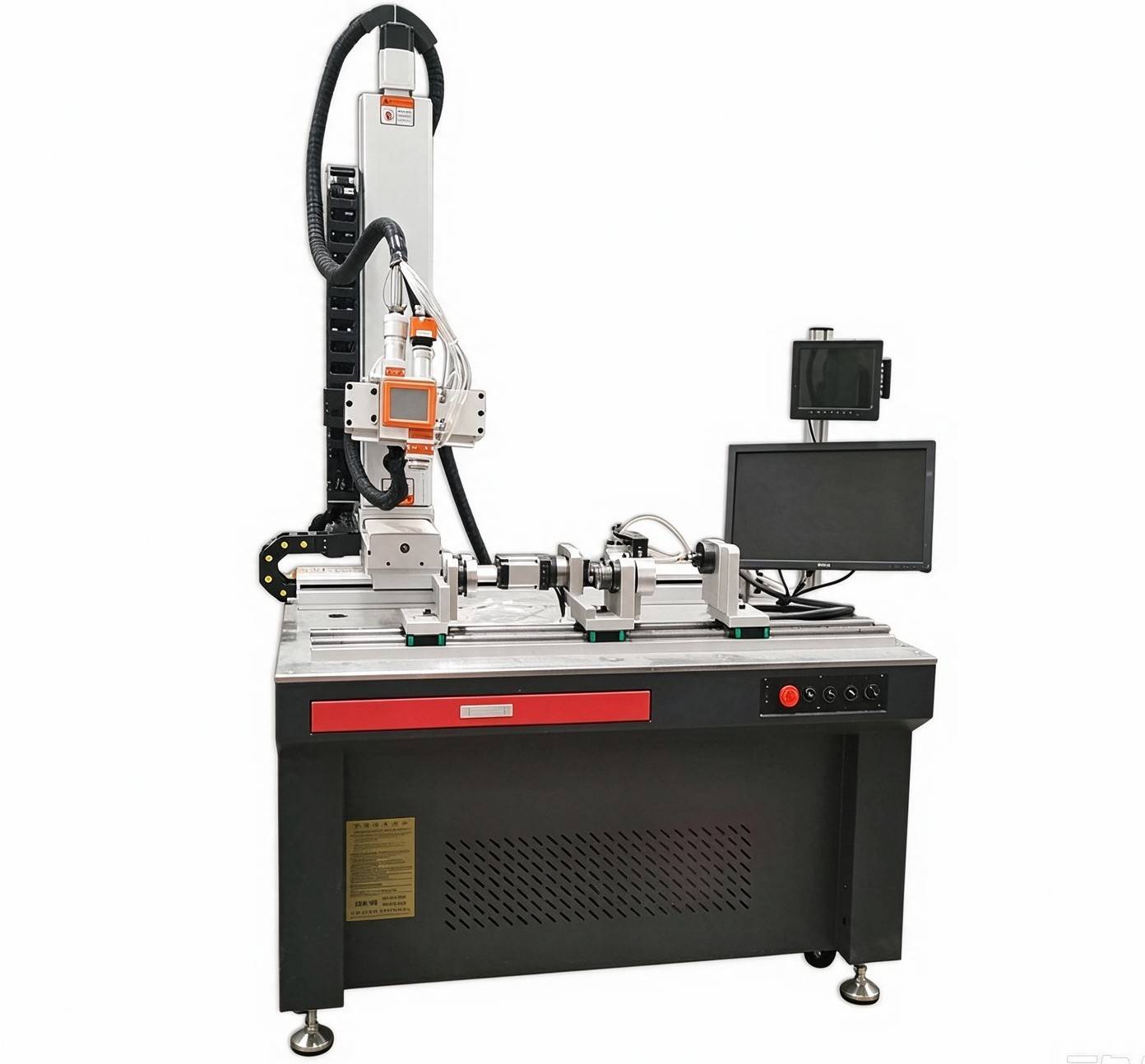
Horizontal And Vertical Axis
Horizontal Rotary Axis
The horizontal rotary axis is designed for workpieces that are mounted horizontally along the machine. Cylindrical or tubular components can be placed between the fixtures and rotated around their center axis during welding. This configuration is particularly suitable for pipes, tubes, cylindrical housings, shafts, sleeves, pipe fittings and other round components that require circumferential or continuous welding. By rotating the workpiece while the laser welding head follows the programmed path, the machine can maintain a consistent welding position around the entire circumference.
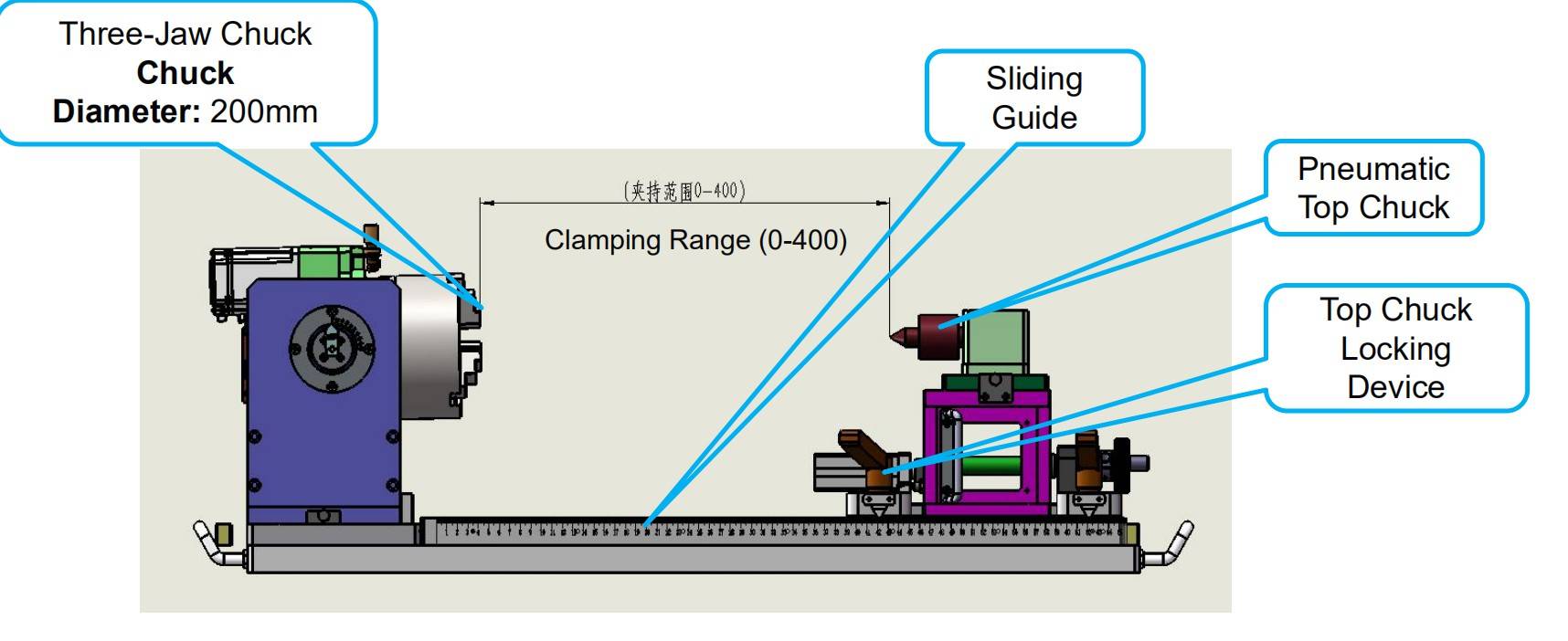
Horizontal Rotary Axis
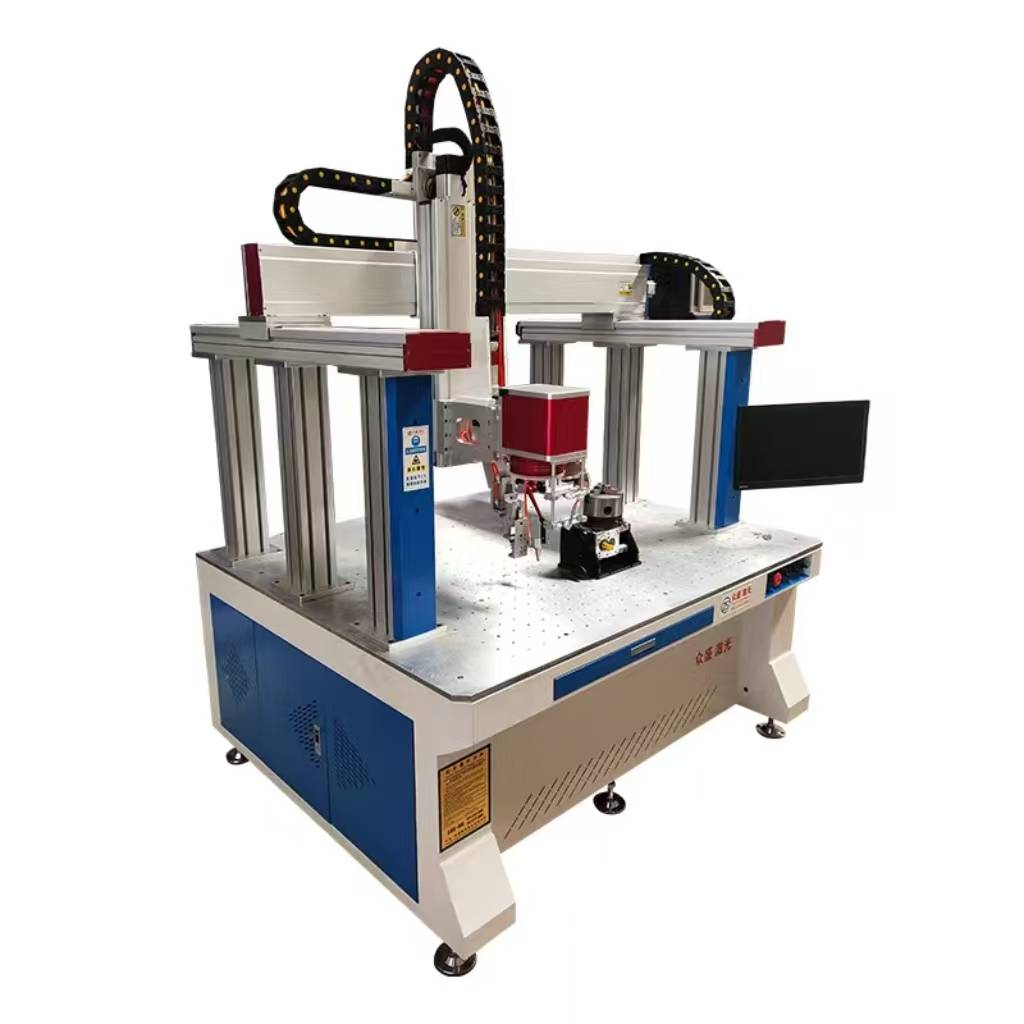
Vertical Rotary Axis
The vertical rotary axis is designed for workpieces that are placed flat on a rotary table. The rotation axis is vertical, allowing the workpiece to rotate around its center while remaining horizontally positioned. This configuration is especially suitable for flanges, diaphragms, circular plates, round covers, instrument components and other disc-shaped or ring-shaped parts. For example, a flange or metal diaphragm can be placed flat on the rotary table, and the rotary axis rotates the component while the laser welding head performs the programmed welding operation.
In simple terms, the horizontal rotary axis is mainly for horizontally mounted cylindrical or tubular parts, while the vertical rotary axis is mainly for flat, circular parts such as flanges and diaphragms.
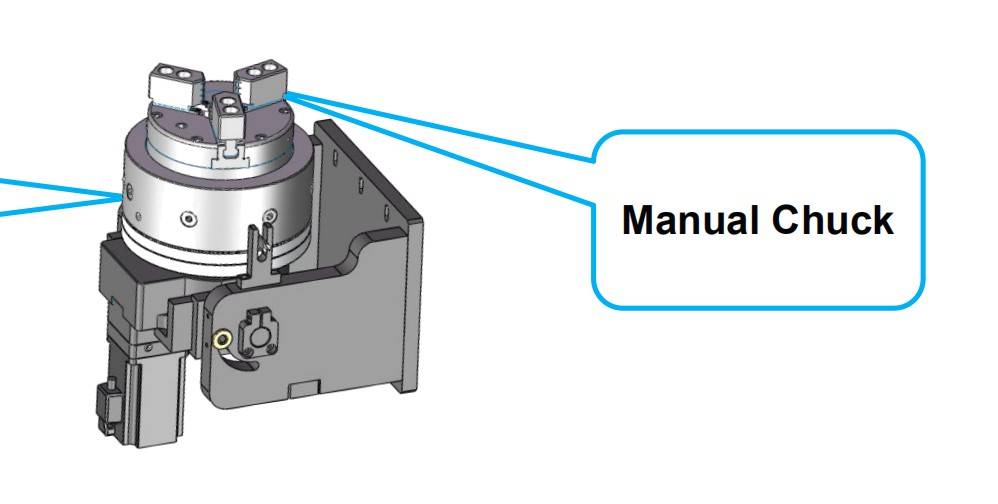
Vertical Rotary Axis
6 Axis Laser Welding for Pipe and Instrument Components
One of the most important applications of this machine is the pipe and instrumentation industry.Many products in this industry contain small cylindrical components, pressure interfaces, diaphragms, flanges and precision welded connections.
The six-axis structure allows the machine to position these components more flexibly and perform different welding operations without repeatedly changing the workpiece position.Typical applications include:
Pressure Instrument Components
Pressure transmitters, pressure sensor housings, pressure interfaces and other instrumentation components often contain cylindrical metal parts and precision joints.
The multi-axis system can position the component accurately while maintaining a suitable welding-head orientation.
Diaphragm Welding
Metal diaphragms require controlled and consistent welding around circular or specially shaped seams.The rotary axes can continuously position the diaphragm while the welding head follows the programmed welding path.
Flange Welding
Flanges may require circumferential welding around pipe connections or cylindrical components.The rotary system can rotate the workpiece while the laser welding head maintains the required welding position.
Instrument Housings
The machine can be used for welding small stainless steel instrument housings and cylindrical enclosures.This is particularly useful when several circular or angled joints need to be welded on the same component.
Pipe Fittings
Elbows, connectors, sockets, joints and other pipe fittings may require welding around different surfaces.The combination of two rotary axes and the welding-head swing axis provides greater flexibility for these components.
Small Cylindrical Components
The machine is also suitable for many small precision-machined components with circular welding seams, including sleeves, connectors, fittings, covers and housings.
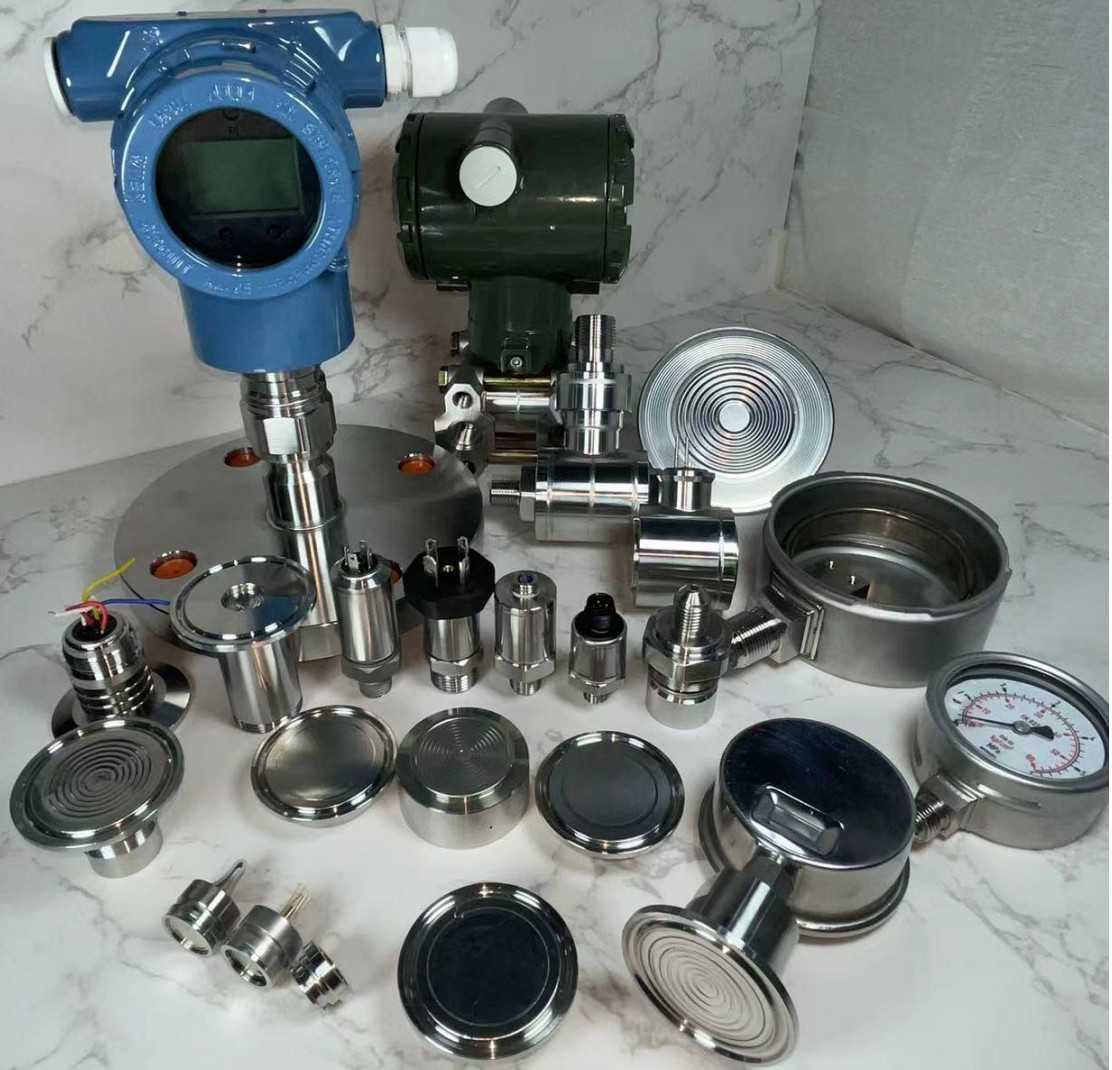
6 axis cnc laser welding samples
6 Axis vs 3 Axis, 4 Axis and 5 Axis Laser Welding
The main difference is the range of coordinated movement.
| Machine | Axis Configuration | Typical Applications |
|---|---|---|
| 3 Axis | X + Y + Z | Flat and relatively simple 3D parts |
| 4 Axis | X + Y + Z + Rotary | Cylindrical and circumferential welding |
| 5 Axis | X + Y + Z + Rotary + Welding Head Swing | Cylindrical parts and difficult welding angles |
| 6 Axis | X + Y + Z + Welding Head Swing + 2 Rotary | Complex cylindrical, tubular and multi-directional components |
The goal is not simply to use more axes, but to select the number of controlled axes that matches the actual geometry and welding requirements.
Key Advantages of a 6 Axis CNC Laser Welding Machine
Wider Welding Range
Six-axis coordinated movement allows the machine to handle a wider range of product geometries than simpler CNC configurations.
Suitable for Pipe and Tube Components
The rotary axes are particularly useful for pipes, fittings, flanges, sleeves and other round components.
Better Access to Difficult Welding Areas
The welding-head swing axis can change the approach angle, helping the laser reach corner joints, angled surfaces and difficult welding positions.
Multi-Directional Positioning
Two rotary axes provide additional workpiece positioning without requiring constant manual repositioning.
Suitable for Small Precision Components
The system can be configured for small cylindrical components such as instrument housings, pressure components, connectors and diaphragms.
Improved Welding Consistency
Once the welding path and motion sequence are properly developed, the CNC system can repeat the same programmed movement for subsequent workpieces.
Reduced Manual Repositioning
The workpiece can be rotated and repositioned automatically through the CNC system rather than being manually moved between different welding operations.
Materials Suitable for 6 Axis CNC Laser Welding
The machine can be configured for a wide range of metal materials, depending on the specific product and welding process.Common materials include:
- Stainless steel
- Carbon steel
- Mild steel
- Aluminum
- Copper
- Brass
- Galvanized steel
- Titanium
- Nickel alloys
- Other engineering metals
For pipe and instrumentation components, stainless steel is particularly common, especially where corrosion resistance, cleanliness and dimensional stability are important.
However, laser power, welding speed, shielding gas, joint design and fixture configuration should be selected according to the actual material and product.
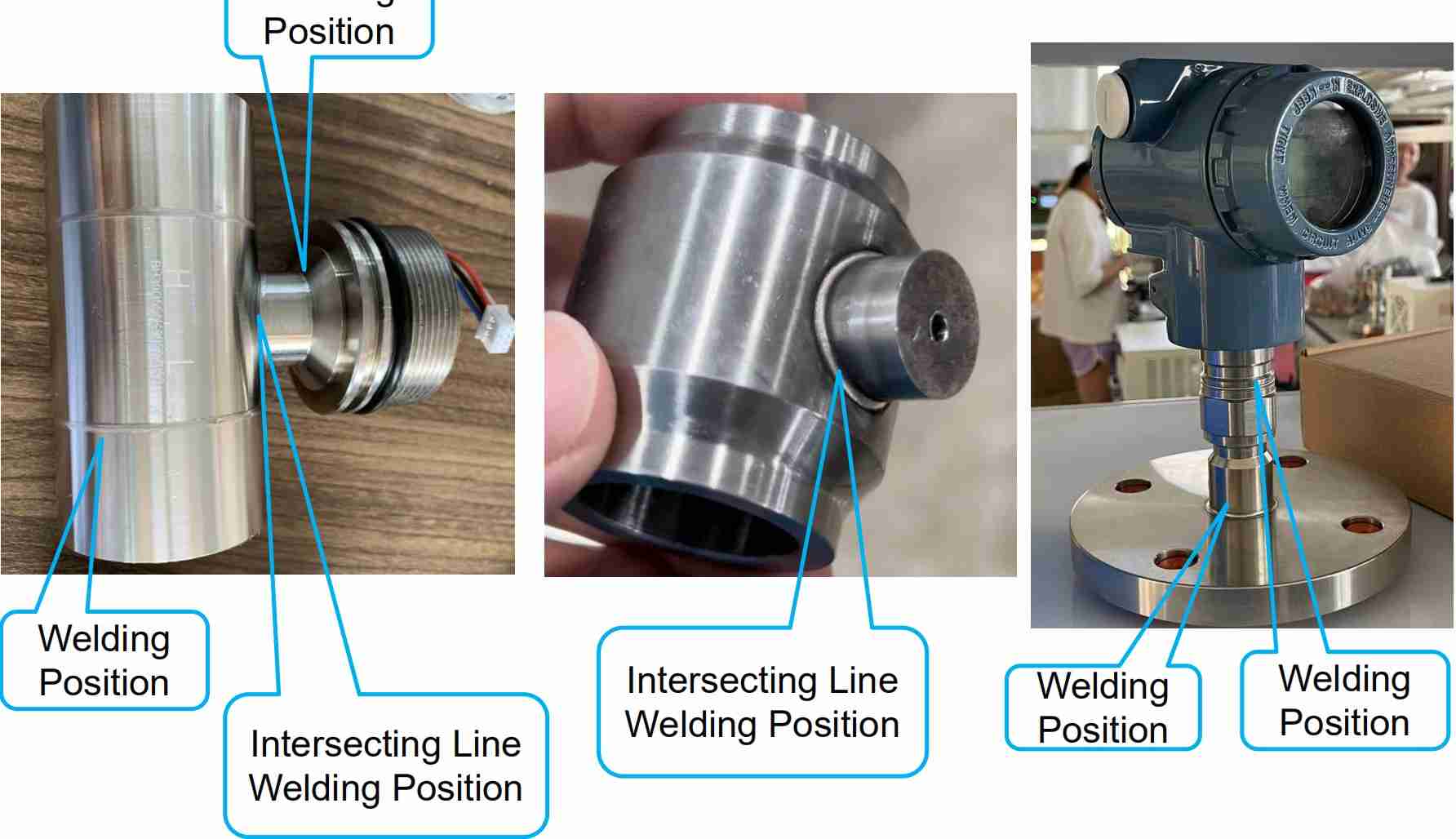
Welding position samples
How to Choose the Right 6 Axis Laser Welding Machine
The correct configuration depends more on the product than simply the laser power.
Before selecting a machine, consider:
Workpiece Geometry
Is the product flat, cylindrical, tubular, conical, curved or irregular?
Welding Position
Does the product require circumferential, corner, angled or multi-directional welding?
Workpiece Size and Weight
The rotary fixture and servo system must be suitable for the workpiece dimensions and weight.
Material and Thickness
Laser power and welding parameters depend on the material, thickness and joint design.
Production Volume
For repetitive production, CNC automation and customized fixtures can improve consistency and production efficiency.
Fixture Requirements
Small precision components often require dedicated fixtures to ensure accurate positioning and repeatable clamping.
Automation Requirements
Vision systems, automatic loading/unloading, wire feeding, inspection and other automation functions can be added according to production requirements.
ZS Machinery can recommend the appropriate axis configuration, laser power, rotary fixture and welding system based on your actual product.
6 Axis CNC Laser Welding Machine Applications
The 6-axis system is especially suitable for products with cylindrical, circular, tubular or multi-directional welding requirements.
Typical applications include:
- Pipe and tube components
- Pipe fittings
- Stainless steel flanges
- Metal diaphragms
- Pressure transmitter components
- Pressure instrument housings
- Sensor housings
- Instrument fittings
- Cylindrical connectors
- Circular covers
- Metal sleeves
- Valve components
- Pump components
- Small precision-machined parts
- Automotive cylindrical components
- Industrial equipment components
- Custom metal assemblies
For products similar to the components shown in the image, the six-axis configuration can provide the flexibility needed to position and weld different surfaces and circular joints within one machine.
Why Choose ZS Machinery 6 Axis CNC Laser Welding Machine?
ZS Machinery focuses on practical laser welding systems designed around the actual geometry and production requirements of the workpiece.For six-axis applications, we can configure the machine according to the product, including:
- Fiber laser source
- Laser welding head
- XYZ motion system
- Welding-head swing axis
- Horizontal rotary axis
- Vertical rotary axis
- Servo motors and drives
- Customized fixtures and chucks
- Water cooling system
- Shielding gas system
- Protective enclosure
- Vision system
- Wire feeding system
- Automatic loading and unloading
For pipe, instrumentation and precision metal components, fixture design and axis coordination are particularly important. A suitable machine is not simply a higher-axis machine; the motion system, rotary tooling, welding head, fixture and laser parameters all need to work together.
Get a 6 Axis CNC Laser Welding Solution for Your Application
If you manufacture pipe fittings, flanges, diaphragms, instrument housings, pressure components, cylindrical fittings or other small round metal parts, a 6 Axis CNC Laser Welding Machine can provide a flexible platform for multi-directional laser welding.
Send ZS Machinery your product drawings, photos, material, thickness and welding requirements. We can evaluate the welding geometry and recommend a suitable laser power, welding head, rotary configuration and customized fixture for your application.