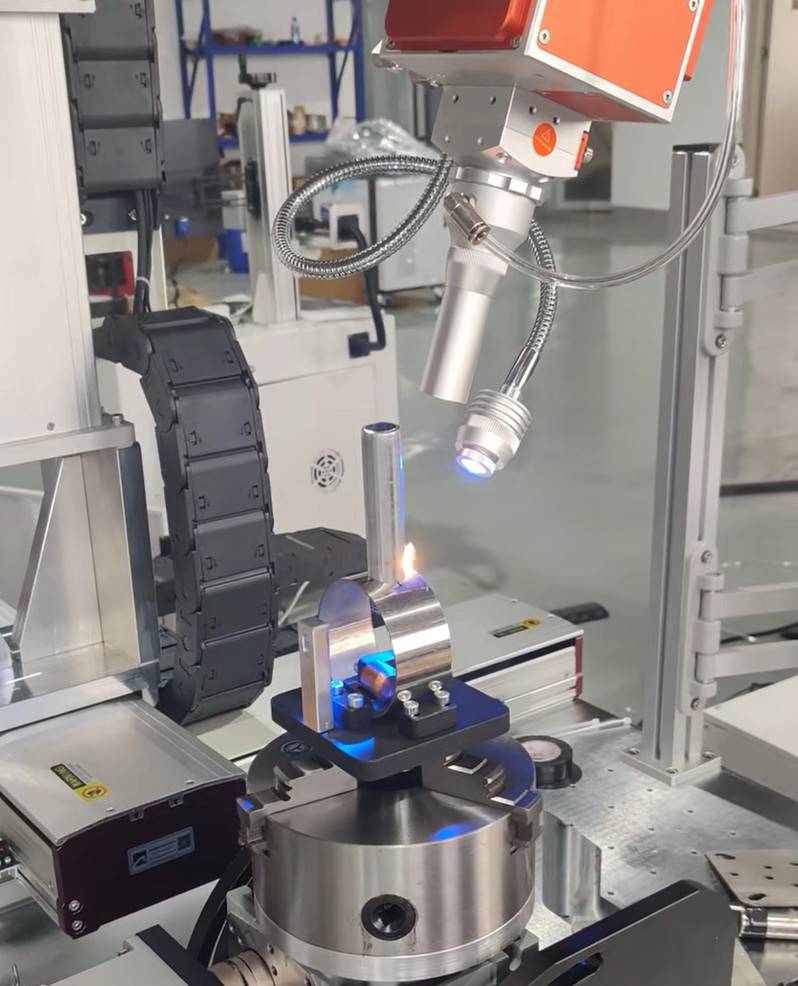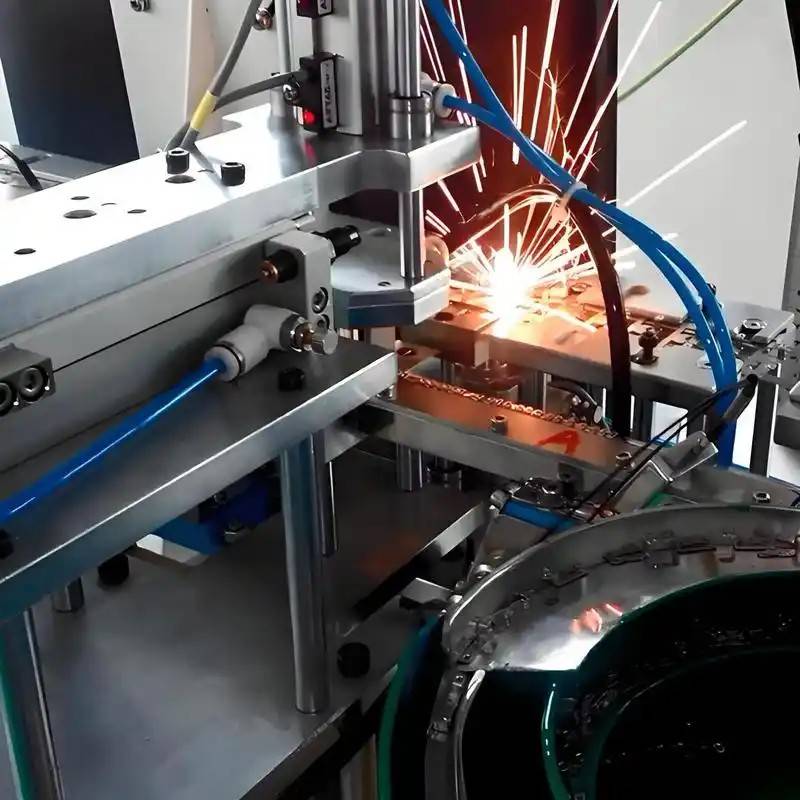
3-Axis vs. 4-Axis vs. 5-Axis vs. 6-Axis CNC Laser Welding Machines
When choosing a CNC laser welding machine, you may come across 3-axis, 4-axis, 5-axis, and 6-axis machines. But what is the actual difference between them?
The simplest way to understand the axis number is to think of it as the movement capability of the machine. Different axes control the movement direction or rotation of the welding head and workpiece, allowing the laser to reach different welding positions and angles.
The more axes a machine has, the more movement options it can provide. However, more axes do not automatically mean a better machine. The right configuration depends on how your workpiece needs to move during welding.
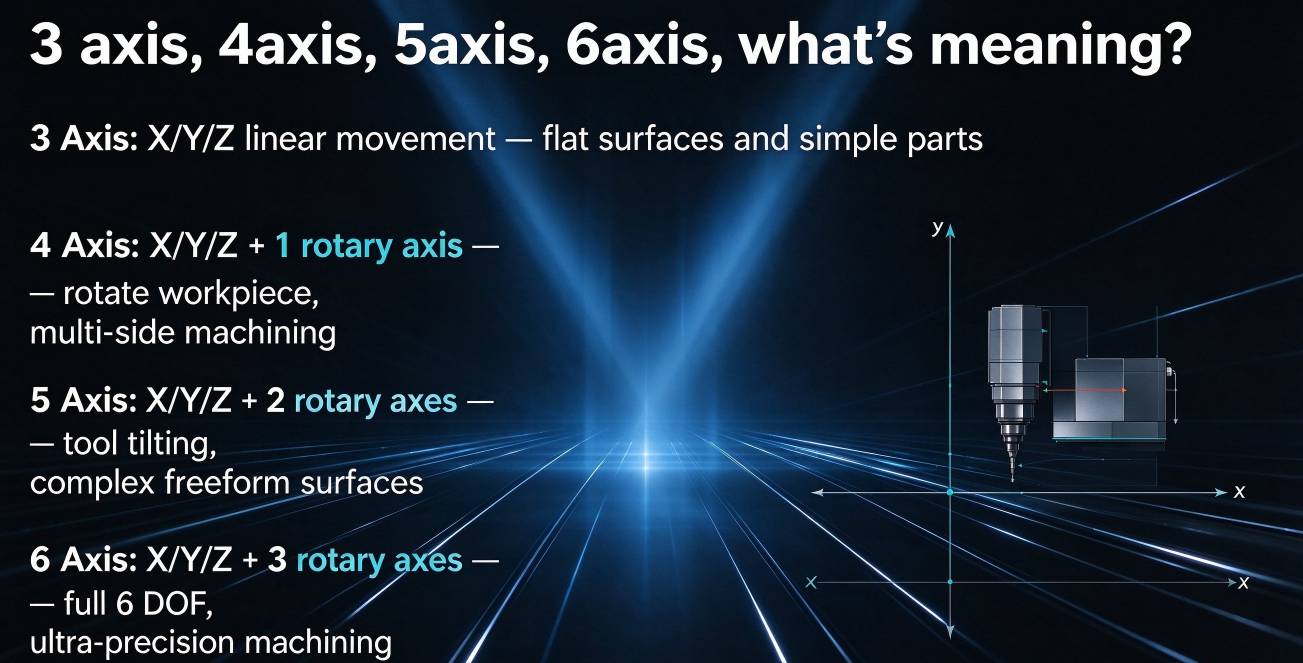
3axis vs 4axis vs 5axis vs 6 axis
What Is a 3-Axis CNC Laser Welding Machine?
A 3-axis CNC laser welding machine has three basic linear axes:
- X-axis: left and right movement
- Y-axis: front and back movement
- Z-axis: up and down movement
Together, the X, Y, and Z axes provide three-dimensional movement.
For many relatively simple workpieces, this is enough. If the welding seam is accessible from one fixed welding direction, the welding head can move along the required path without the workpiece or welding head needing to rotate.
It is also important to note that 3-axis does not mean the machine can only perform straight line welding.
For example, if you need to weld a circular seam on a vertical plane and the welding head can reach the entire circular path through XYZ movement, a 3-axis machine may be sufficient. The workpiece does not necessarily need to rotate simply because the weld itself is circular.
The key question is whether the welding head can reach the complete welding path while maintaining a fixed welding position.
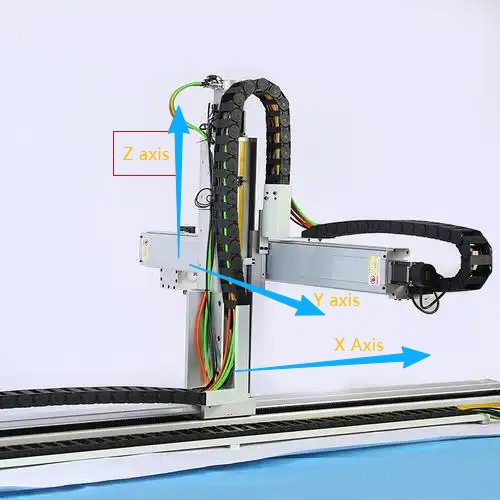
Schematic diagram of XYZ three-axis motion
What Is a 4-Axis CNC Laser Welding Machine?
A 4-axis CNC laser welding machine adds one additional axis to the basic XYZ system.However, there are two common ways to add this fourth axis.
1. Add a Rotary Axis to the Workpiece
If the workpiece needs to rotate during welding, a rotary axis can be added to the fixture.The basic configuration becomes:
X + Y + Z + Rotary Axis
In this configuration, the welding head can remain in a fixed position while the workpiece rotates.This is particularly useful for cylindrical or round products that need to be welded around their circumference.
For example, if a cylindrical workpiece needs a continuous weld around its outside surface, the rotary fixture can rotate the workpiece while the laser welding head stays in position.In this case, the fourth axis mainly increases the movement capability of the workpiece.
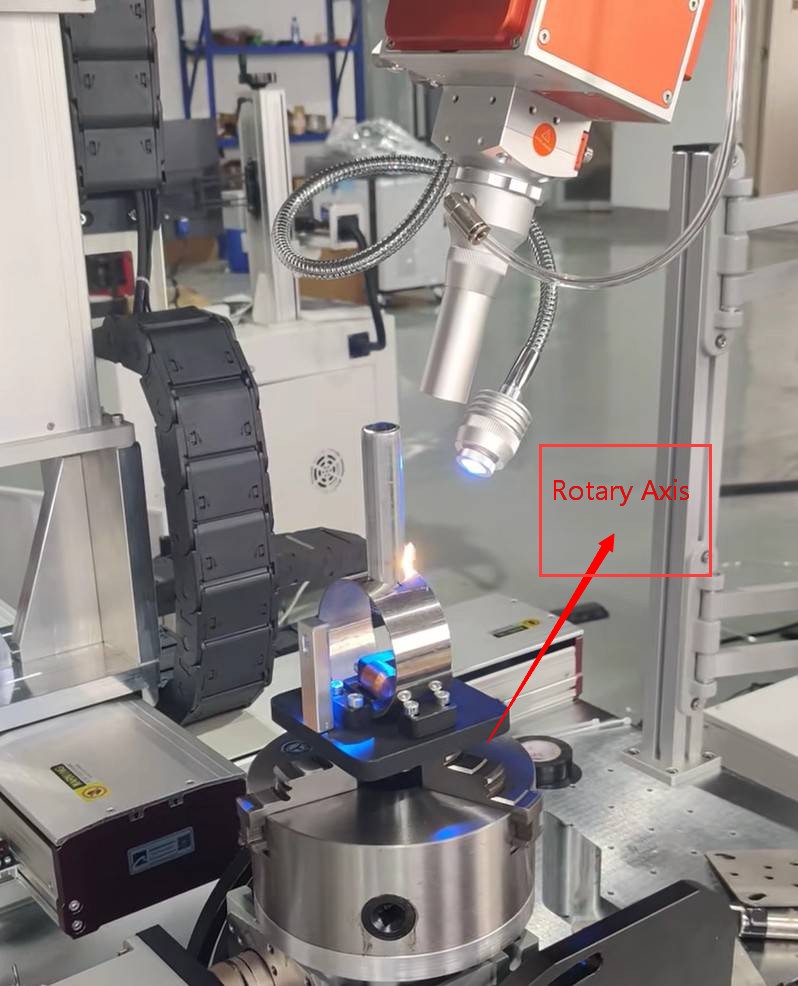
Rotary axis of CNC laser welding machine
2. Add an Axis to the Welding Head
The fourth axis can also be added to the welding head.Instead of rotating the workpiece, the machine changes the orientation of the welding head.
Depending on the design, the welding head can swing or tilt in different directions, such as front-to-back or left-to-right. Some machine designs use a cylinder-driven mechanism to move the welding head.
This configuration is useful when the workpiece does not need to rotate, but different welds require the welding head to approach the joint from different angles.In this case, the fourth axis increases the flexibility of the welding head.
Therefore, two machines can both be called 4-axis CNC laser welding machines while having different mechanical configurations.
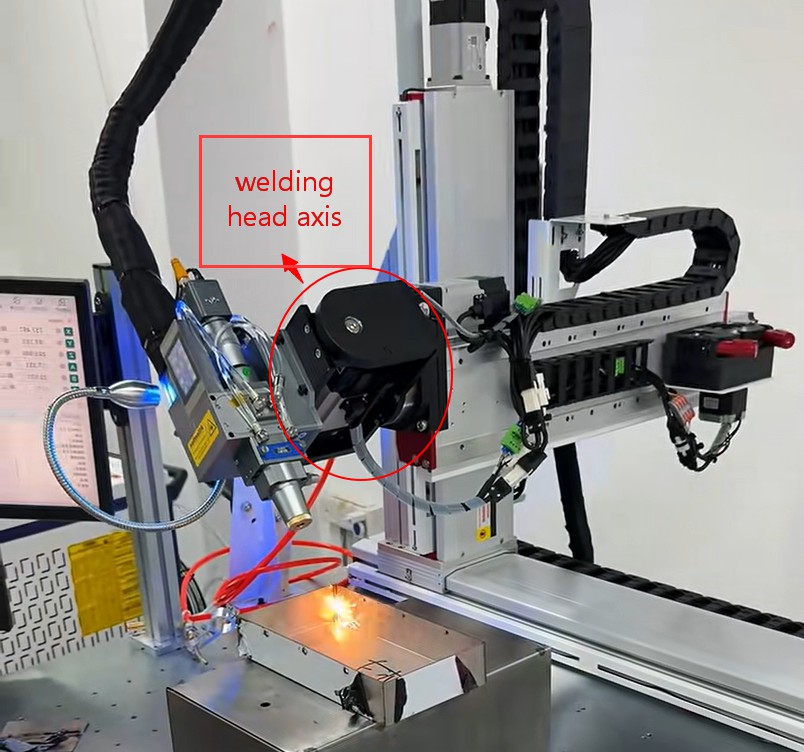
Welding head axis of CNC laser welding machine
What Is a 5-Axis CNC Laser Welding Machine?
A 5-axis CNC laser welding machine adds both types of movement to the basic three-axis system.In a typical configuration, it has:
XYZ + Welding Head Axis + Rotary Axis
This means the machine can have an additional movement axis on the welding head while also using a rotary axis to move the workpiece.The welding head can change its angle, while the workpiece can also rotate.
This provides much greater flexibility for welding workpieces with multiple welding directions or more complicated geometries.
In simple terms:
3-axis = basic XYZ movement
4-axis = XYZ + one additional movement
5-axis = XYZ + welding-head movement + workpiece rotation
What Is a 6-Axis CNC Laser Welding Machine?
A 6-axis CNC laser welding machine adds another rotary axis to the 5-axis configuration.A typical configuration can include:
XYZ + Welding Head Axis + Rotary Axis + Second Rotary Axis
The two rotary fixture axes do not have to be the same.Depending on the workpiece, they can be designed in different orientations, such as:
- horizontal;
- vertical;
- inclined.
The exact arrangement depends on the shape of the workpiece and the welding positions that need to be reached.
With two rotary axes, the workpiece can be positioned and rotated in more directions. Combined with the movement of the welding head, this gives the machine a much higher degree of flexibility for complex welding applications.This means it can weld a wider variety of workpieces.
It’s important to note that the operating system of a CNC laser welding machine consists of one system for five axes and below, and another for six axes and above. While the left-right and forward-backward oscillations of the welding head are essentially one motion axis, achieving system control requires controlling two axes.
For example, a machine with a welding torch that can oscillate both forward/backward and left/right, in addition to the XYZ axes, already utilizes five control functions. If a rotary tooling is also needed, a six-axis system is required. A six-axis system supports more than six control directions, allowing for greater control capabilities.
What About 7-Axis CNC Laser Welding Machines?
Some manufacturers also use the term 7-axis laser welding machine.When comparing these machines, it is important to check what the seventh axis actually controls.In some configurations, the additional “axis” refers to the movement of a wire-feeding system.
A wire feeder can have controlled movement, but it is different from an axis that changes the spatial position or orientation of the welding head or workpiece.For this reason, we generally distinguish the main welding movement axes from auxiliary functions such as wire feeding.
Instead of looking only at the number “7-axis,” ask the supplier what the seventh axis actually does.
How to Choose Between 3-Axis, 4-Axis, 5-Axis and 6-Axis?
One simple way to choose the right CNC laser welding machine is to think about how you would manually weld the same workpiece.Imagine that you are holding a welding torch and welding the part by hand.
Ask yourself:
Does the workpiece need to rotate?
If you would manually rotate the workpiece while keeping the welding torch in approximately the same position, you may need a rotary axis.This is common for cylindrical or round components.
Does the welding torch need to change angle?
If you would keep the workpiece in place but continuously adjust the welding torch angle to reach different welds, you may need a welding-head axis.This allows the welding head to move or swing to different welding angles.
Do you need both?
If the workpiece needs to rotate and the welding head also needs to change its angle, a 5-axis configuration may be appropriate.
If you need to weld many workpieces requires different rotary movements in addition to welding-head movement, a 6-axis configuration may be considered.This manual-welding method is a simple and practical way to think about axis requirements.
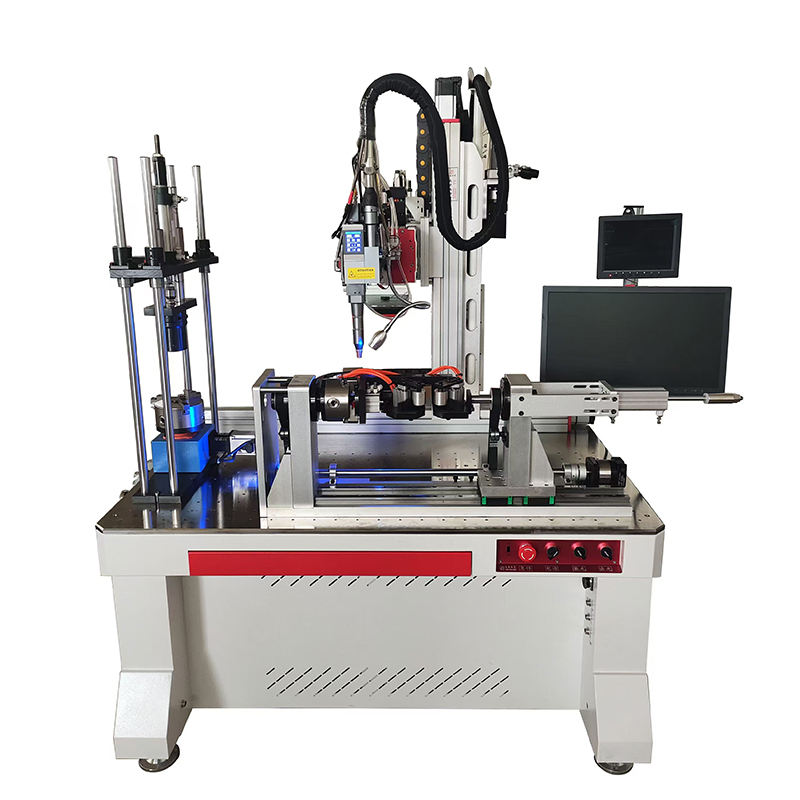
6 axis cnc laser welding mahcine
Do You Always Need More Axes for Circular Welding?
No.
A circular weld does not automatically require a rotary axis.
For example, if you need to weld a circle on a vertical flat plane, and the welding head can move around the entire circle using the X, Y, and Z axes while maintaining a suitable welding position, a 3-axis CNC laser welding machine may be sufficient.
A rotary axis becomes necessary when the workpiece itself needs to rotate to complete the welding process.
This distinction is important:A circular weld does not necessarily require a rotary axis. A rotating workpiece does.
3-Axis, 4-Axis, 5-Axis and 6-Axis at a Glance
| Axis Configuration | Main Movement Capability |
|---|---|
| 3-Axis | X, Y, Z linear movement |
| 4-Axis | XYZ + rotary workpiece axis or welding-head movement axis |
| 5-Axis | XYZ + welding-head movement + rotary axis |
| 6-Axis | XYZ + welding-head movement + two rotary axes |
The actual configuration can vary between machines, so always check where each axis is located and what it controls.
Conclusion
The number of axes on a CNC laser welding machine represents its controlled movement capability.
A 3-axis machine provides basic XYZ movement and can handle many welding applications where the welding head does not need to change orientation and the workpiece does not need to rotate.
A 4-axis machine adds either a rotary workpiece axis or an additional welding-head movement axis.
A 5-axis machine combines welding-head movement with workpiece rotation, providing greater flexibility.
A 6-axis machine adds another rotary axis, allowing even more complex positioning of the workpiece.
When selecting a machine, don’t simply ask, “How many axes do I need?”
Instead, look at your actual workpiece and ask:
How would I weld this part manually?
Would I need to rotate the workpiece? Would I need to change the welding torch angle? Would I need both? The answers to these questions can provide a practical starting point for determining whether a 3-axis, 4-axis, 5-axis, or 6-axis CNC laser welding machine is suitable for your application.
If you are unsure how many axes of welding machine you need for your workpiece, please feel free to contact ZS Machinery. We can help you select the appropriate machine based on our experience.
Robotic Welding: Complete Guide to Automated Welding Systems