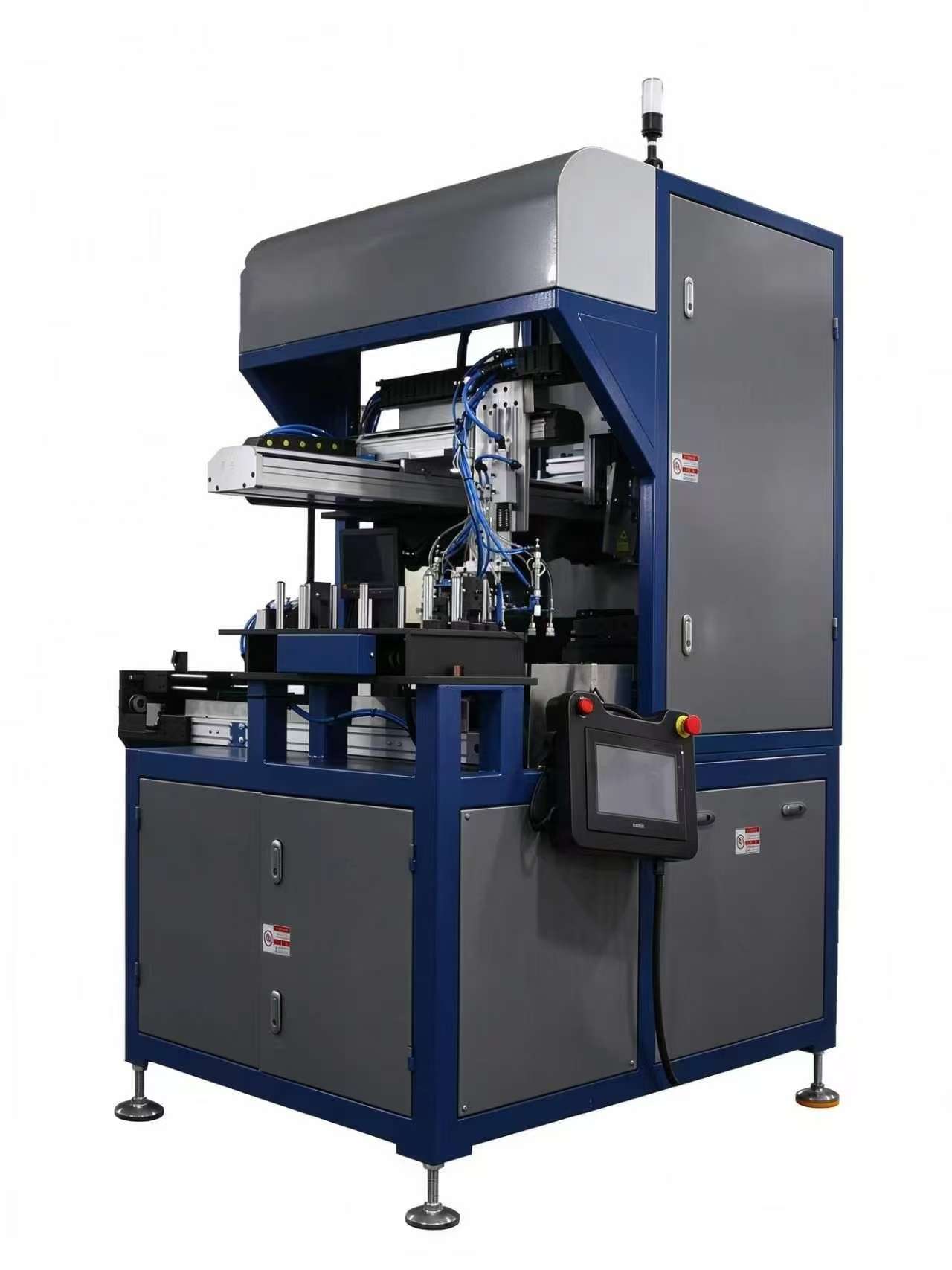
- Product Details
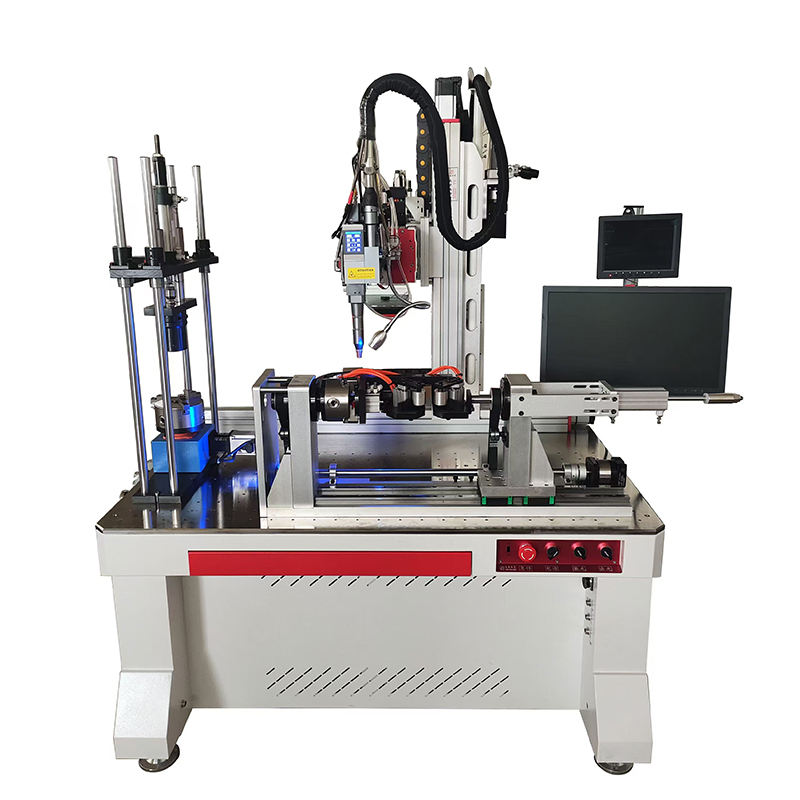
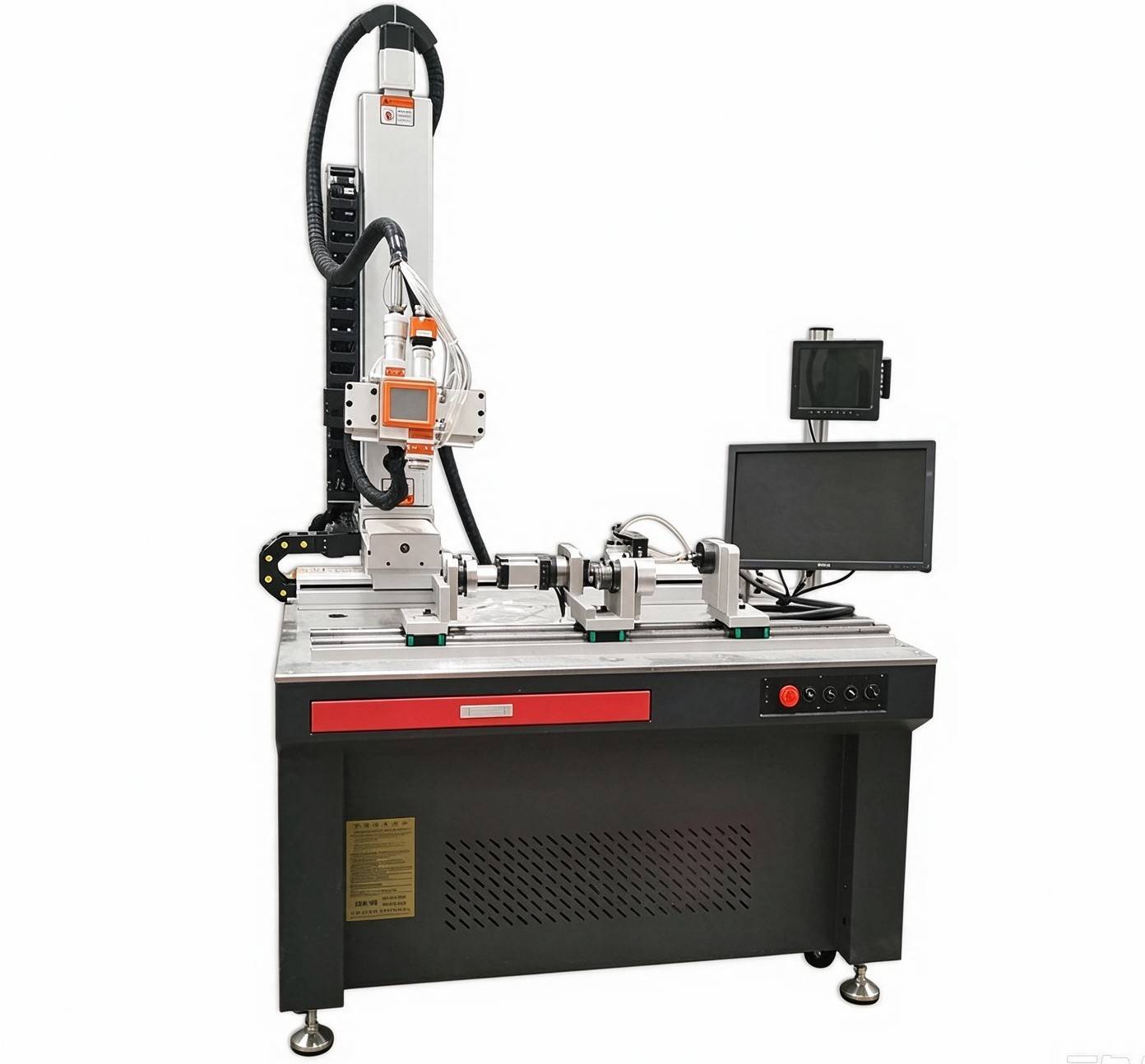
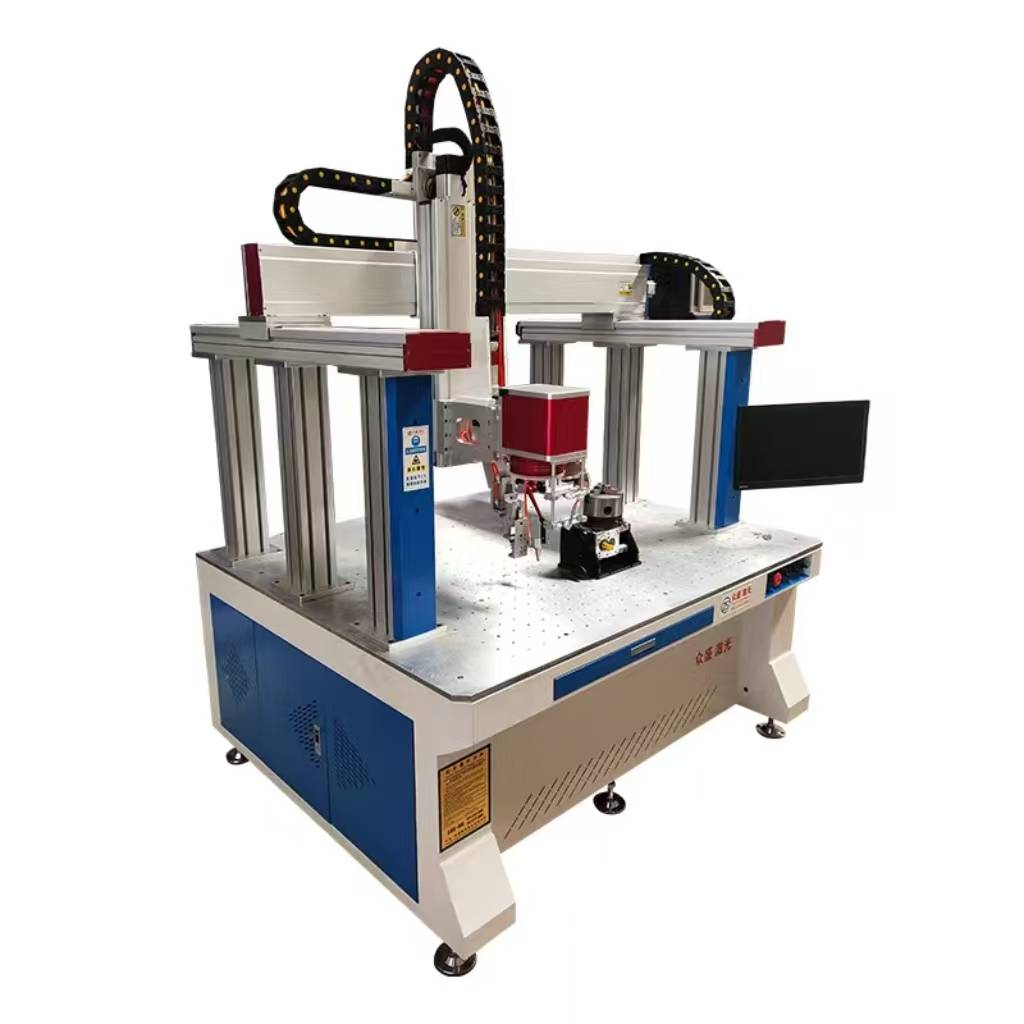
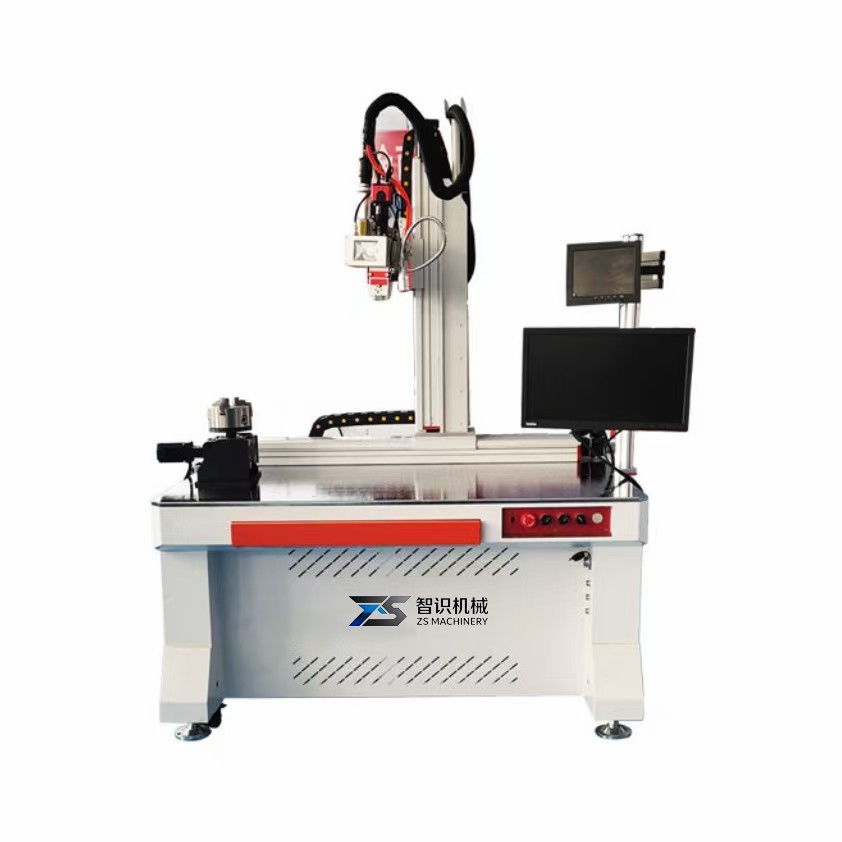
The ZS Machinery automatic pipe welder is designed for manufacturers who need to produce thin-wall, short cylindrical metal tubes from flat sheet metal. By integrating automatic sheet loading, roll forming, clamping, laser seam welding, and unloading into one production system, the machine streamlines the process of turning flat metal blanks into finished tubular components.
Unlike conventional automatic pipe welding machines that primarily join existing pipes or weld circumferential joints, this machine focuses on forming a flat metal sheet into a cylinder and laser welding the longitudinal seam. It combines forming, positioning, and welding in a coordinated process to reduce manual handling and improve production consistency.
With suction-cup loading and workpiece-specific clamping fixtures, ZS Machinery can customize the system according to the tube diameter and the customer’s manufacturing requirements.
Automatic pipe welder
What Is an Automatic Pipe Welder?
An automatic pipe welder is a machine designed to perform pipe or tube welding with reduced manual intervention. However, automatic pipe welding equipment can serve different production processes, including pipe-to-pipe joining, circumferential welding, and longitudinal seam welding.
The ZS Machinery automatic pipe welder is specifically developed for thin-wall short tube forming and longitudinal laser seam welding. Instead of requiring operators to manually roll a sheet, position the edges, clamp the workpiece, and weld the seam as separate operations, the system integrates these steps into an automated production cycle.
The machine is particularly suitable for manufacturers producing repeated batches of cylindrical metal components that require consistent forming and seam welding.
How Does the Automatic Pipe Forming and Laser Welding Machine Work?
The production process combines five main steps.
1. Automatic Sheet Loading with Suction Cups
The machine uses a suction-cup loading mechanism to pick up a flat metal sheet and transfer it to the forming station. This reduces the need for operators to manually handle and position each blank.
The loading arrangement can be configured according to the workpiece dimensions and production requirements. Reliable sheet positioning is important because the blank must enter the forming process in the correct orientation.
2. Roll Forming: Turning Flat Sheet Metal into a Cylinder
After loading, the flat sheet is rolled into a cylindrical shape. The forming mechanism brings the sheet edges together to prepare the longitudinal seam for welding.Depending on the thickness of the steel plate, different extrusion pressures are required, and the appropriate configuration needs to be confirmed based on specific requirements.
The forming process must match the required tube diameter and geometry. Because different products may have different dimensions, the machine’s forming components and fixtures need to be configured for the intended workpiece.
3. Customized Clamping and Positioning
Once the sheet has been formed into a cylinder, a dedicated fixture clamps the workpiece and holds the seam in the required position.
The clamping fixture is customized according to the tube diameter. This is an important part of the machine design because the tube must be supported and positioned properly before laser welding begins.
Accurate seam alignment helps establish repeatable welding conditions, particularly when processing thin-wall materials where excessive gaps or inconsistent positioning can affect weld quality.
4. Automatic Laser Longitudinal Seam Welding
After the cylindrical workpiece is clamped, the laser welding system joins the two sheet edges along the longitudinal seam.
Laser welding is suitable for many thin-wall metal applications because it can produce a narrow weld with a relatively concentrated heat input when the process is properly configured. This can help control distortion and reduce unnecessary thermal effects compared with some higher-heat-input welding processes.
The appropriate laser power and welding parameters depend on the material, wall thickness, joint fit-up, tube diameter, and required weld quality. These details should be confirmed through process evaluation and sample testing.
5. Automatic Unloading of the Finished Tube
After welding, the finished tube is discharged from the machine to make room for the next workpiece.
Integrating loading and unloading into the production cycle helps reduce repetitive handling and supports a more continuous manufacturing workflow. The actual cycle time and production capacity depend on the workpiece dimensions, welding length, loading arrangement, and process parameters.
Key Features of the ZS Machinery Automatic Pipe Welder
Integrated Tube Forming and Laser Welding
The machine combines flat-sheet loading, cylindrical forming, clamping, longitudinal seam welding, and unloading in one system. This reduces the need to transfer workpieces manually between separate forming and welding stations.
Suction-Cup Automatic Loading
The automatic loading mechanism uses suction cups to pick up and transfer sheet-metal blanks. This is designed to reduce repetitive manual handling and improve the consistency of workpiece feeding.
Diameter-Specific Clamping Fixtures
The clamping fixture is designed according to the required tube diameter. This allows the machine configuration to match the geometry of the product being manufactured.
For projects involving multiple tube diameters, the fixture arrangement and changeover requirements should be evaluated during customization.
Laser Welding for Thin-Wall Tubular Components
The laser welding system is intended for longitudinal seam welding after the flat sheet has been formed into a cylinder. With suitable joint preparation and welding parameters, laser welding can provide a controlled process for many thin-wall metal products.
The achievable weld appearance, penetration, and production speed depend on the actual material and workpiece requirements.
Customized Automation
Different tube products may require different sheet dimensions, forming components, clamping fixtures, loading arrangements, and welding parameters. ZS Machinery develops the equipment around the customer’s workpiece and manufacturing process rather than relying on one universal setup.
Applications of Automatic Pipe Welding Equipment
The ZS Machinery automatic pipe welder can be considered for manufacturing thin-wall, short cylindrical components produced from flat metal sheets.Potential applications include:
- Cylindrical metal housings and shells
- Short tubular sleeves and covers
- Thin-wall cylindrical enclosures
- Industrial metal components with longitudinal seams
- Custom tubular parts manufactured in repeated batches
The machine’s suitability depends on the product’s diameter, length, wall thickness, material, and seam requirements. Product drawings or physical samples can help determine whether the forming and welding process is appropriate.
Why Use Laser Welding for Thin-Wall Short Tubes?
Laser welding offers several potential advantages for thin-wall tube production when the material and joint design are suitable.
Concentrated heat input: The laser beam delivers energy to a localized area, which can help control the heat-affected region.
Narrow weld seams: Properly configured laser welding can produce a relatively narrow seam, making it useful for products where the weld appearance and local distortion matter.
Automation compatibility: Laser welding can be integrated with fixtures, motion systems, and automated loading mechanisms to support repeatable production.
Process consistency: When the workpiece geometry, seam fit-up, and welding parameters are controlled, an automated system can reduce variation associated with manual handling and welding.
These benefits are not automatic guarantees. The final results depend on material properties, wall thickness, joint gaps, fixture accuracy, laser configuration, and process validation.
What Information Is Needed to Customize an Automatic Pipe Welder?
Because the clamping fixture and forming setup depend on the target product, ZS Machinery recommends confirming the following information before finalizing a machine configuration:
- Tube diameter: The required diameter determines the forming arrangement and clamping fixture.
- Tube length: The length of the cylindrical workpiece affects support, positioning, and handling.
- Material: Stainless steel, carbon steel, and other metals may require different process parameters.
- Wall thickness: Thickness influences the laser power and welding process window.
- Welding requirements: Specify the required penetration, seam appearance, and any inspection criteria.
- Production volume: Expected output helps determine the required automation level and production-cycle targets.
- Product drawings or samples: These allow the forming, clamping, and welding process to be evaluated against the actual workpiece.
For products with multiple diameters or dimensions, the changeover method and fixture replacement requirements should also be discussed before ordering.
Why Choose ZS Machinery?
Over 10 Years of Industry and Project Experience
With more than 10 years of industry experience, ZS Machinery has provided equipment and solutions to factories in China and overseas. Our experience across different manufacturing applications helps us understand practical production challenges and develop equipment that addresses real customer needs.
Customer-Oriented Engineering and Customization
Every production line has different requirements. Rather than offering only standard configurations, we focus on understanding each customer’s workpieces, production processes, and automation goals before recommending a suitable solution. For automatic pipe welding projects, this means considering the complete process, from sheet loading and tube forming to clamping and laser seam welding.
Continuous R&D and Innovation
We emphasize research, development, and continuous improvement to make our equipment more suitable for evolving manufacturing requirements. By combining process knowledge with customized mechanical design and laser technology, we aim to improve production consistency and automation.
Solutions for Challenging Welding Applications
Not every welding challenge can be solved with standard equipment or preset parameters. Our team works to address application-specific challenges involving workpiece positioning, joint alignment, material characteristics, and process configuration. We focus on finding practical solutions that meet the customer’s actual welding requirements.
Request a Quote for an Automatic Pipe Welder
Looking for an automatic pipe welder to manufacture thin-wall, short cylindrical components?
Contact ZS Machinery with your product drawings, tube diameter, tube length, material, wall thickness, and expected production volume. Photos or physical samples are also helpful for evaluating the forming process, suction-cup loading arrangement, clamping fixture, and laser seam welding requirements.
Based on your application, ZS Machinery can discuss a customized automated solution for sheet loading, tube forming, clamping, longitudinal laser welding, and finished-part unloading.