
CNC Laser Welding in the Furniture Industry: Applications for Metal Furniture Parts
Metal furniture manufacturers are under increasing pressure to produce durable products with clean welds, consistent quality, and competitive manufacturing costs. From metal chair frames and table legs to shelving systems, bed frames, cabinets, and decorative furniture components, welding quality directly affects both product performance and appearance.
Traditional welding processes remain widely used in furniture manufacturing. However, when manufacturers need consistent weld quality, reduced post-welding finishing, and repeatable production, laser welding can provide an alternative worth evaluating.
CNC laser welding is particularly suitable for furniture manufacturers producing metal components with repeatable geometries, defined welding paths, and consistent workpiece positioning. By combining programmable movement, suitable fixtures, and controlled laser welding parameters, manufacturers can establish a more consistent process for recurring production tasks.
This guide explores the practical applications of CNC laser welding in the furniture industry, explains when it makes sense to use CNC or robotic laser welding, and examines whether laser welding is a cost-effective option for plastic furniture components.
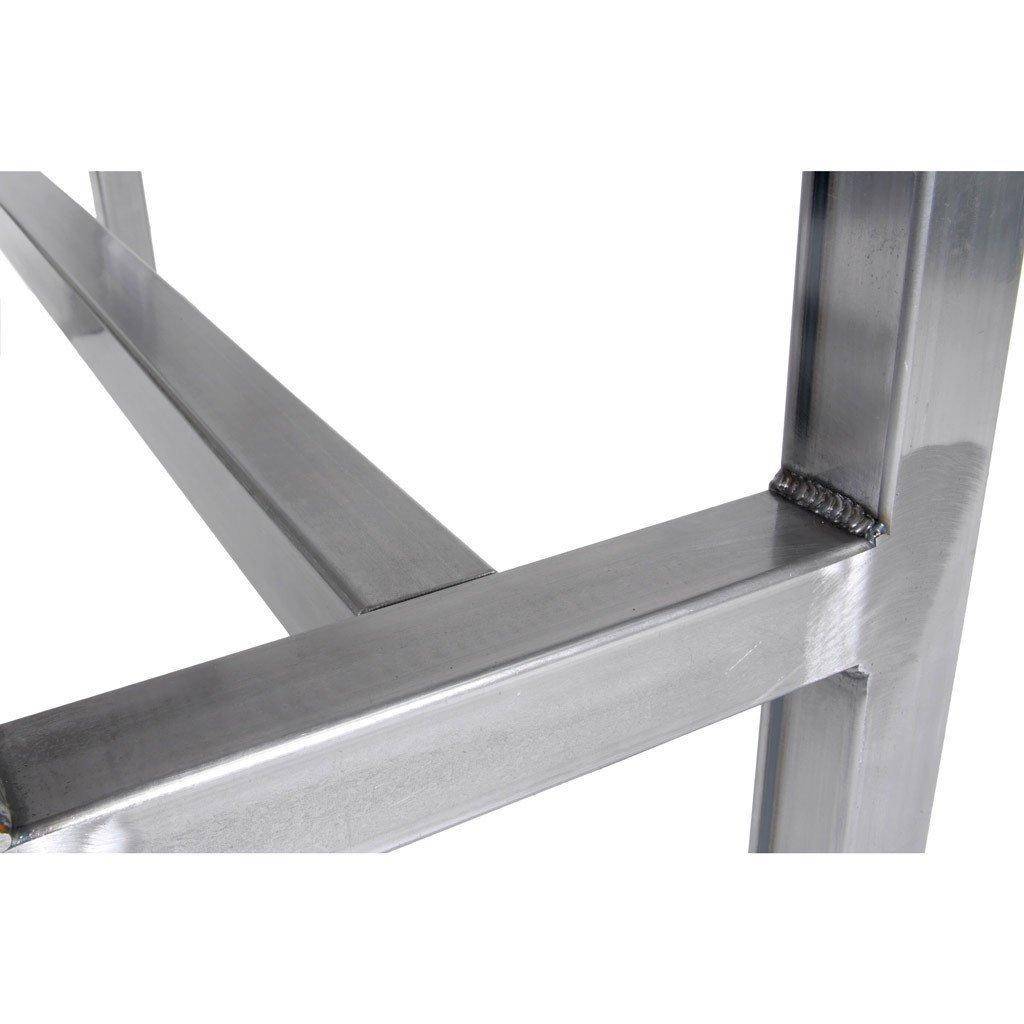
Welding effect of stainless steel furniture frame
Why Is CNC Laser Welding Used in Metal Furniture Manufacturing?
Furniture manufacturing includes many welding tasks that appear simple but can become difficult to control when production volumes increase. A chair frame may contain several tube joints, a table base may require symmetrical welds, and a retail display rack may contain dozens of similar connections.
When these parts are produced repeatedly, small differences in positioning, weld length, heat input, or operator technique can affect the final result.When use CNC Laser welding,it has the following advantages:
1.Clean Welds for Visible Furniture Components
Appearance is an important consideration in furniture manufacturing, particularly for products with exposed metal frames, decorative joints, and polished or coated surfaces.Laser welding can produce narrow, well-controlled welds when the material, joint design, and process parameters are properly matched. For suitable applications, this may reduce the amount of grinding, polishing, or other post-welding finishing required.
This is especially relevant to furniture components where weld seams remain visible, including metal chair frames, table bases, stainless steel structures, and decorative metal assemblies.
Controlled Heat Input and Reduced Distortion
Thin-walled tubes and sheet metal components can be sensitive to heat during welding. Excessive heat input may cause distortion, discoloration, burn-through, or dimensional changes.Laser welding concentrates energy into a relatively small area. Under suitable conditions, this can help limit the heat-affected region and reduce distortion compared with processes that introduce more heat into the workpiece.
For furniture manufacturers, this can be valuable when welding lightweight frames, thin sheet metal enclosures, and components that must maintain accurate dimensions during assembly.
Repeatability in Batch Production
A major advantage of CNC laser welding is the ability to repeat a programmed welding path.Once the welding process has been validated, the machine can follow the same motion sequence for subsequent workpieces. This is useful for manufacturers producing identical table legs, chair frames, brackets, cabinet components, or other parts in batches.
A suitable production setup typically combines a CNC motion system, a laser welding source, a compatible welding head, workholding fixtures, and a control system. Depending on the component, a rotary axis or customized fixture may also be required.
It is important to note that repeatability still depends on consistent loading, accurate positioning, stable part dimensions, and proper machine maintenance. CNC control improves process consistency, but it cannot compensate for poorly fitted joints or inconsistent incoming components.
Which Furniture Components Can Use CNC Laser Welding Machine?
The most promising applications are generally metal components with accessible weld seams, repeatable geometries, and a clear production requirement.
The following examples illustrate where CNC laser welding may be useful. Suitability must be confirmed for the actual component, material, thickness, and joint design.
1. Metal Chair Frames and Table Bases
Metal chair frames and table bases are among the most practical furniture applications to evaluate for laser welding.
Common components include tubular chair frames, stool structures, metal legs, crossbars, support brackets, and table bases made from steel or stainless steel. Some designs use round tubes, while others combine square tubes, rectangular profiles, and sheet metal parts.
These components often contain repeated joints. For example, a table base may require several legs to be welded to a central support, while a chair frame may include multiple crossbars and connections between the seat support and legs.A CNC laser welding machine can be configured to weld these joints along predefined paths. Dedicated fixtures help position the tubes and brackets accurately, while programmable movement provides a consistent welding sequence.
For suitable designs, laser welding may help manufacturers achieve clean joints and reduce the finishing work required on visible surfaces.
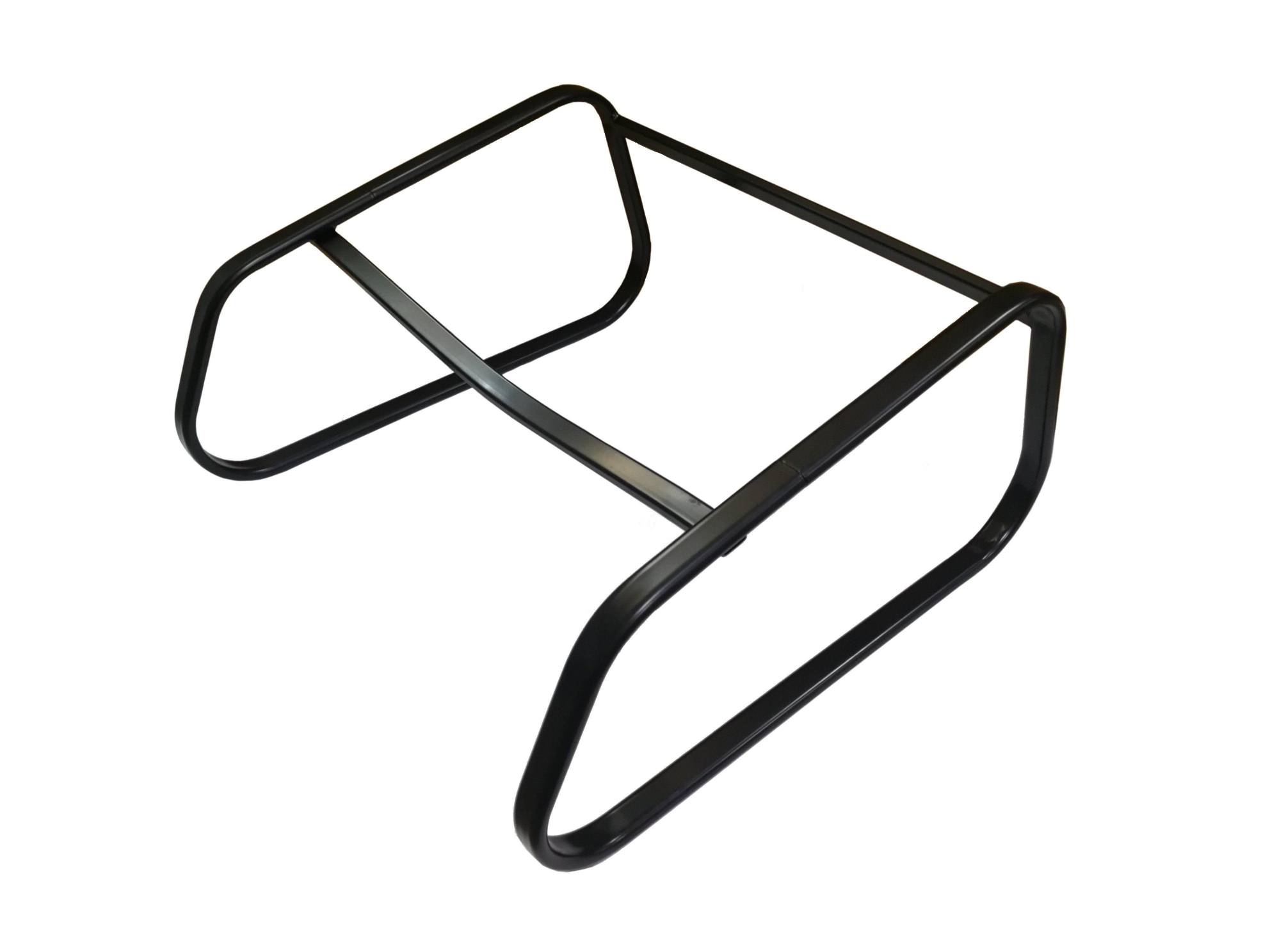
Chair leg welding effect
When is CNC laser welding suitable for chair and table frames?
It is worth considering when the manufacturer produces many similar frames, the welding locations are consistent, and the parts can be secured in a repeatable position. The workpiece should also provide adequate joint fit-up and sufficient access for the welding head.
For round tubes, curved parts, or components requiring circumferential welds, a rotary axis may be useful. For multiple joints at different angles, a customized fixture or multi-axis configuration may be necessary.
If the frame is large, has complicated three-dimensional geometry, or requires the welding head to approach joints from many directions, a robotic laser welding system may offer greater flexibility.
2. Metal Bed Frames and Support Structures
Metal bed frames typically include longitudinal rails, crossbars, legs, mounting brackets, support members, and other structural connections.These parts are often produced in repeatable dimensions, making them potential candidates for CNC-controlled welding. A fixture can hold the rails and crossbars in the required position while the machine welds the designated joints.
For manufacturers producing standardized bed frames, laser welding may help improve the consistency of repeated joints and reduce the finishing required on certain visible areas.
However, bed frames must withstand loads and repeated use. Their suitability for laser welding cannot be determined by appearance alone.The joint design, weld penetration, material thickness, fatigue requirements, and overall frame structure must be evaluated. A laser-welded joint must satisfy the product’s actual mechanical requirements, and the completed frame should be tested where necessary.
For heavy-duty bed frames, thick structural members, or designs requiring extensive weld penetration, another welding process may remain more economical or technically appropriate.
CNC laser welding is therefore most promising for bed-frame components where the material thickness, joint geometry, production volume, and mechanical requirements align with the process.
3. Metal Shelving and Retail Display Racks
Shelving systems, retail display racks, product stands, and metal storage structures often contain many repeated joints.
Examples include:
- Shelf support brackets and mounting components
- Metal rack frames and crossbars
- Display stands and product holders
- Hanging rails and tubular supports
- Lightweight metal frames for retail fixtures
- Repeated joints between sheet metal and tubular components
These products are frequently manufactured in batches, and consistent positioning is important when multiple parts must fit together during final assembly.
CNC laser welding can be considered for components with clearly defined welding paths and repeatable joint locations. A dedicated fixture can hold the frame or individual components, while the programmed sequence controls the welding movement.
For lightweight display products, appearance can be as important as structural performance. A narrow, controlled weld may help reduce the amount of visible finishing needed, provided the joint design and process are suitable.Manufacturers should also consider the coating and finishing process. If a component will be powder-coated, painted, or plated after welding, the required surface quality may differ from that of a polished stainless steel product.
A complete production assessment should consider welding, finishing, assembly, and inspection rather than comparing welding speed alone.
4. Metal Cabinets and Sheet Metal Furniture Components
Metal furniture also includes storage cabinets, lockers, drawer structures, filing cabinets, office furniture, and equipment enclosures.These products may contain thin sheet metal panels, mounting brackets, internal supports, frames, and smaller structural components.
Laser welding can be useful for selected sheet metal joints where controlled heat input and a clean finished appearance are important. CNC movement is particularly relevant when the same panel geometry or joint pattern is produced repeatedly.
Possible applications include:
- Selected cabinet frame joints
- Sheet metal brackets and support structures
- Drawer and storage-system components
- Metal furniture enclosures
- Repeated joints in modular storage products
- Small assemblies that require consistent weld positioning
Not every sheet metal joint needs laser welding. Some cabinet structures are assembled more economically with spot welding, resistance welding, rivets, screws, or other joining methods.The choice depends on whether the joint must be continuous, the required strength, the appearance of the finished product, the material thickness, and the expected production volume.
For thin panels, laser welding parameters must be controlled carefully to avoid burn-through and distortion. The fixture must also prevent gaps and movement between the parts.Where the components are standardized and the welding sequence is repeated across large batches, CNC laser welding may provide a more controlled production process.
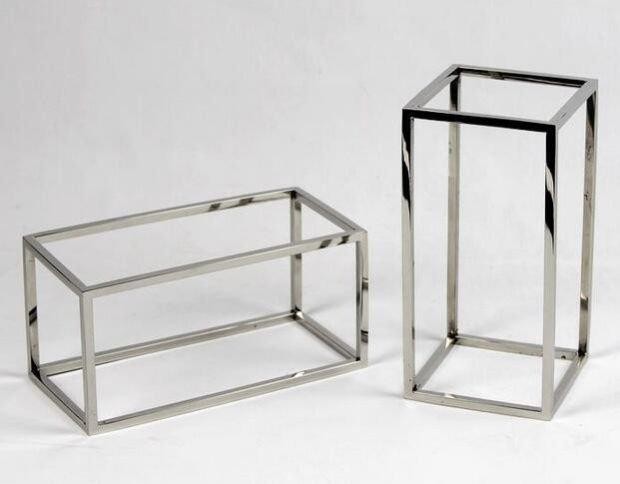
Metal frame welding
5. Stainless Steel and Decorative Metal Furniture Components
Stainless steel is used in furniture that requires corrosion resistance, easy cleaning, or a distinctive appearance. Examples include selected kitchen and hospitality furniture, stainless steel table structures, decorative frames, and furniture components used in commercial environments.
CNC Laser welding is suitable for stainless steel tubes, brackets, sheet metal parts, and decorative assemblies when the material thickness and joint configuration are appropriate.The concentrated heat input can help control distortion on certain thin components, while a well-developed process may produce narrow seams that are easier to finish than wider welds.
Nevertheless, stainless steel appearance depends on more than the welding method. Surface finish, discoloration, oxidation, shielding, cleaning, and post-welding polishing may all influence the final result.If the finished furniture requires a brushed, mirror-polished, or highly decorative surface, the welding process should be tested using the actual material and finish specification.
For manufacturers producing repeated stainless steel components, CNC laser welding can help standardize the welding sequence. A fixture can maintain joint alignment, while a programmed path controls the movement along each seam.
6. Metal Furniture Brackets, Connectors, and Small Components
Not every application involves welding a complete furniture frame. Smaller metal components can also be candidates for CNC laser welding.Examples include brackets, connectors, mounting plates, support tabs, decorative fittings, and selected assemblies made from sheet metal and small profiles.These parts may be produced in large quantities and often require consistent positioning to ensure that they fit correctly during final assembly.
A CNC machine can weld repeated joints with a programmed path, while a multi-position fixture can help reduce the time required to load and unload parts.For small components, however, the complete cycle time matters. If loading and unloading take much longer than the welding itself, the manufacturer may need a fixture with multiple stations, a rotary table, or a semi-automatic loading arrangement to improve productivity.
The most suitable solution is the one that improves the entire production process—not simply the one that welds the seam fastest.
How Does CNC Laser Welding Work in Furniture Production?
CNC laser welding combines a laser welding system with programmable machine movement. Instead of relying entirely on an operator to guide the welding head, the machine follows a defined path based on the part geometry and selected process parameters.A typical production workflow includes the following stages.
Step 1: Evaluate the Component and Welding Joint
The first step is to identify the material, thickness, joint type, seam length, and required weld quality.Furniture components may involve butt joints, lap joints, corner joints, tube intersections, or connections between sheet metal and profiles. Each joint presents different requirements for fit-up, laser access, and process parameters.
The manufacturer should also determine whether the weld is primarily cosmetic, structural, or both.
Step 2: Design the Fixture
Fixtures are essential to repeatable CNC laser welding.They position the components, maintain alignment, and help keep the joint gap within an acceptable range. For furniture frames, fixtures may need to hold multiple tubes or brackets in a fixed relationship.
For round components, a rotary fixture may be useful. For multiple product models, interchangeable fixtures can help the same machine handle different parts without redesigning the entire production setup.Fixture design should account for loading access, clamping force, heat effects, weld-head clearance, and the risk of component movement during welding.
Step 3: Program the Welding Path
The machine movement is programmed according to the location and shape of each weld seam.For a simple table base, the program may consist of several straight welds at defined positions. A tubular component may require additional axes or rotation to maintain the required welding orientation.
The program must also coordinate movement speed and the laser welding process. The correct parameters depend on the material, thickness, joint geometry, and desired penetration.
Before mass production, the process should be validated using representative workpieces.
Step 4: Load and Position the Workpiece
The operator places the components into the fixture and verifies their positioning.
Consistent loading is important because a programmed welding path assumes that the workpiece is located where the machine expects it to be. If the part shifts or its dimensions vary significantly, the welding head may not follow the intended joint accurately.
Depending on production requirements, the system may use manual loading, interchangeable fixtures, a rotary worktable, or integrated automation.
Step 5: Perform the Welding Cycle
Once the workpiece is secured and the program is selected, the machine executes the welding sequence.
For batch production, a validated program can be reused for subsequent components, helping reduce variation caused by manual torch movement.Actual cycle time depends on more than laser travel speed. It also includes loading, clamping, repositioning, part changes, inspection, and any required post-welding finishing.
Step 6: Inspect and Improve the Process
The completed component should be inspected against the product requirements.Depending on the application, inspection may include visual examination, dimensional checks, destructive testing of sample joints, or other suitable mechanical tests.The results can then be used to refine the welding parameters, fixture design, and production sequence.
For furniture manufacturers, the goal is not simply to achieve a good-looking weld on one sample. It is to establish a repeatable process that produces acceptable parts throughout normal production.
CNC Laser Welding vs. Robotic Laser Welding for Furniture Manufacturing
CNC laser welding and robotic laser welding can both support automated furniture production, but they are suited to different motion and workpiece requirements.The best choice depends on the size of the furniture component, the complexity of its weld seams, the required motion range, and the production layout.
When Is a CNC Laser Welding Machine the Better Choice?
A CNC laser welding machine is worth evaluating when the workpiece can be positioned in a fixture and the welding path can be defined in advance.Typical candidates include repeated table bases, chair-frame components, brackets, sheet metal assemblies, and other parts with consistent joint locations.
A CNC system can provide a relatively structured production setup, especially when the components fit within the machine’s working area and do not require extensive changes in welding orientation.For manufacturers producing the same part in batches, a dedicated fixture and validated program can simplify repeated production.
A rotary axis can expand the machine’s capability for round or cylindrical components. However, the actual range of motion depends on the machine configuration, axis arrangement, fixture, and workpiece dimensions.
When Is Robotic Laser Welding More Suitable?
A robotic laser welding system may be more appropriate when the workpiece is large, the weld seams extend across complex three-dimensional surfaces, or the welding head must reach joints from multiple directions.For example, a large furniture frame may have weld seams on several sides, with some joints difficult to access using a conventional fixed CNC platform.
A robot can provide a broader and more flexible motion envelope, depending on its reach, mounting arrangement, tooling, and workpiece position. It may also be integrated with rotary positioners, fixtures, and automated material handling.However, robotic systems generally require careful planning of reach, collision avoidance, fixture design, programming, and cell safety. They are not automatically the most economical choice for every furniture manufacturer.
A practical selection rule is to start with the workpiece and welding path, then choose the motion system. If the parts are repeatable and fit comfortably within a CNC machine’s working range, a CNC solution may be sufficient. If the parts are larger or require more complex three-dimensional access, robotic laser welding deserves consideration.
ZS Machinery can evaluate the application based on actual part dimensions, weld locations, and production requirements rather than recommending a machine configuration based on the product name alone.
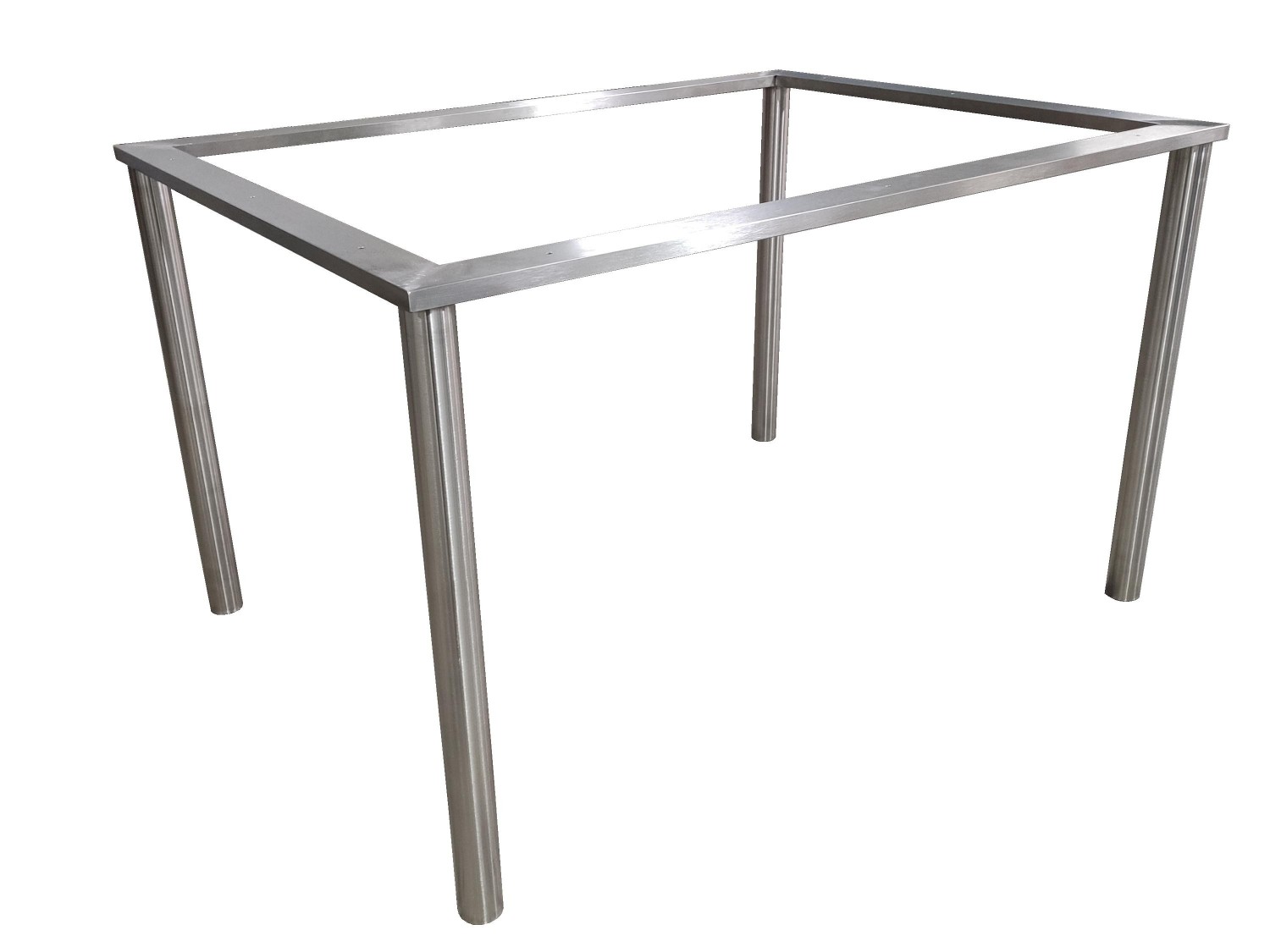
Table leg welding effect
Can Laser Welding Be Used for Plastic Furniture Components?
Yes, laser welding can join certain thermoplastic components. However, its technical feasibility does not mean it is the most economical choice for ordinary plastic furniture parts.This distinction is important because plastic laser welding requires a suitable combination of materials, laser wavelength, optical configuration, joint design, and clamping conditions.
How Does Plastic Laser Welding Work?
A common approach is transmission laser welding.
In a typical configuration, the upper plastic component allows the selected laser wavelength to pass through, while the lower component absorbs the laser energy. The absorbed energy generates heat at the interface, allowing the materials to melt and form a joint under suitable clamping conditions.
The two parts must be compatible with the process. Their optical properties, polymer type, pigmentation, additives, geometry, and joint design can all affect the result.Plastic laser welding can offer advantages such as localized heating, clean joints, and the ability to weld certain complex geometries. However, the process is not universally compatible with all plastics or all component designs.
Which Plastic Furniture Components Might Be Considered?
Potential candidates would be specific thermoplastic assemblies that require a clean, controlled, or concealed joint and are manufactured in sufficient quantities to justify dedicated equipment and process development.For example, a manufacturer with a high-volume plastic assembly containing a defined welding seam might investigate laser welding if conventional joining methods do not meet its requirements.
But common furniture plastic components—such as foot caps, decorative covers, clips, connectors, and many simple fittings—often do not require such a specialized process.These parts may be more economically assembled using snap-fit designs, screws, adhesives, ultrasonic welding, heat staking, or other established joining methods, depending on the material and component geometry.
It would therefore be misleading to present plastic laser welding as a mainstream solution for all plastic furniture components.
Is Plastic Laser Welding Too Expensive for Furniture Manufacturing?
It can be difficult to justify when the part is inexpensive, the joint is simple, or production volumes are too low to offset the equipment and development costs.
A plastic laser welding setup may require a dedicated laser source, compatible optics, fixtures, clamping arrangements, process development, and potentially specialized automation. The exact investment depends on the component and required production capacity.
The economic calculation should consider the total cost per accepted part, not just the machine price. Relevant factors include cycle time, labor, scrap, quality requirements, tooling, and the cost of alternative joining methods.
For an ordinary plastic furniture fitting, a simpler joining process may provide a better balance of cost and performance.While for a specialized, high-volume plastic assembly where appearance, cleanliness, joint consistency, or process limitations make conventional methods unsuitable, laser welding may still deserve a feasibility study.
For most furniture manufacturers evaluating CNC laser welding, metal components should be the primary focus. Plastic laser welding should be considered only when a specific component and business case justify it.
It is also important to distinguish the equipment involved. A CNC laser welding machine configured for metal welding should not be assumed to weld plastic simply by changing a program. Plastic laser welding may require a different laser wavelength and optical system, along with compatible materials and dedicated process development.
How to Choose a CNC Laser Welding Machine for Furniture Production
Furniture components vary considerably in size, material, joint design, and production requirements. Selecting a machine based only on the product category—such as a chair frame or metal cabinet—can lead to an unsuitable configuration.The following factors should be evaluated before choosing a system.
Material Type and Thickness
Identify the material used in the component, including steel, stainless steel, aluminum, or another metal. The material and thickness affect laser absorption, heat transfer, process stability, and the required welding parameters.Different materials and joint designs can require different process windows. Even components made from the same material may need different settings because of differences in thickness, fit-up, and welding orientation.
The machine configuration should therefore be based on actual workpieces and sample testing.
Joint Design and Welding Position
Determine whether the component uses butt joints, lap joints, corner joints, tube intersections, or other configurations.The location of each seam is equally important. A weld that is easy to access from above may be much more difficult if it is located inside a frame or behind another component.
The welding head must have sufficient clearance to reach the seam without colliding with the workpiece or fixture.
Workpiece Size and Machine Travel
The working area must accommodate the complete part, including the fixture and any required rotary movement.
For smaller components and repeatable joints, a CNC platform may be appropriate. For large furniture frames, the working range and access requirements must be checked carefully. A robotic system may be more suitable when the component exceeds the practical working envelope of the proposed CNC machine.
Axis Configuration and Rotary Functions
A basic CNC configuration may be sufficient for components with simple, accessible welding paths.
Parts with round sections or circumferential joints may benefit from a rotary axis. Components with multiple welding orientations may require a more specialized multi-axis setup or a redesigned fixture.The number of axes alone does not determine whether a machine is suitable. What matters is whether the axes can position the workpiece and welding head correctly for every required seam.
Fixture Design and Changeover Time
Fixtures directly affect welding consistency and production efficiency.
A well-designed fixture should locate the components accurately, hold them securely, allow convenient loading and unloading, and provide adequate access to the welding joints.If a manufacturer produces several furniture models, fixture changeover time should be included in the machine-selection process. Modular fixtures may be useful when different products share similar dimensions or clamping points.
Production Volume and Automation Level
A manufacturer producing a small number of customized components may not need a fully automated system.While a company producing large quantities of identical frames or brackets may benefit from a dedicated CNC program, repeatable fixture, and more efficient loading arrangement.
For more demanding production requirements, the system may be integrated with rotary positioning, material handling, or robotic automation.The appropriate automation level should be based on expected output, labor availability, part variation, and the manufacturer’s budget.
Safety and Factory Integration
Laser welding equipment must be integrated into a suitable industrial safety arrangement.
Depending on the laser class and system design, this may involve an enclosed work area, interlocks, protective viewing windows, appropriate laser safety procedures, fume extraction, and operator training.Furniture manufacturers should also consider the available floor space, electrical supply, cooling requirements, maintenance access, and integration with existing production equipment.
Safety provisions must be selected according to the actual machine and installation rather than assumed to be identical for every laser welding system.
CNC Laser Welding Solutions from ZS Machinery
ZS Machinery provides industrial laser welding solutions for manufacturers evaluating automated or semi-automated welding processes.For furniture production, the appropriate configuration depends on the actual component rather than a one-size-fits-all machine specification.
For repeatable metal components, a CNC laser welding machine may be configured around the required working range, motion axes, welding head, and fixture arrangement. Components with round sections may require a rotary axis, while products with multiple welding orientations may need a customized workholding solution.
For large furniture frames or complex three-dimensional weld paths, robotic laser welding may be worth evaluating. The system can be planned around the required reach, workpiece positioning, joint accessibility, and production sequence.
ZS Machinery can help assess the feasibility of laser welding for applications such as metal chair frames, table bases, shelving structures, cabinets, brackets, and selected stainless steel furniture components.
The goal is to identify a practical welding solution that matches the component geometry, required weld quality, and production volume—not to recommend unnecessary automation.
What Information Is Needed for a Furniture Laser Welding Assessment?
To evaluate whether CNC laser welding is suitable for your furniture products, prepare the following information where available:
- Product photos or drawings: Show the complete component and the joints that need to be welded.
- Material and thickness: Identify the metal type and the thickness of each component at the joint.
- Welding locations: Mark the seams that require welding and indicate whether they are visible or structural.
- Workpiece dimensions: Provide the overall length, width, height, and any important clearances.
- Production volume: Estimate the number of parts produced per shift, day, month, or year.
- Current welding process: Explain whether you currently use TIG, MIG, resistance welding, manual laser welding, or another method.
- Current production challenges: Describe issues such as excessive finishing, inconsistent welds, distortion, labor requirements, or slow cycle times.
- Quality requirements: Specify the required appearance, mechanical performance, dimensional tolerances, and applicable inspection requirements.
With this information, the machine configuration and expected process benefits can be evaluated more accurately. Sample testing is recommended before making a final investment decision, especially for structural components or products with demanding appearance requirements.
Frequently Asked Questions About CNC Laser Welding in Furniture Manufacturing
Can CNC laser welding be used for metal chair frames?
Yes, selected metal chair frames can be suitable for CNC laser welding, particularly when the frame contains repeatable joints and can be positioned accurately in a fixture. Material thickness, joint design, weld accessibility, and required mechanical performance must be evaluated before selecting the process.
Is laser welding suitable for metal table legs and table bases?
It can be suitable for table legs, tubular supports, brackets, and table-base assemblies with compatible joint designs. CNC control is particularly useful when the same geometry is produced repeatedly. Components requiring circumferential welding may benefit from a rotary axis, depending on their design.
Can a CNC laser welding machine weld stainless steel furniture?
Yes, suitable stainless steel components can be laser welded. The actual result depends on material grade, thickness, joint fit-up, shielding, welding parameters, and the required surface finish. Decorative stainless steel products may still require post-welding cleaning or polishing.
Can one CNC laser welding machine produce different furniture products?
Potentially, yes. A machine may handle different products when their dimensions, welding paths, fixture requirements, and motion requirements fall within the machine’s capabilities. Interchangeable fixtures and separate programs can support product changeovers, although the time and cost of changing fixtures should be considered.
Is CNC laser welding better than TIG or MIG welding for furniture?
There is no universal winner. Laser welding may be advantageous when clean seams, controlled heat input, and repeatable programmed welding are important. TIG or MIG welding may remain more economical for certain thick materials, large structural joints, irregular parts, or low-volume work.
The best choice depends on the component, required weld quality, production volume, and total manufacturing cost.
Can a metal CNC laser welding machine weld plastic furniture parts?
Not necessarily. Laser welding plastic generally requires compatible thermoplastic materials and a suitable laser wavelength and optical configuration. A machine configured for metal welding should not be assumed to be suitable for plastic welding without a separate technical assessment.
For common plastic furniture fittings, simpler joining methods may be more economical. Plastic laser welding is worth investigating when a specific component requires it and the production volume justifies the equipment and process development.
Should I choose CNC laser welding or robotic laser welding for furniture frames?
CNC laser welding may be suitable for components that fit within the working area and have repeatable, accessible weld seams. Robotic laser welding may be more appropriate for larger components or complex three-dimensional paths that require a wider range of motion.
The decision should be based on the actual part dimensions, weld locations, fixture design, and production requirements.
Conclusion: Is CNC Laser Welding Worth Considering for Furniture Manufacturing?
CNC laser welding offers a potential solution for furniture manufacturers seeking more consistent welding of selected metal components. Chair frames, table bases, bed-frame components, shelving systems, retail display structures, cabinets, brackets, and decorative stainless steel assemblies are all worth evaluating when their material, joint design, and production requirements are compatible with laser welding.
The strongest applications are not simply the parts that can be welded with a laser. They are the parts for which programmable movement, accurate fixturing, repeatability, and reduced finishing can create measurable production benefits.
If you are considering a CNC laser welding machine for furniture production, ZS Machinery can help evaluate your components and identify a suitable configuration.
Share your product photos or drawings, material thickness, welding locations, and expected production volume so that the application can be assessed before you invest in equipment.