
CNC Laser Welding in the Industrial Equipment Industry
Industrial equipment manufacturing covers a broad range of products, from machine frames and metal enclosures to pump housings, motor components, gearboxes, and specialized industrial assemblies. These products often require multiple welding joints, accurate positioning, stable structural performance, and consistent manufacturing quality.
CNC laser welding provides a programmable joining solution for suitable industrial metal components, particularly when manufacturers need controlled heat input, repeatable weld paths, and efficient batch production. Depending on the component geometry and production requirements, a 4-axis, 5-axis, or 6-axis CNC laser welding machine can be used. For larger structures or more complex welding paths, a robotic laser welding system may offer greater flexibility.
Industrial equipment also includes plastic housings and functional components. For compatible thermoplastics, CNC laser plastic welding provides another option for joining selected components used in control systems, sensors, and industrial equipment enclosures.
However, industrial equipment varies considerably in size, material, thickness, and service conditions. Laser welding is not automatically the best process for every component. The appropriate solution depends on the actual joint design, required strength, dimensional tolerances, production volume, and applicable quality standards.
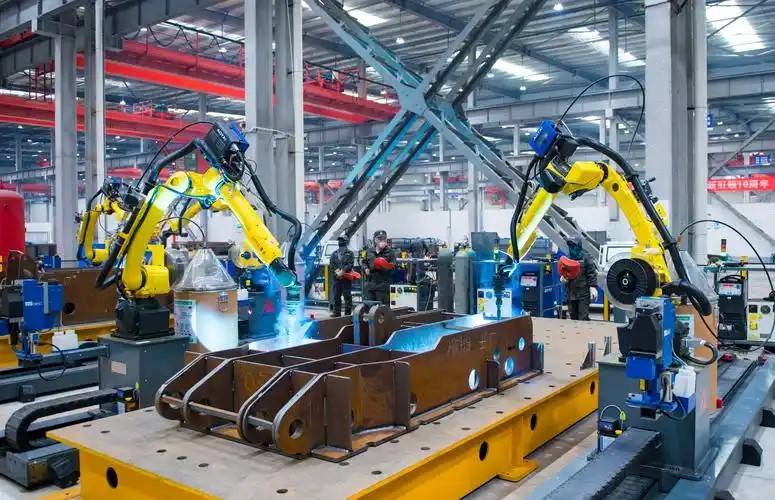
Industrial Equipment Industry
Why Use CNC Laser Welding for Industrial Equipment?
Industrial equipment manufacturers often produce components that must maintain their dimensions and structural integrity after welding. Excessive heat can cause distortion, complicate subsequent assembly, or increase the amount of finishing work required.
Laser welding concentrates energy in a relatively small area. When the material and joint design are suitable, this can help limit the heat-affected area and reduce distortion compared with processes involving greater overall heat input.
CNC control adds another advantage: welding paths and movement sequences can be programmed and repeated. When combined with suitable fixtures, rotary axes, and automated handling, this makes laser welding useful for manufacturing repeated components.
Key advantages include:
- Controlled heat input: Helps limit thermal distortion in suitable metal components.
- Repeatable welding paths: CNC programming supports consistent production of similar workpieces.
- Accurate positioning: Fixtures and controlled movement help maintain the intended welding location.
- Efficient processing: High welding speeds may be achievable for suitable materials and joint geometries.
- Flexible equipment configurations: Different CNC axes and robotic systems accommodate different workpiece sizes and welding directions.
- Automation potential: Welding can be integrated with positioners, fixtures, vision systems, and material handling.
- Reduced finishing requirements: Some applications may require less grinding or correction when the weld process and joint design are properly optimized.
These benefits depend on the application. Laser welding still requires suitable joint fit-up, stable workholding, appropriate process parameters, and inspection to confirm that the finished component meets its requirements.
Industrial Equipment Products Suitable for CNC Laser Welding
1. Machine Frames and Industrial Structures
Machine frames support the main components of industrial equipment. Depending on the machine, they may be fabricated from sheet metal, steel sections, plates, or formed structural components.Laser welding may be suitable for selected frames and structural assemblies, particularly where the components have accessible joints, appropriate material thicknesses, and controlled fit-up.
Potential applications include:
- Sheet metal machine frames
- Small and medium-sized equipment frames
- Precision equipment support structures
- Machine bases and brackets
- Lightweight fabricated structures
- Selected welded structural assemblies
For compact frames made from relatively thin sections, a CNC laser welding machine may provide a repeatable welding solution.
Larger frames with long seams, thick sections, substantial gaps, or demanding structural requirements may be better suited to conventional arc welding or a qualified laser-hybrid process. A robotic laser welding system can be considered when the material and joint geometry are compatible with laser welding.
2. Machine Housings and Equipment Enclosures
Machine housings protect internal mechanisms and provide mounting surfaces for electrical, mechanical, or control components. Equipment enclosures are commonly fabricated from stainless steel, carbon steel, galvanized steel, or aluminum.These products often contain corners, panel joints, brackets, mounting points, and short or continuous seams.
Potential laser welding applications include:
- Machine covers and housings
- Equipment enclosures
- Metal equipment cabinets
- Protective covers
- Sheet metal panels
- Internal mounting brackets
- Selected enclosure frames
For small and medium-sized housings, CNC laser welding can be used with customized fixtures to position the panels and maintain the required joint alignment.
Laser welding can also be considered when the visible weld appearance is important. However, a clean weld appearance is not guaranteed by the laser alone; joint preparation, fit-up, surface condition, shielding gas, and process settings all affect the result.
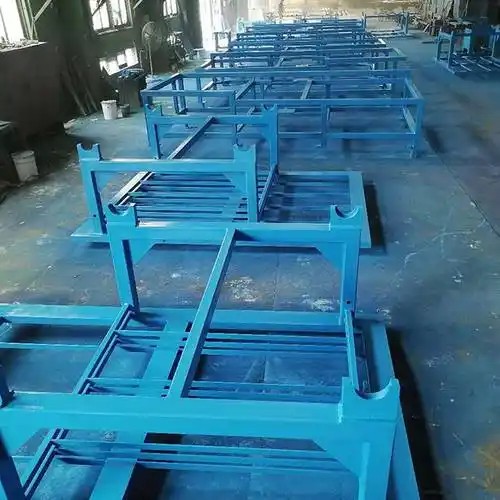
Machine Frames and Industrial Structures
3. Industrial Cabinets and Electrical Cabinets
Industrial cabinets house electrical equipment, control systems, and other components used in manufacturing facilities and industrial installations.Their structures may include side panels, doors, frames, mounting plates, and supporting brackets.
Laser welding may be suitable for selected joints in:
- Industrial cabinets
- Electrical cabinets
- Control cabinets
- Machine control enclosures
- Equipment distribution cabinets
- Metal control boxes
For batch production, a CNC laser welding machine can repeat programmed seams on similar cabinet components. A fixture can help maintain squareness and panel positioning during welding.
For larger cabinets or structures that require welding from several directions, a 5-axis CNC machine or robotic laser welding system may provide better access, depending on the design.
It is important to distinguish welding the metal cabinet structure from assembling its electrical contents. Laser welding is a joining process for suitable metal components, not a universal solution for completing the entire cabinet.
4. Server Cabinets and Racks
Server cabinets and equipment racks are fabricated from multiple metal panels, uprights, brackets, rails, and structural members.Laser welding can be considered for selected structural joints and sheet metal components, particularly where repeated production and dimensional consistency are important.
Potential applications include:
- Cabinet frames
- Metal mounting brackets
- Structural supports
- Selected sheet metal enclosure joints
- Specialized equipment rack components
However, many server racks use bolted connections, rivets, clinching, or other mechanical fastening methods because they support modular assembly and maintenance. Laser welding is therefore most appropriate for components whose design specifically benefits from welded joints.
5. Pump Housings and Fluid-Handling Components
Industrial pumps are used in water treatment, chemical processing, manufacturing, cooling systems, and many other applications. Depending on the pump type, the housing may be cast, machined, fabricated from sheet metal, or assembled from multiple metal components.Laser welding may be suitable for selected fabricated housings, covers, thin-wall components, and metal assemblies.
Potential applications include:
- Fabricated pump housings
- Metal covers and end plates
- Selected fluid-handling components
- Thin-wall metal manifolds
- Mounting brackets and supports
- Selected welded impeller or rotating assemblies
The suitability of laser welding depends on the actual pump design. Many pump casings are cast or machined, and their manufacturing processes may not involve laser welding.
For components that contain pressurized fluid, the joint must satisfy the specified pressure, fatigue, corrosion, and sealing requirements. The process must be validated for the actual material and service conditions.
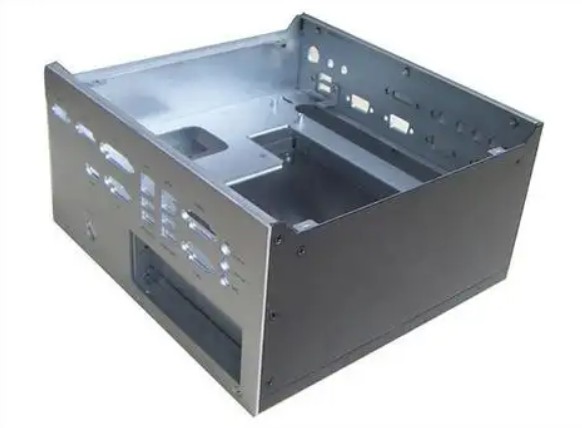
Machine Housings and Equipment Enclosures
6. Motor Housings and Electrical Drive Components
Electric motors and industrial drives contain housings, end covers, mounting features, and other metal components. Some designs use fabricated metal parts, while others rely on cast or machined housings.Laser welding can be considered for suitable fabricated motor housings, covers, and selected electrical drive components.
Potential applications include:
- Fabricated motor housings
- Metal end covers
- Selected motor casing joints
- Mounting structures
- Drive system covers
- Selected thin-wall electrical equipment housings
The motor’s internal construction matters. For example, welding near windings, magnets, bearings, insulation, or precision-machined surfaces may introduce unacceptable heat or distortion if the process is not carefully designed.
Therefore, the most appropriate applications are those where the joint location, material, and thermal limits have been evaluated in advance.
7. Gearbox Housings and Transmission Components
Industrial gearboxes and transmission systems contain housings, shafts, gears, and other precision components.
Laser welding is used in specific powertrain and drive-system applications. Fraunhofer IWS describes dedicated laser welding systems for rotary components, including shafts, gear wheels, and differential gear components.
Potential applications include:
- Selected gearbox housing assemblies
- Shafts and gear components designed for laser welding
- Differential components
- Specialized rotary assemblies
- Selected metal covers and brackets
Not every gearbox component is suitable for laser welding. Many housings are cast or machined, while gears and shafts may require specialized joining processes and strict control of heat treatment and dimensional accuracy.
For precision transmission components, the material, joint design, metallurgical requirements, and post-weld machining or heat treatment must be considered before selecting the welding system.
8. Conveyor Components and Industrial Brackets
Conveyor systems contain frames, brackets, supports, guards, and other fabricated components. Many are manufactured in repeated batches.Laser welding may be suitable for selected sheet metal parts and lightweight structural components, especially where repeatability and controlled distortion are important.
Potential applications include:
- Conveyor brackets
- Sensor mounting supports
- Sheet metal conveyor guards
- Lightweight frame assemblies
- Equipment mounting plates
- Selected conveyor subassemblies
For simple parts with repeated short seams, a CNC laser welding machine can be programmed for consistent welding. A robotic system may be more appropriate when the assembly is large or contains numerous joints at different angles.
For heavy conveyor frames, thick steel sections, and highly loaded structures, conventional arc welding may remain more practical. The decision should be based on structural requirements and process feasibility, not solely on welding speed.
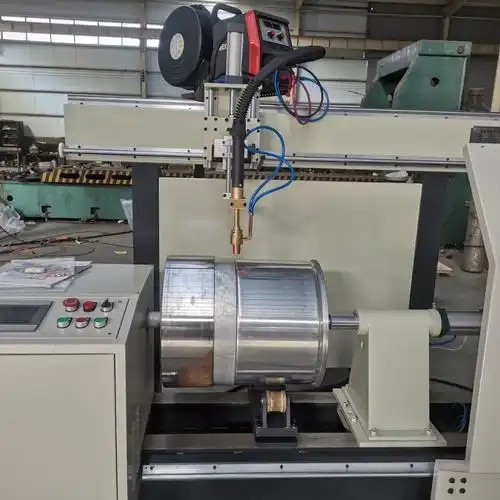
Pump Housings and Fluid-Handling Components laser welding
9. Machine Guards and Protective Covers
Machine guards protect operators from moving parts and help separate hazardous operating areas from accessible spaces. Protective covers also shield internal equipment from dust, debris, or other environmental factors.
Laser welding can be used for suitable metal guard frames, covers, panels, and mounting components.
Potential applications include:
- Sheet metal machine guards
- Protective covers
- Safety enclosure frames
- Metal access panels
- Equipment covers
- Mounting brackets
For repetitive production, CNC laser welding can help maintain consistent joints and component geometry. If the guard is part of a safety-related structure, the completed assembly must still meet the relevant mechanical and safety requirements.
Storage Tanks and Pressure Vessels: When Is Laser Welding Suitable?
Storage tanks, industrial tanks, and pressure vessels should be evaluated separately from ordinary machine housings because their service conditions may impose much stricter requirements.
Laser welding can be used in selected tank and vessel applications, including specialized thin-wall structures and certain metal systems. Research and industrial development have also demonstrated laser-welded tank systems for specific high-pressure applications.
However, this does not mean that a standard CNC laser welding machine is suitable for every storage tank or pressure vessel.
Important factors include:
- Material grade and thickness
- Joint preparation and fit-up tolerance
- Required penetration and weld geometry
- Operating pressure and temperature
- Fatigue and corrosion requirements
- Applicable pressure equipment codes
- Welding procedure qualification
- Non-destructive examination and pressure testing
For large tanks, thick plates, long circumferential seams, and conventional pressure vessel fabrication, submerged arc welding, TIG, MIG/MAG, or other established processes may be more appropriate. Laser or laser-hybrid welding should be selected only when the process is technically qualified for the component and applicable requirements.
For standard industrial equipment projects, it is generally more useful to focus on machine frames, housings, enclosures, brackets, and suitable precision assemblies unless the specific tank or vessel application has been verified.
CNC Laser Welding for Plastic Industrial Components
Industrial equipment also uses thermoplastic components in sensors, control systems, fluid management, protective enclosures, and functional assemblies.For compatible thermoplastics, CNC laser plastic welding can join two parts along a programmed seam. In transmission laser welding, the laser passes through one component and is absorbed near the interface by the other, creating localized melting at the joint.
This process is application-specific: the polymer grades, optical transmission, pigments, fillers, joint geometry, and clamping conditions must be compatible.
Plastic Sensor and Control Housings
Industrial automation systems use sensors, electronic modules, and control components that may be enclosed in plastic housings.Laser plastic welding may be suitable for joining selected housing halves or covers where a consistent joint and controlled enclosure are required.
Potential applications include:
- Sensor housings
- Electronic control module housings
- Plastic covers for monitoring devices
- Selected industrial control enclosures
- Functional molded plastic assemblies
Whether the finished housing meets dust, moisture, or other protection requirements must be established through product testing.
Plastic Fluid-Handling Components
Some industrial systems use molded thermoplastic components to direct or contain fluids. Depending on the material and design, laser plastic welding may be suitable for selected reservoirs, housings, or fluid-handling assemblies.
The required chemical resistance, operating temperature, fluid compatibility, and leak-tightness must be considered before confirming the process.
Plastic Covers and Equipment Housings
Plastic covers and housings may be used around industrial sensors, control devices, and selected machine subsystems.
CNC laser plastic welding can be evaluated when compatible thermoplastics require a controlled, repeatable joint. It is not suitable for every plastic, and some components may be better assembled using screws, snap fits, ultrasonic welding, or adhesives.
Choosing the Right CNC Laser Welding Machine for Industrial Equipment
Industrial equipment covers a wide range of component sizes and joint configurations. The machine should be selected according to the actual workpiece and welding path rather than the industry category alone.
4 Axis CNC Laser Welding Machine
A 4 Axis CNC Laser Welding Machine combines XYZ movement with a rotary axis for workpiece positioning.
It may be suitable for compact metal components that require rotary positioning, including selected cylindrical housings, round covers, and rotary assemblies.
Typical applications:
- Small fabricated housings
- Cylindrical metal components
- Round covers and fittings
- Selected pump or motor components
- Repetitive parts mounted on rotary fixtures
The available rotary movement must be sufficient to reach the required welding seams.
5 Axis CNC Laser Welding Machine
A 5 Axis CNC Laser Welding Machine combines XYZ movement, a rotary workpiece axis, and a welding-head swing axis.
It is suitable for many components that require welding from different directions or at multiple angles.
Typical applications:
- Industrial equipment housings
- Sheet metal cabinets
- Machine covers
- Fabricated frames
- Selected pump and motor assemblies
- Customized metal components
The swing axis changes the welding-head orientation, while the rotary axis positions the workpiece. This combination can provide greater flexibility than a basic XYZ platform for multi-angle welding.
6 Axis CNC Laser Welding Machine
A 6 Axis CNC Laser Welding Machine provides additional rotary positioning for more complex workpiece orientations.
It may be suitable for parts with multiple welding surfaces or three-dimensional geometries that require greater positioning flexibility.
Typical applications:
- Complex fabricated housings
- Selected rotary assemblies
- Multi-angle industrial components
- Irregular metal structures
- Customized three-dimensional parts
The actual axis configuration and travel must be checked against the workpiece. A higher axis count alone does not guarantee that every joint will be accessible.
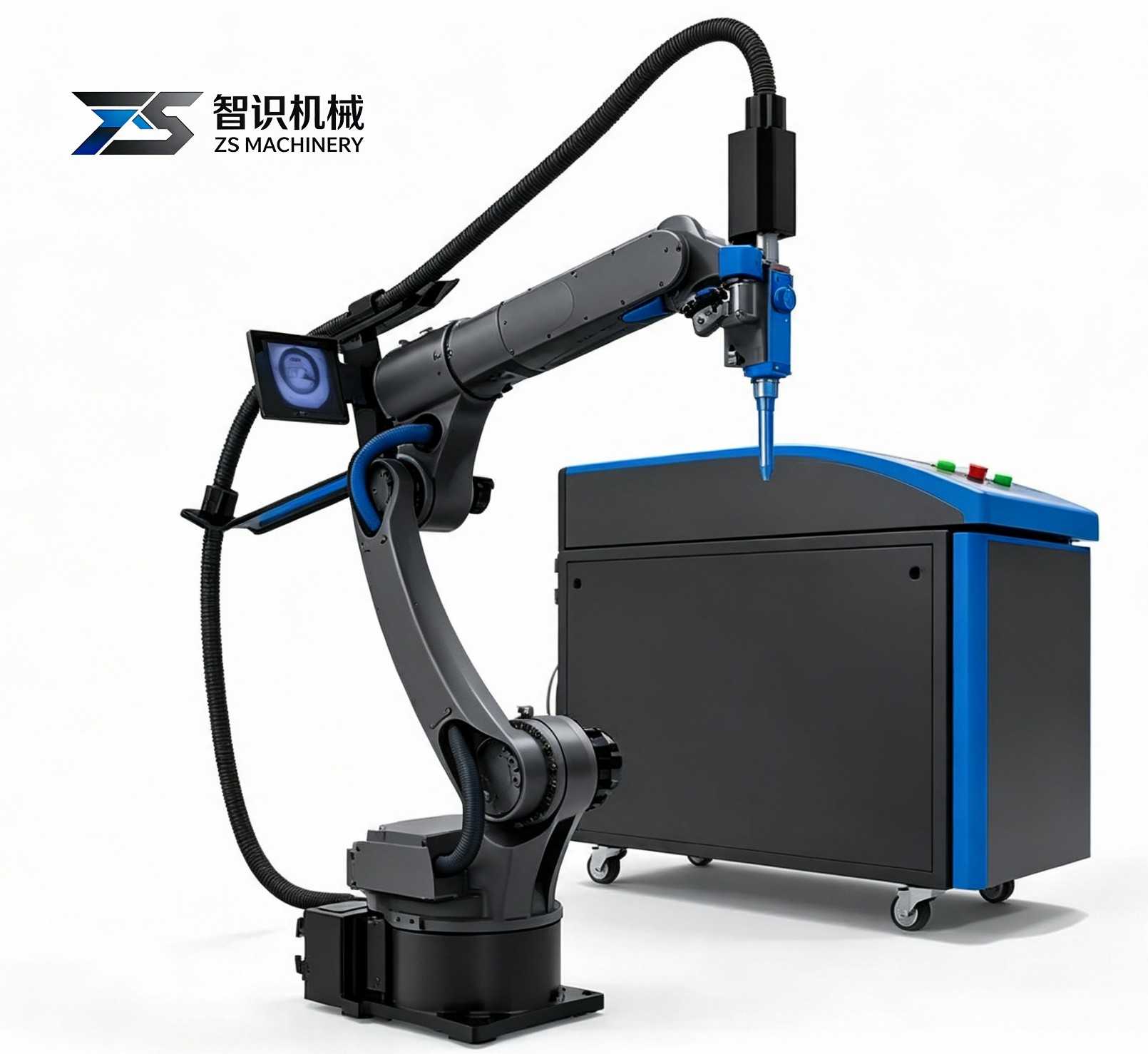
6 axis robot laser welding machine
Robotic Laser Welding System
For large workpieces, complex structures, or production lines requiring flexible automation, a robotic laser welding system may be the more suitable choice.
A six-axis industrial robot can move the welding head around the workpiece. A positioner, rotary table, customized fixture, or additional linear axis can be integrated when needed.
Typical applications:
- Large machine frames
- Large equipment housings
- Industrial cabinet structures
- Complex fabricated assemblies
- Larger welded subassemblies
- Repetitive production of compatible industrial components
Robot selection depends on the workpiece dimensions, reach, payload, required welding orientations, and fixture arrangement.
Supporting Batch Production and Automation
Many industrial equipment manufacturers produce repeated parts or similar product families. CNC and robotic laser welding can help standardize these processes when the joint design and material are suitable.
A typical workflow may include:
Cutting and Forming → Component Preparation → Fixture Loading → Workpiece Positioning → Programmed Welding → Inspection → Unloading
Depending on production requirements, the system may also integrate:
- Customized welding fixtures
- Rotary or tilting positioners
- Automatic loading and unloading
- Vision-based positioning
- Seam tracking
- Process monitoring
- Automated inspection and production data recording
For small batches and customized products, a flexible CNC machine with a suitable fixture may be sufficient. For higher production volumes, dedicated fixtures and robotic automation may improve consistency and production flow.
The level of automation should be based on the actual production cycle, product variation, and required output rather than assumed to be necessary for every project.
How to Choose a Laser Welding Solution for Industrial Equipment
Before selecting a machine, manufacturers should define the following requirements.
Material and thickness: Identify the material grade, wall thickness, and any material combinations. Different metals have different laser absorption, thermal conductivity, and weldability characteristics.
Joint design: Confirm whether the product uses butt joints, lap joints, corner joints, circumferential seams, or other configurations. Joint gap and fit-up are particularly important for laser welding.
Workpiece dimensions: Determine the overall size, weight, and accessibility of the welding joints. This helps establish whether a fixed CNC platform or robot is more appropriate.
Production volume: Consider the number of workpieces, required cycle time, changeover frequency, and need for automatic loading or unloading.
Quality requirements: Define the required penetration, mechanical performance, dimensional tolerances, appearance, and inspection procedures. Pressure-containing components require additional qualification and testing.
Sample welding: Where suitability is uncertain, sample testing should be completed before finalizing the laser source, machine configuration, fixture, and process parameters.
CNC Laser Welding Solutions from ZS Machinery
ZS Machinery provides CNC laser welding machines, robotic laser welding systems, and customized fixtures for suitable industrial equipment applications. CNC laser plastic welding solutions are also available for compatible thermoplastic components.
Depending on the project, the system may include:
- 4 Axis CNC Laser Welding Machine
- 5 Axis CNC Laser Welding Machine
- 6 Axis CNC Laser Welding Machine
- Robotic Laser Welding System
- CNC Laser Plastic Welding Machine
- Customized Welding Fixtures and Positioners
- Automated Welding Cells
The final configuration depends on the workpiece material, thickness, dimensions, joint geometry, welding positions, quality requirements, and production volume.
For components that require high structural strength, pressure integrity, or strict dimensional control, process feasibility and qualification should be confirmed before recommending a laser welding solution.
Conclusion
CNC laser welding can support industrial equipment manufacturing across a range of suitable applications, including machine housings, metal enclosures, industrial cabinets, selected pump and motor components, transmission parts, brackets, and fabricated structures.
For compact components and multi-angle welding, a 4-axis, 5-axis, or 6-axis CNC laser welding machine may provide the required positioning flexibility. For large structures and more complex production requirements, robotic laser welding can offer a larger working envelope and greater movement flexibility.
For compatible plastic components, CNC laser plastic welding provides another joining option for selected sensor housings, control modules, and molded industrial assemblies.
The most effective solution begins with the actual product and joint requirements. By evaluating the material, workpiece geometry, quality standards, and production volume, manufacturers can determine whether CNC laser welding, robotic laser welding, plastic laser welding, or a conventional welding process is the appropriate choice.
Contact ZS Machinery
Looking for a laser welding solution for an industrial equipment project?
Send ZS Machinery your product drawings, material and thickness details, joint requirements, component dimensions, and production volume. We can help evaluate a suitable CNC or robotic laser welding configuration for your application.