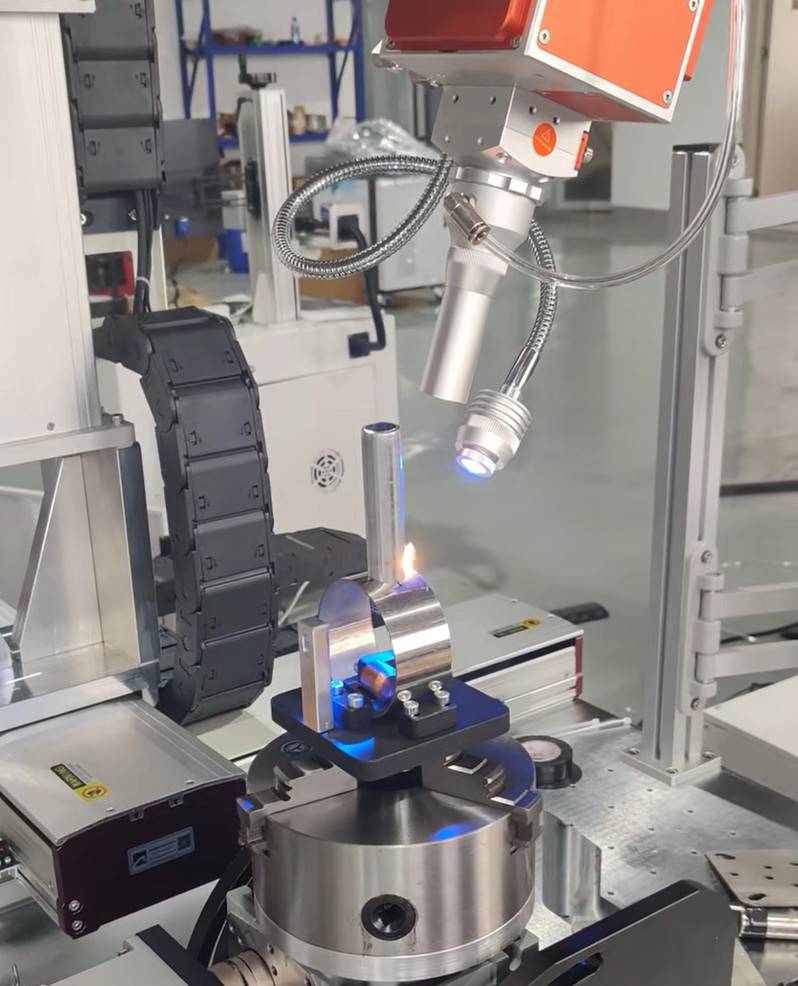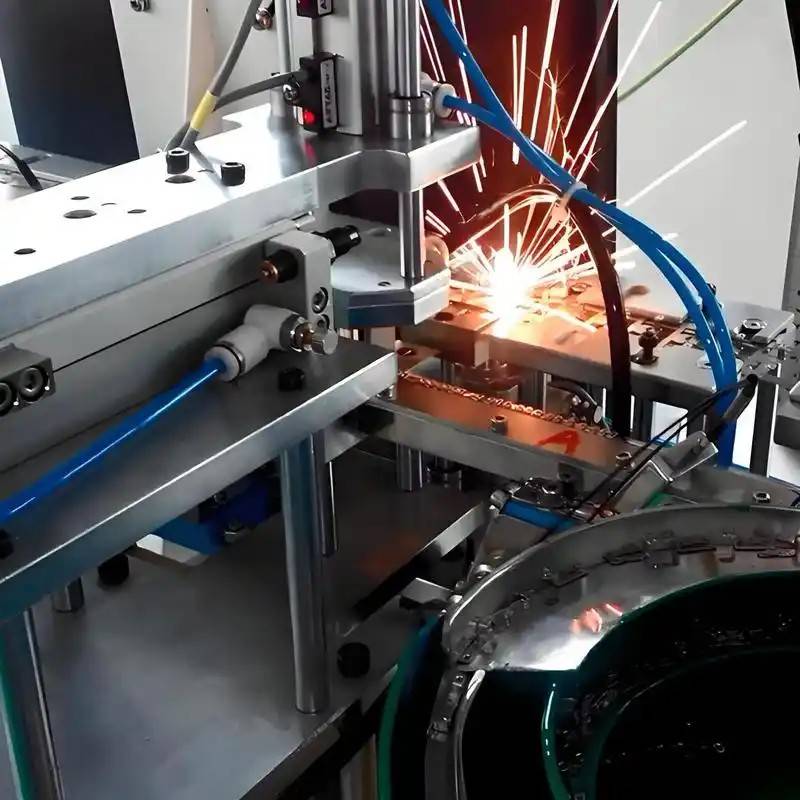
Laser Cladding Guide: Process Overview,Core Principles, Key Parameters And Technology Selection
In modern industry, wear, corrosion, and fatigue failure of critical metal components are recurring challenges. Traditional repair methods often involve risks such as high heat input, component deformation, or insufficient bonding strength. Replacing an entire high-value component, meanwhile, can result in substantial costs and prolonged equipment downtime.
Is there a technology that can provide precise repair and surface enhancement while even creating complex structures that are difficult or impossible to achieve using conventional processes?
Laser Cladding is an effective solution to these challenges. It can produce one or more high-performance alloy layers directly on a component surface, forming a metallurgical bond with the substrate while limiting thermal damage to the underlying component.
This guide examines laser cladding from several perspectives:
- Principles and Core Advantages. How does laser cladding achieve both high bonding strength and low thermal distortion through its distinctive physical mechanisms?
- The Complete Laser Cladding Process. How do the laser beam, metal powder, and substrate interact within a very short time to form a dynamically stable molten pool?
- Key Process Parameters and Their Effects. Why are laser power, scanning speed, and material feed rate three critical process variables? How do they collectively determine cladding geometry, dilution, and final properties?
- Comparison with Other Surface Engineering Technologies. Compared with plasma transferred arc (PTA) cladding, thermal spraying, and hard chrome plating, what are the advantages and limitations of laser cladding in different industrial applications? How should engineers select the appropriate process?
Laser Cladding
1. Principles and Core Advantages of Laser Cladding
1.1 Working Principle
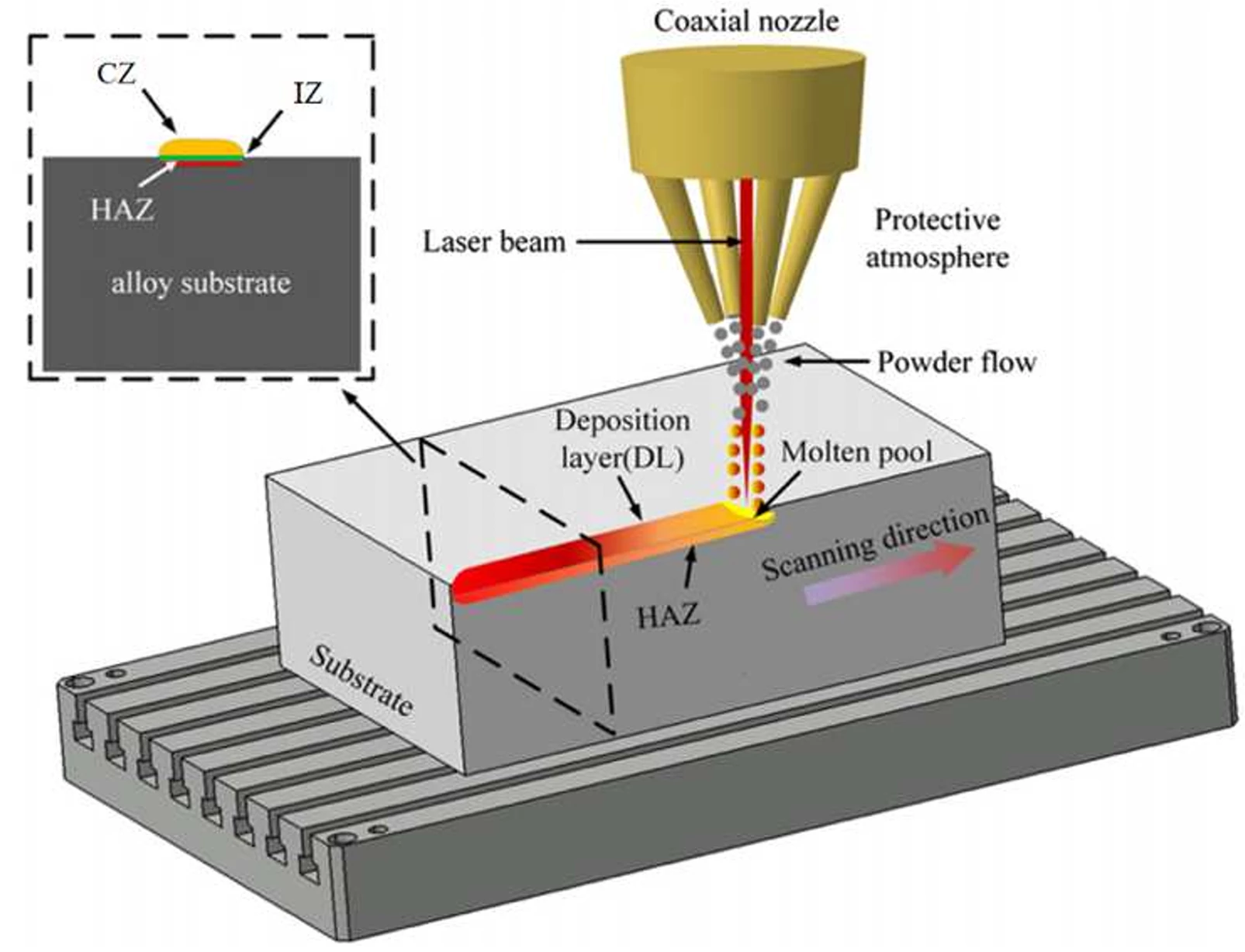
Laser cladding is an advanced surface enhancement and additive manufacturing technology. Its fundamental operating principle can be divided into the following steps:
- Precise Heating: A high-energy-density laser beam is directed onto a designated area of the workpiece.
- Molten Pool Formation: The laser energy rapidly melts a small portion of the substrate surface, forming a localized pool of molten metal known as the molten pool.
- Material Delivery: At the same time, a laser cladding head delivers a controlled amount of metal powder or wire into the molten pool through a nozzle or feeding mechanism.
- Melting and Mixing: The incoming material melts under the laser’s continued energy input and mixes with the molten surface layer of the substrate.
- Rapid Solidification: As the laser beam moves along the programmed path, the molten pool behind it loses its primary heat source. Heat is conducted into the surrounding workpiece, causing the material to cool and solidify rapidly.
- Formation of a New Layer: This process produces a new alloy layer on the workpiece surface, metallurgically bonded to the underlying substrate.
The key to the entire process is the metallurgical bond between the deposited layer and the substrate. At the interface, atomic-scale interactions and diffusion occur, creating a bond that can provide strong adhesion and resistance to delamination when the process is properly controlled.
This distinguishes laser cladding from many conventional coating technologies, in which the coating is primarily attached through mechanical or other non-metallurgical mechanisms.
Laser Cladding Process
Powder Feeding Methods:
a) Lateral powder feeding
b) Laser surrounded by powder — annular laser with powder delivery
c) Powder surrounding the laser — discrete multi-beam coaxial powder feeding
d) Powder surrounding the laser — continuous annular coaxial powder feeding
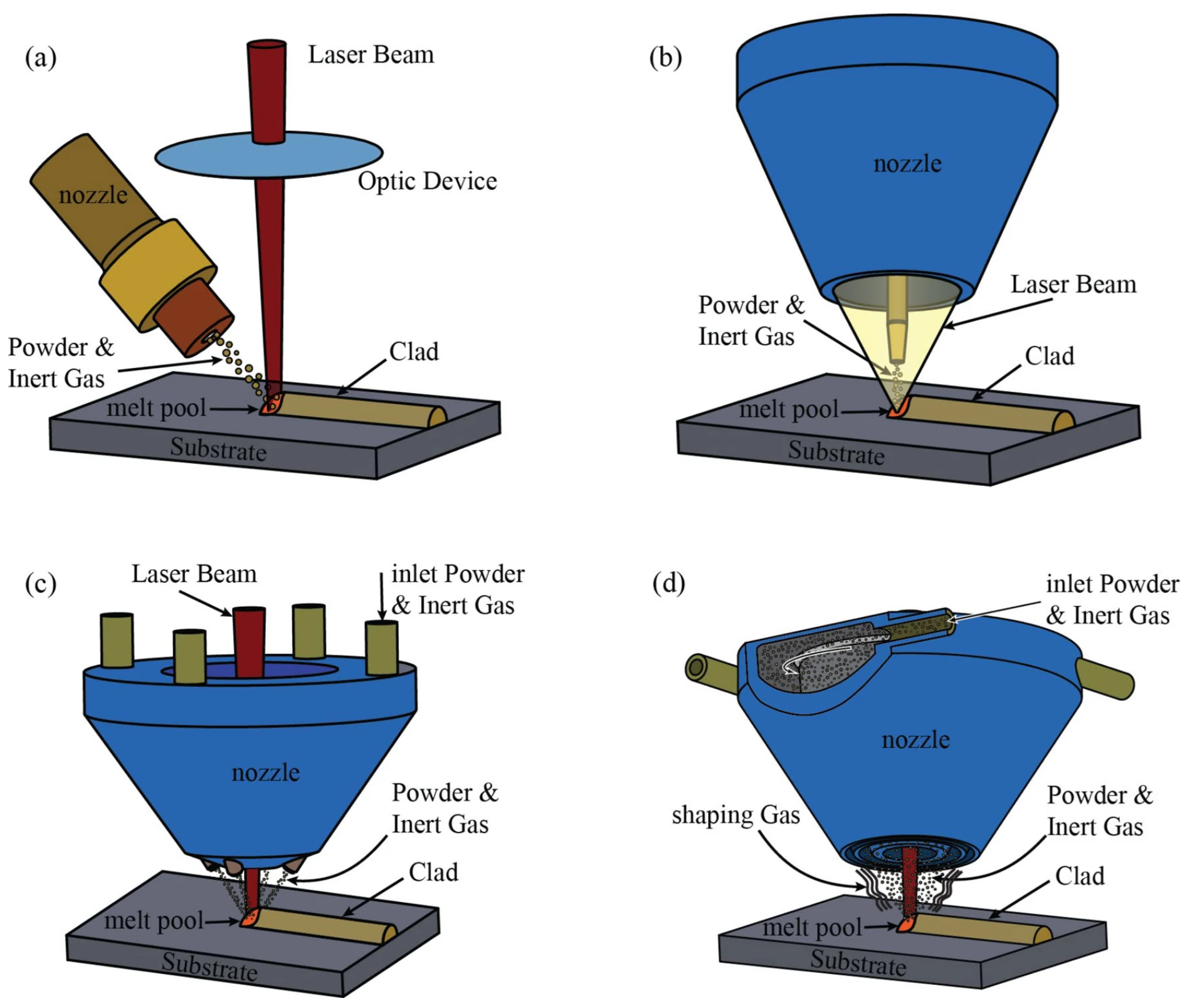
Different Laser cladding powder feeding method
1.2 Three Major Application Areas of Laser Cladding
(1)Repair and Remanufacturing
Laser cladding can restore high-value components that have failed or deteriorated due to wear, corrosion, or fatigue. Examples include turbine blades in aerospace and power generation equipment, worn industrial molds, shafts, rollers, and other precision mechanical components. The process can rebuild worn areas and help restore the required dimensions and surface properties.
(2)Surface Enhancement and Modification
A functional alloy layer with specialized properties—such as high hardness, wear resistance, corrosion resistance, or elevated-temperature performance—can be deposited onto a relatively economical substrate.
This approach can significantly improve surface performance and extend service life while retaining much of the substrate’s original mechanical function. The actual improvement depends on the substrate, cladding material, and processing conditions.
(3)Additive Manufacturing
By depositing material layer by layer, laser metal deposition can build complex metal components directly from three-dimensional CAD models. It can also add new functional features to existing components.
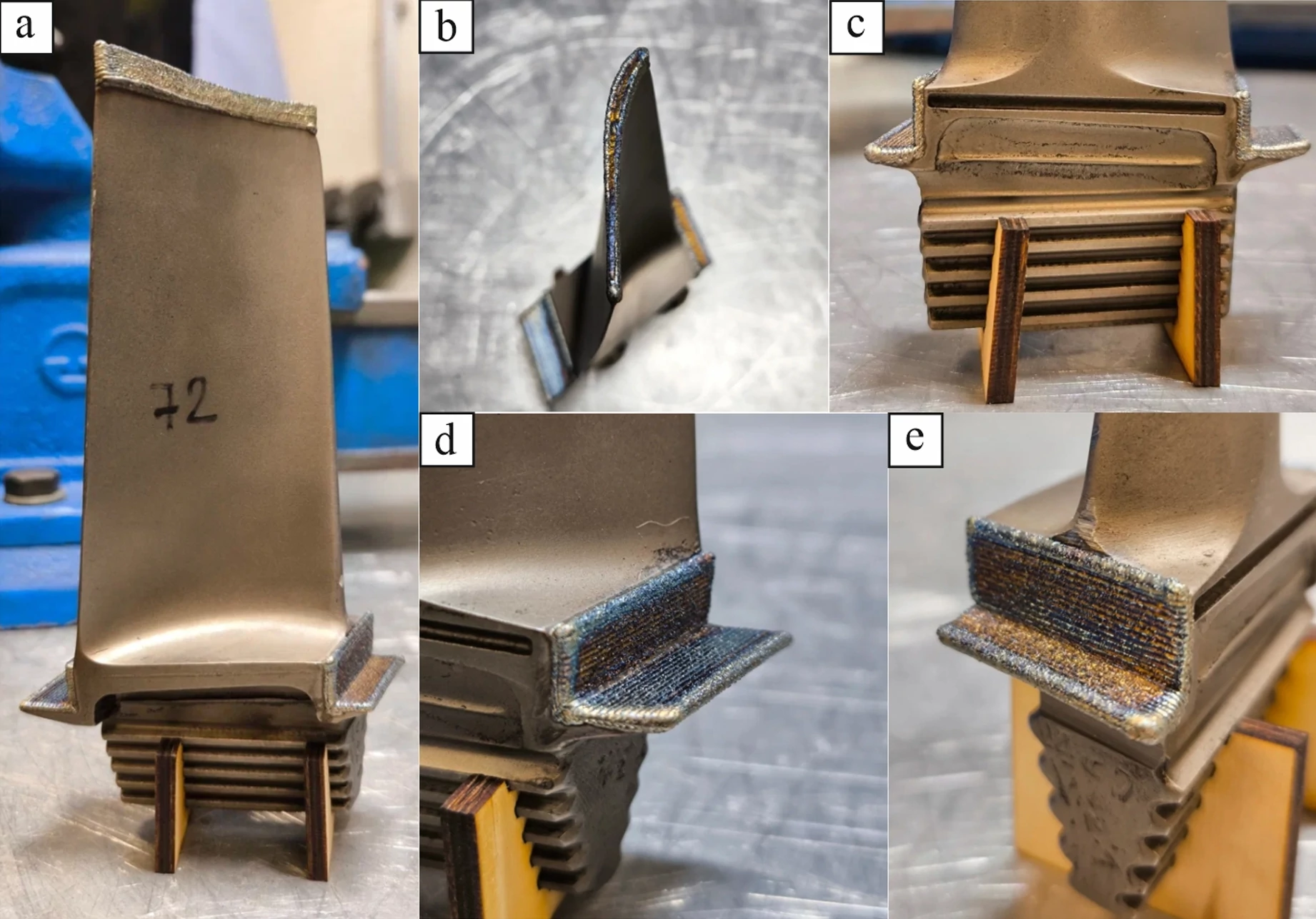
Laser cladding repair of a rotor blade
1.3 Molten Pool Flow and Solidification
Laser cladding involves much more than simply depositing material. Complex fluid flow within the molten pool and the subsequent solidification process play critical roles in determining the final quality of the cladding layer.
Molten Pool Flow
Under laser irradiation, temperature variations across the molten pool surface create surface-tension gradients. These gradients can drive a flow phenomenon known as Marangoni convection.
This internal circulation promotes mixing between the incoming alloying elements and the substrate elements. However, the flow pattern can also affect molten pool stability, bead geometry, and the formation of defects.
Rapid Solidification
The cooling rate during laser cladding can reach approximately (10^3) to (10^6) K/s under certain processing conditions. This rapid, nonequilibrium thermal cycle is one of the principal reasons laser cladding can produce distinctive microstructures.
It offers two important potential benefits.
- Microstructural Refinement: Rapid cooling restricts the time available for crystal growth. As a result, laser-clad layers often contain fine microstructures, including cellular and dendritic structures. According to the Hall–Petch relationship, grain refinement can increase the strength and hardness of many materials.
- Formation of Nonequilibrium Phases: Rapid solidification can retain alloying elements in supersaturated solid solutions or produce metastable phases that are difficult to obtain through slower cooling. Under suitable conditions, these structures can contribute to improved strength, hardness, or corrosion resistance.
The resulting properties depend on the alloy composition, cooling conditions, phase transformations, and subsequent heat treatment.
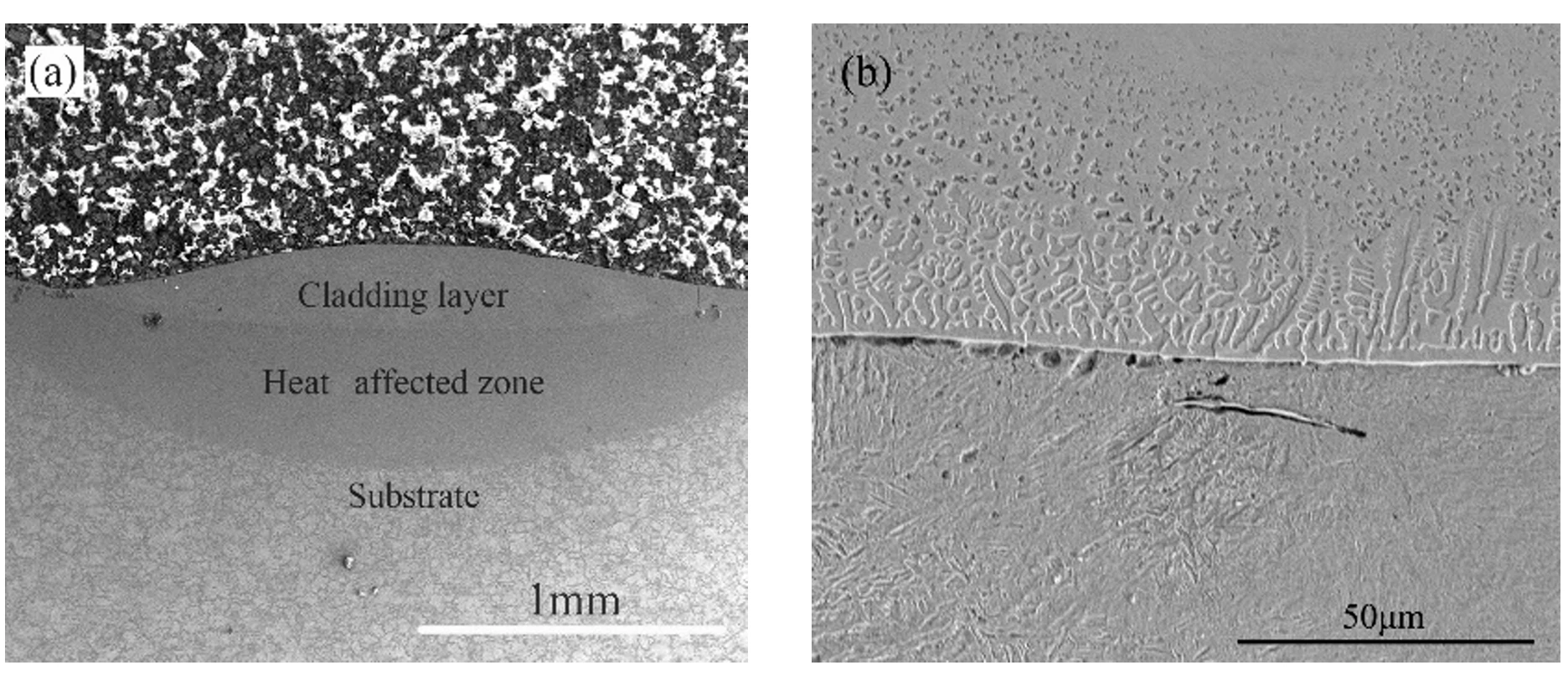
Metallurgical bonding of cladding layer a) cross-sectional morphology; b) bottom microstructure
1.4 Core Technical Advantages
The principal advantages of laser cladding include controlled heat input, strong metallurgical bonding, and flexible material selection.
Its distinctive physical process provides several important benefits.
(1)Low Heat Input and a Small Heat-Affected Zone (HAZ)
Laser energy is concentrated within a relatively small spot and applied over a short period. Although the local molten pool reaches a high temperature, the overall thermal input to the workpiece can be limited through appropriate process control.
This helps restrict the size of the heat-affected zone (HAZ), the region in which the substrate’s microstructure or properties are altered by the thermal cycle.
The practical benefit is reduced thermal distortion and warping compared with many higher-heat-input processes. This is particularly valuable when repairing precision components or treating thin-walled structures. The actual distortion still depends on component geometry, restraint, material properties, and process parameters.
(2)Low Dilution
Dilution refers to the proportion of the deposited layer that originates from the melted substrate.
Because laser cladding allows localized and controlled energy delivery, the amount of substrate melted can often be limited. Under suitable conditions, the dilution rate may be below 10%, while some conventional overlay welding processes can produce dilution rates above 20%.
Lower dilution helps preserve the intended chemical composition of the deposited alloy, which is important when the cladding layer must provide specific wear-resistant, corrosion-resistant, or high-temperature properties.
However, the actual dilution rate depends on the laser power, beam profile, travel speed, material feed rate, and substrate–cladding material combination.
(3)High Density and Strong Bonding
As described above, laser cladding creates a metallurgical bond between the deposited material and the substrate.
With appropriate material preparation, shielding, and parameter control, the resulting layer can achieve high density and low porosity. Density values above 99.9% may be achievable in some systems and material combinations, but this should not be assumed for every cladding process.
Proper process qualification and inspection are essential when the component requires stringent quality standards.
(4)Flexible Materials and Processes
Laser cladding can be applied to many weldable metals, including steels, nickel-based superalloys, and titanium alloys, provided that the material combination and process are suitable.
Multi-channel powder feeding systems can also blend different powders to produce functionally graded materials, in which the composition gradually transitions from one material to another. This offers greater flexibility in designing surface properties and component functionality.
Laser cladding systems can be integrated with CNC machine tools or industrial robots to improve automation, process consistency, and repeatability.
1.5 Key Terminology: LMD, DED, and LC
The terms LMD, DED, and LC are sometimes used interchangeably, although they emphasize different aspects of the technology.
- Laser Metal Deposition (LMD): A term describing the deposition of metal material using a laser as the energy source. It is commonly used in both surface repair and additive manufacturing.
- Directed Energy Deposition (DED): A broader additive manufacturing category in which focused energy melts material as it is deposited. Laser-based, electron-beam, and arc-based systems can fall within this category, depending on the process.
- Laser Cladding (LC): A term that emphasizes the formation of a functional surface layer, particularly for surface enhancement, repair, and remanufacturing.
This article primarily uses Laser Cladding (LC) because the main focus is surface coating and component repair.
2.The Complete Laser Cladding Process
Laser cladding is not simply a matter of depositing material and finishing the operation. It is a coordinated engineering process consisting of three closely connected stages: pretreatment, cladding, and post-processing.
2.1 Pretreatment Stage
Pretreatment is fundamental to achieving reliable bonding and minimizing defects.
Surface Cleaning and Preparation
Oil, rust, oxide scale, and other contaminants on the workpiece surface can decompose, vaporize, or react during laser processing. This may contribute to pores, inclusions, and other defects in the deposited layer.
- Chemical Cleaning: Wipe the surface with a suitable solvent, such as alcohol, to remove oil and grease.
- Mechanical Preparation: Use methods such as grinding or abrasive blasting to remove oxide layers and corrosion. For repair components, damaged material, fatigue-affected regions, and cracks must be assessed and removed where required by the repair procedure.
The preparation method should be selected according to the substrate material, damage mechanism, and applicable quality requirements.
Preheating
Preheating is particularly important for materials that are sensitive to thermal stress or susceptible to cracking, including some high-carbon steels, tool steels, and cast irons.
- Purpose 1: Reduce Temperature Gradients. Preheating reduces the temperature difference between the hot molten pool and the surrounding substrate. This can lower thermal stress during cooling and reduce the risk of cracking.
- Purpose 2: Moderate Cooling. A preheated substrate generally cools more slowly than a cold substrate under otherwise comparable conditions. For certain steels, this can help control hard and brittle microstructures and improve resistance to cracking.
The appropriate preheating temperature must be determined according to the substrate’s chemical composition, thickness, geometry, and metallurgical requirements.
Powder Drying
Metal powders can absorb moisture from the surrounding environment. Moisture and surface contamination may contribute to porosity or hydrogen-related cracking in susceptible material systems.
For this reason, powder condition must be controlled before processing. Drying should follow the powder supplier’s recommendations and the requirements of the selected alloy rather than relying on one universal drying temperature or procedure.
2.2 Cladding Stage
Material Delivery Systems
Powder Feeding
Powder feeding is one of the most widely used methods in laser cladding. Metal powder is transported, typically by a carrier gas, through a nozzle into the molten pool.
- Coaxial Powder Feeding: Powder is delivered through nozzles arranged around the laser beam and converges near the processing point. This configuration is relatively independent of travel direction and is suitable for complex paths and three-dimensional surfaces.
- Off-Axis or Lateral Powder Feeding: Powder enters from a nozzle positioned to one side of the laser beam. The structure can be simpler, but the powder delivery is direction-dependent and may require careful alignment when the processing direction changes.
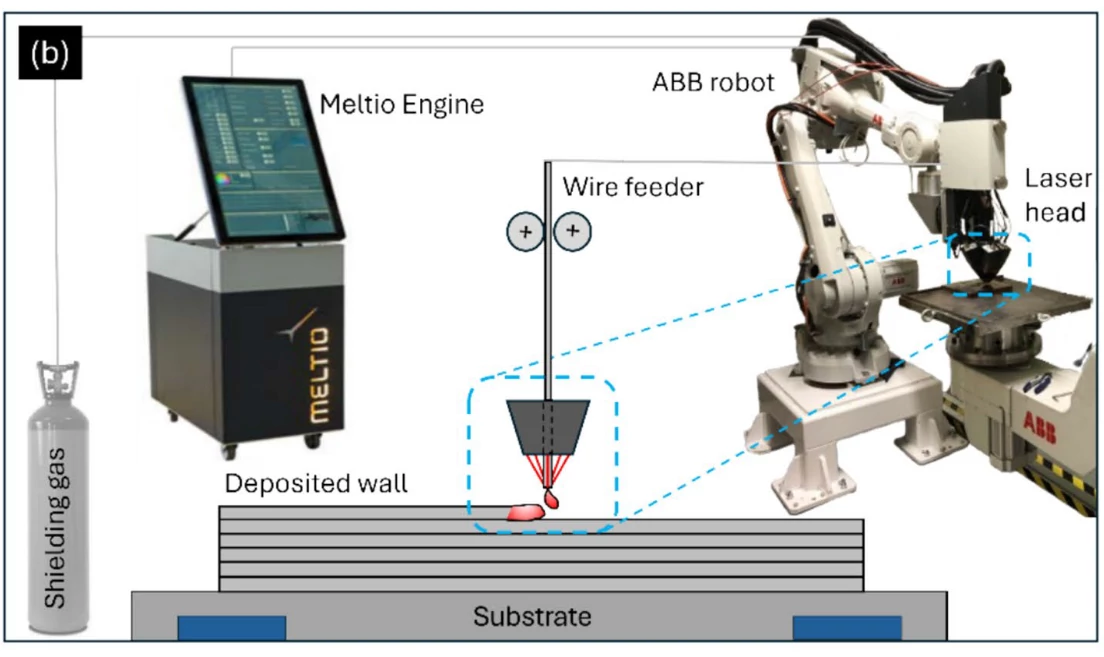
Wire Feeding
Wire-based laser metal deposition uses metal wire as the feedstock.
Advantages include:
- Material utilization can approach 100%, depending on the process.
- No loose powder is required, reducing powder handling and airborne material.
- Wire of a comparable alloy composition may be less expensive than specialized spherical powder.
Limitations include:
- Stable deposition requires precise coordination between the wire feed, laser energy, and molten pool.
- The process window can be relatively narrow.
- Adapting wire delivery to complex geometries may be more difficult than using powder feeding.
Molten Pool Control and Protection
Laser–Material Coupling
For efficient and stable cladding, the laser focal position and the convergence point of the powder stream—or the wire tip in wire-fed systems—must be properly aligned with the intended processing zone.
Incorrect alignment can cause unstable deposition, poor material utilization, inconsistent bead geometry, or incomplete fusion.
Shielding Gas
At high temperatures, the molten pool and surrounding heat-affected region can react with oxygen and nitrogen in the air. These reactions may lead to oxidation, inclusions, porosity, or other defects.
Shielding gas is therefore used to protect the cladding zone from the atmosphere. High-purity argon is common, although the appropriate gas and delivery arrangement depend on the alloy, cladding head, and process requirements.
2.3 Post-Processing Stage
After cladding, post-processing may be required to reduce residual stress and achieve the final dimensions and surface finish.
Heat Treatment
Stress-Relief Annealing
The steep temperature gradients and rapid cooling associated with laser cladding can introduce residual stresses in both the deposited layer and the surrounding substrate. Tensile residual stress is particularly important because excessive stress can contribute to distortion or cracking.
For certain complex components or applications with strict dimensional requirements, a suitable post-cladding heat treatment may be necessary.
A typical stress-relief procedure involves heating the component to an appropriate temperature below the relevant transformation temperature, holding it for a specified period, and then cooling it in a controlled manner. The treatment helps reduce residual stress through temperature-dependent material relaxation mechanisms.
The appropriate temperature and cycle must be determined according to the substrate, cladding alloy, component geometry, and metallurgical requirements. Heat treatment is not mandatory for every laser-clad component.
Property-Modification Heat Treatment
Depending on the material system and application, additional heat treatments—including quenching, tempering, solution treatment, or aging—may be used to adjust hardness, toughness, and other mechanical properties.
These treatments must be selected carefully because the cladding layer and substrate may respond differently to the same thermal cycle.
Surface Finishing
Laser cladding is often considered a near-net-shape process. It can provide better dimensional control than many conventional overlay welding methods, but the deposited surface may still contain ripples, excess material, or contour deviations.
For precision applications, most components require a final machining operation, such as turning, milling, or grinding, to remove excess material and achieve the required dimensions and surface finish.
[Image: Pretreatment, laser cladding, and post-processing workflow]
3. Key Process Parameters and Their Effects
The final quality of a laser-clad layer is determined by a set of interrelated process parameters. At its core, laser cladding requires a balance between the energy supplied per unit time and the amount of material introduced into the molten pool.
3.1 Core Input Parameters
(1)Laser Power (P)
Laser power is one of the most direct controls over energy input.
Increasing laser power generally raises the energy available to melt the substrate and feedstock, potentially increasing molten pool width and depth and raising dilution.
If the power is too low, the powder or wire may not melt sufficiently, leading to incomplete fusion or poorly bonded regions.
If the power is too high, excessive substrate melting can increase dilution and may cause alloying-element loss, unwanted microstructural changes, or excessive grain growth.
The effects depend on the other process parameters and the materials involved.
(2)Beam Spot Size (d)
Spot size determines how laser energy is distributed across the workpiece surface.
At a constant laser power, a smaller spot generally produces a higher power density (W/cm²), concentrating the energy into a smaller area. This can increase penetration depth while reducing the width of the processed region.
A larger spot distributes energy over a wider area and may produce a wider, shallower molten pool.
Spot size is therefore an important parameter for controlling penetration-to-width ratio, bead geometry, and dilution.
(3)Scanning Speed (v)
Scanning speed is the rate at which the laser beam moves across the workpiece surface.
Increasing the scanning speed generally reduces the time during which any given point receives laser energy. Consequently, the energy delivered per unit length decreases if the other parameters remain unchanged.
This can reduce the molten pool dimensions, bead width, and penetration. The resulting layer height also depends on the material feed rate and deposition efficiency.
If the speed is too high, the incoming powder or wire may not melt adequately. If it is too low, excessive energy input and substrate melting may occur.
Scanning speed also influences the thermal cycle and solidification conditions, which affect microstructure development.
(4)Powder or Wire Feed Rate (m)
Feed rate describes the amount of material delivered per unit time.
At a constant laser power and travel speed, increasing the feed rate generally increases the amount of deposited material per unit length. This can increase layer height and, depending on the process, bead width.
However, if the feed rate is too high relative to the available laser energy, the material may not melt completely, resulting in partially melted particles, inclusions, or incomplete fusion.
(5)Overlap Ratio
For multi-track cladding, the overlap ratio is the percentage of one track’s width covered by the adjacent track.
Overlap ratio directly affects the uniformity and flatness of the overall cladded surface.
- Too little overlap may leave grooves or gaps between adjacent tracks.
- Too much overlap may increase material consumption and heat accumulation.
An overlap ratio of approximately 30%–50% is a common starting range for some applications, but the appropriate value depends on bead geometry, the cladding head, alloy, and processing strategy.
Proper overlap helps produce a continuous surface. The thermal influence of subsequent tracks can also alter the microstructure of previously deposited material, although the extent of this effect varies by process.
3.2 Interactions Between Process Parameters
These parameters do not operate independently; they are coupled.
For example, increasing laser power alone may increase dilution. If scanning speed is also increased appropriately, however, the energy delivered per unit length may remain similar, potentially maintaining comparable dilution while increasing processing productivity.
To quantify these combined effects, engineers often use energy density or linear energy input as simplified process indicators.
Linear Energy Input:
Linear energy density (J/mm²) = P / v
where:
- (E) is linear energy input in J/mm when power is expressed in W and speed in mm/s.
- (P) is laser power in W.
- (v) is scanning speed in mm/s.
Nominal Area-Based Energy Input:
Surface energy density (J/mm²) = P / (v * d)
where (d) is a characteristic spot dimension in mm. The result is expressed in J/mm² when the units are consistent.
These expressions help relate important process variables to energy input. However, they do not fully describe the thermal behavior of the molten pool because they do not account for absorptivity, beam profile, powder interception, material properties, or heat losses.
Different material combinations and cladding heads have different process windows. High-quality cladding is achieved when the combination of power, speed, feed rate, spot size, and other parameters falls within a suitable range.
3.3 Combined Effects on Cladding Quality
Geometric Shape and Dilution Control
An ideal cladding layer should have a smooth surface, suitable wetting characteristics, and controlled dilution.
In some applications, engineers target dilution below 5%, but this is not a universal requirement or a guaranteed outcome.
One strategy is to operate at a relatively high scanning speed while supplying enough laser power to ensure that the feedstock melts and bonds properly. The correct balance must be established experimentally for each material combination.
Microstructural Evolution
Process parameters influence the thermal history of the molten pool, which in turn determines the resulting microstructure.
- Cooling Rate: Scanning speed influences the thermal cycle, although cooling rate also depends on heat input, substrate geometry, material properties, and heat extraction. Faster scanning can increase the cooling rate under otherwise comparable conditions, potentially refining the microstructure.
- Temperature Gradient (G) and Solidification Rate (R): These two parameters influence crystal growth and solidification morphology. Adjusting laser power and scanning speed changes the temperature field and solidification conditions, which may influence whether the microstructure develops predominantly as columnar or equiaxed grains.
Effects of Temperature Gradient (G) and Solidification Rate (R) on Dendrite Morphology
[Image: Influence of temperature gradient and solidification rate on dendritic growth]
Mechanical Property Control
- Hardness: Hardness depends on alloy composition, phase formation, and microstructure. Under suitable conditions, faster cooling and microstructural refinement may increase hardness. Excessive energy input, increased dilution, or unfavorable phase transformations can instead reduce the desired properties.
The relationship between processing parameters and hardness is therefore material-specific and should be established through testing.
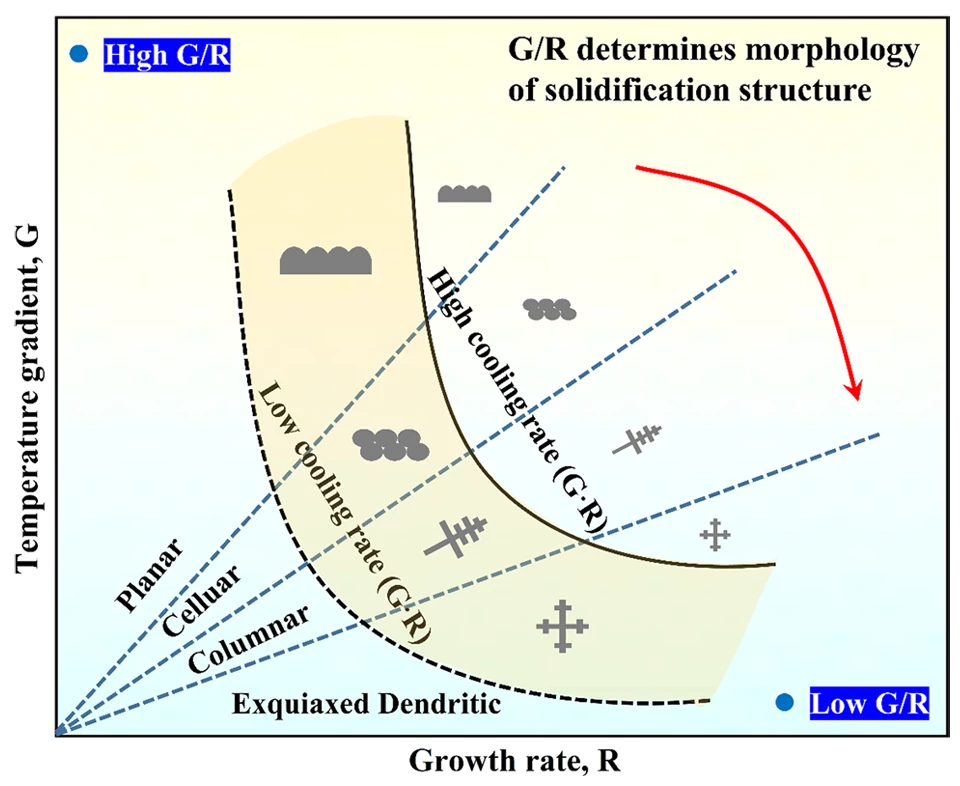
Influence of laser cladding temperature gradient (G) and solidification rate (R) on dendrite morphology
Defect Formation and Prevention
Cracking
Cracking may result from excessive tensile residual stress, unfavorable solidification behavior, material incompatibility, or unsuitable processing conditions.
Factors that can increase cracking risk include excessive heat input, steep thermal gradients, rapid cooling in susceptible alloys, inappropriate scanning paths, and large differences in thermal expansion between the substrate and deposited material.
Potential control measures include:
- Appropriate preheating and temperature management.
- Optimization of laser power, scanning speed, and material feed rate.
- Segmented or region-based scanning strategies where appropriate.
- Selection of compatible cladding materials or suitable transition layers.
- Post-processing heat treatment when required.
Porosity
Porosity can originate from several sources:
- Gas trapped in the molten pool.
- Hollow powder particles or moisture and contamination on the powder surface.
- Insufficient or impure shielding gas, resulting in oxidation or inadequate atmospheric protection.
- Unstable material delivery or unsuitable processing conditions.
Potential preventive measures include optimizing carrier-gas and shielding-gas flow, ensuring suitable powder quality and dryness, maintaining stable gas protection, and controlling the laser–material interaction.
4. Laser Cladding Compared with Other Surface Engineering Technologies
The objective is not to identify one universally superior technology, but to select the process that best fits the application.
The first step is to identify the primary engineering challenge: dimensional accuracy and distortion, coating adhesion, wear resistance, processing efficiency, or overall cost. The appropriate technology can then be selected based on those requirements.
Conventional Gas Metal Arc Welding (GMAW) and Overlay Welding
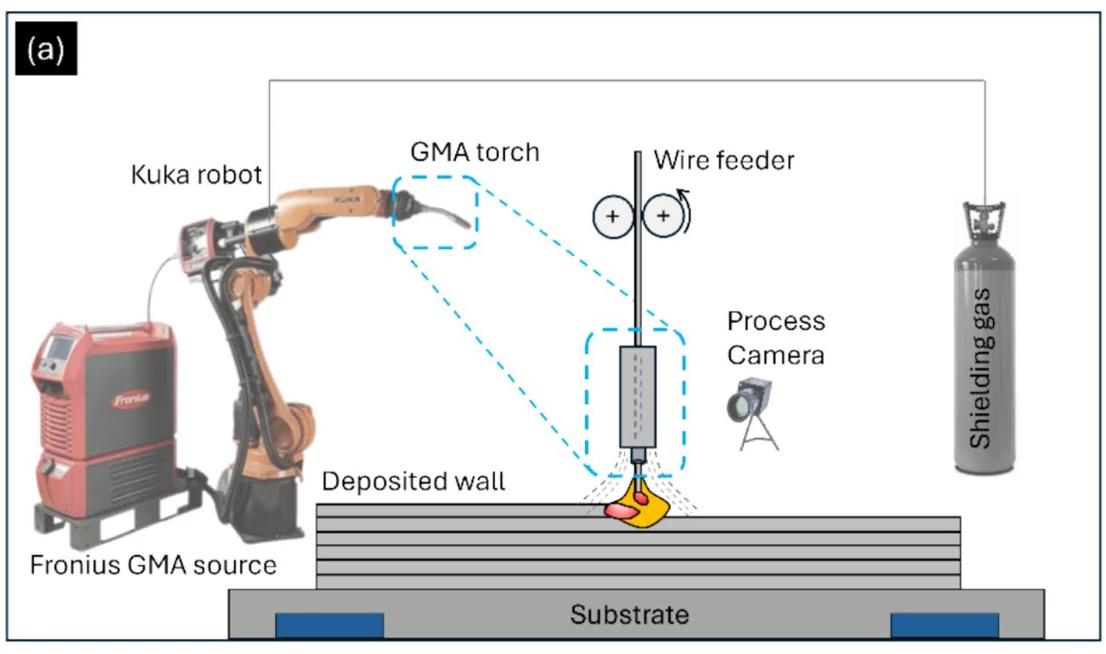
GMA
Laser Cladding (LC)
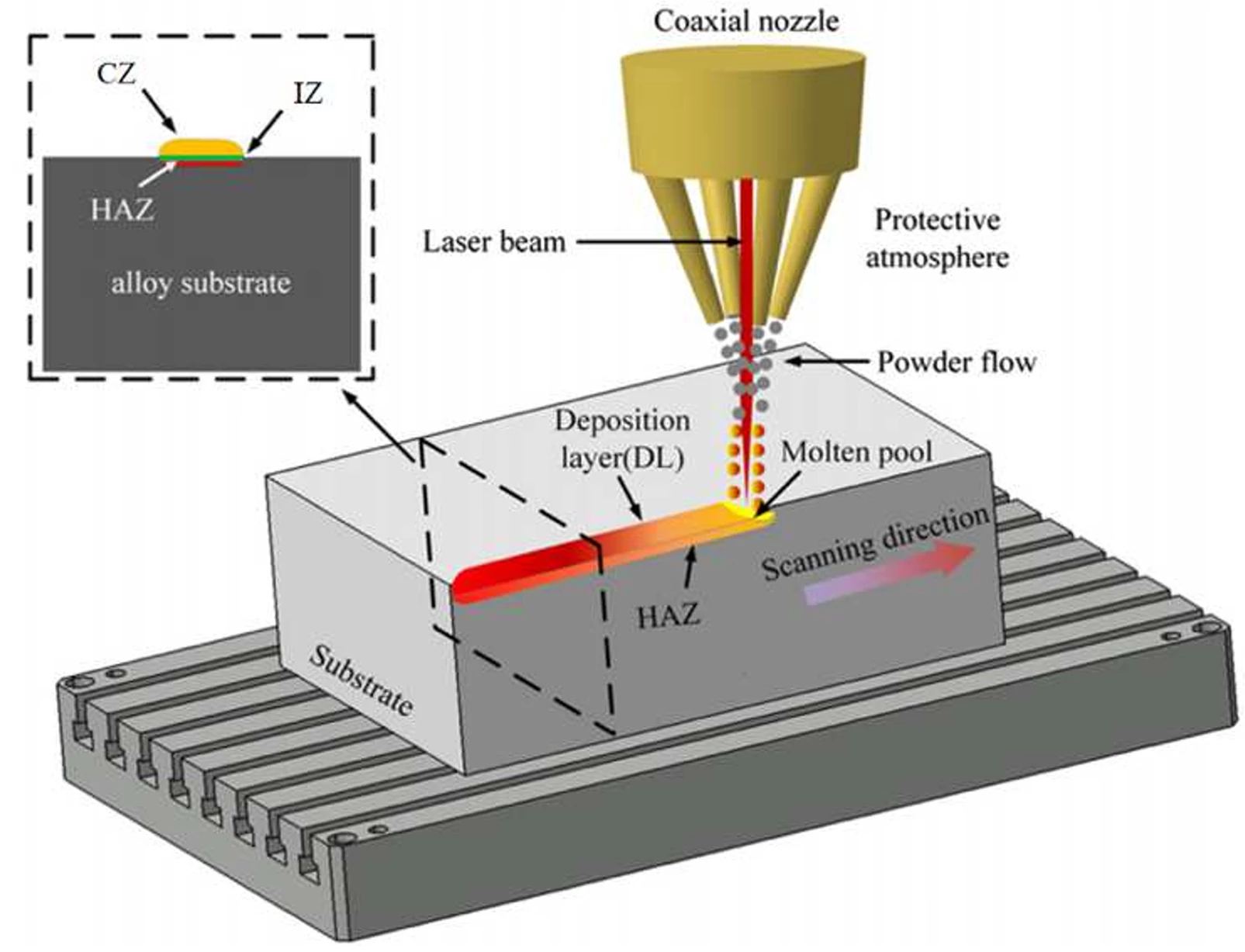
Laser Cladding Process
Plasma Transferred Arc (PTA) Cladding
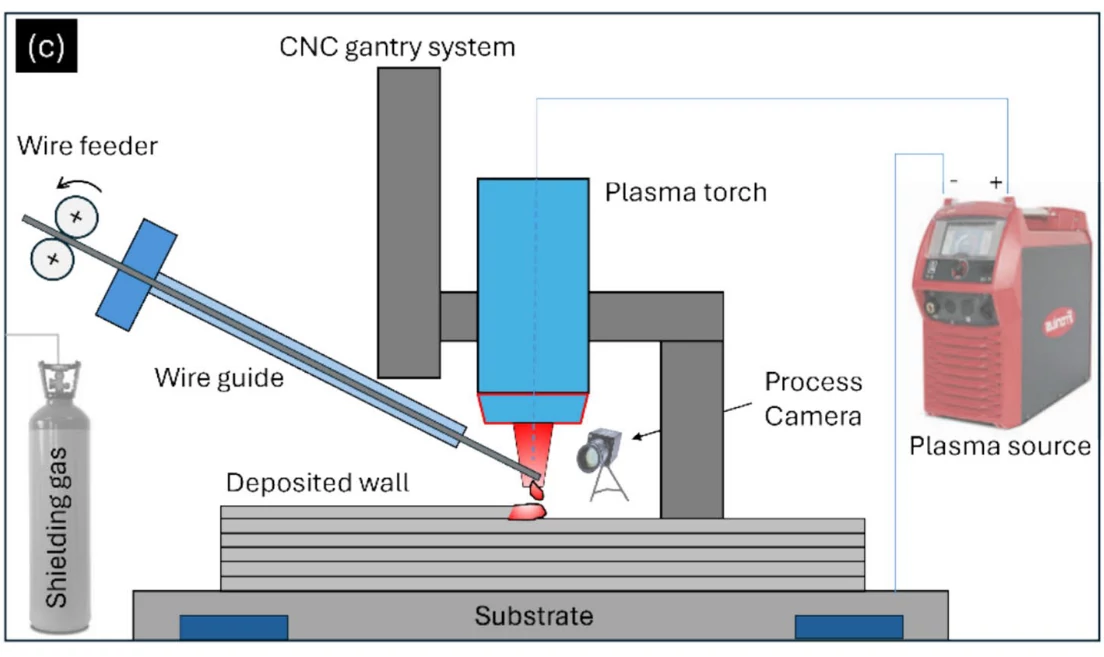
PTA
4.1 Laser Cladding vs. Plasma Transferred Arc (PTA) Cladding
PTA is a major competing technology in high-performance surface coating and overlay applications.
Heat Source
Laser cladding uses a highly concentrated laser beam, whereas PTA uses a plasma arc.
Under comparable application requirements, laser cladding can provide a smaller localized heat source and lower overall thermal exposure than many PTA processes. This can reduce the heat-affected zone and limit substrate distortion.
Laser cladding can therefore be advantageous for precision components, thin-walled parts, and materials that are sensitive to thermal distortion.
However, actual heat input depends on the equipment, process parameters, component geometry, and deposition requirements.
Dilution and Coating Composition
Laser cladding offers precise control over localized substrate melting and can achieve low dilution in suitable applications. Values below 5% may be possible with optimized parameters.
PTA commonly operates at higher dilution levels in many overlay applications, often in the approximate range of 10%–20%, although actual values vary substantially.
Lower dilution can help preserve the intended alloy composition and associated properties of the deposited layer.
Deposition Efficiency and Cost
Traditionally, PTA has been competitive in large-area applications and thick overlays because of its relatively high deposition rates and established industrial infrastructure.
With the development of high-power fiber lasers and improved powder delivery systems, laser cladding productivity has increased significantly, narrowing the efficiency gap in some applications.
Nevertheless, the most economical process depends on coating thickness, deposition rate, consumable costs, post-processing requirements, and equipment utilization.
Precision and Flexibility
Laser cladding can provide precise energy delivery and localized deposition. With suitable optics and cladding heads, it can be adapted to narrow areas, selected edges, grooves, and complex geometries.
PTA may be more economical for certain large-area, heavy-duty overlays where a higher heat input and greater deposited volume are acceptable.
4.2 Laser Cladding vs. Thermal Spraying (HVOF and Plasma Spraying)
Fundamental Differences in Bonding Mechanisms
One of the most important differences is how the coating bonds to the substrate.
Laser cladding forms a metallurgical bond through localized melting and solidification at the interface.
Thermal spraying deposits heated or molten particles onto a prepared surface. Depending on the process, the coating bonds primarily through mechanical interlocking and other interfacial mechanisms rather than through a fully melted substrate interface.
As a result, laser cladding can provide strong metallurgical bonding. Thermal-sprayed coatings can also deliver excellent performance, but their adhesion, cohesive strength, and resistance to impact or thermal cycling depend on the spray process, coating material, and application.
Coating Density and Porosity
A properly processed laser-clad layer can achieve high density and low porosity because the deposited material melts and solidifies.
Thermal-sprayed coatings are formed by successive deposited particles. Their microstructures may contain pores and interparticle boundaries, although advanced processes such as high-velocity oxy-fuel (HVOF) spraying can produce dense coatings with low porosity.
For corrosive environments, coating porosity and permeability must be evaluated against the application requirements rather than assumed from the process name alone.
Heat Input and Substrate Effects
Thermal spraying generally transfers relatively little heat to the substrate compared with fusion-based processes. With suitable controls, the bulk substrate temperature can often be kept relatively low.
This makes thermal spraying attractive for components that cannot tolerate substantial heating or substrate melting.
Laser cladding, in contrast, locally melts the substrate surface. Although the affected region can be small, it can change the substrate microstructure and introduce residual stresses. This distinction is important when selecting a process for heat-sensitive materials.
Coating Thickness and Material Selection
Laser cladding can produce layers ranging from relatively thin deposits to several millimeters or more, depending on the process and application. It is particularly useful when a thick, metallurgically bonded repair layer is required.
Thermal spraying is widely used for thin and medium-thickness functional coatings. Excessive coating thickness can create problems related to residual stress, cohesion, or cracking, depending on the coating system.
Thermal spraying also offers a broad material range, including many metals, alloys, ceramics, and selected polymers, provided that the material can be processed by the chosen spray method without unacceptable decomposition.
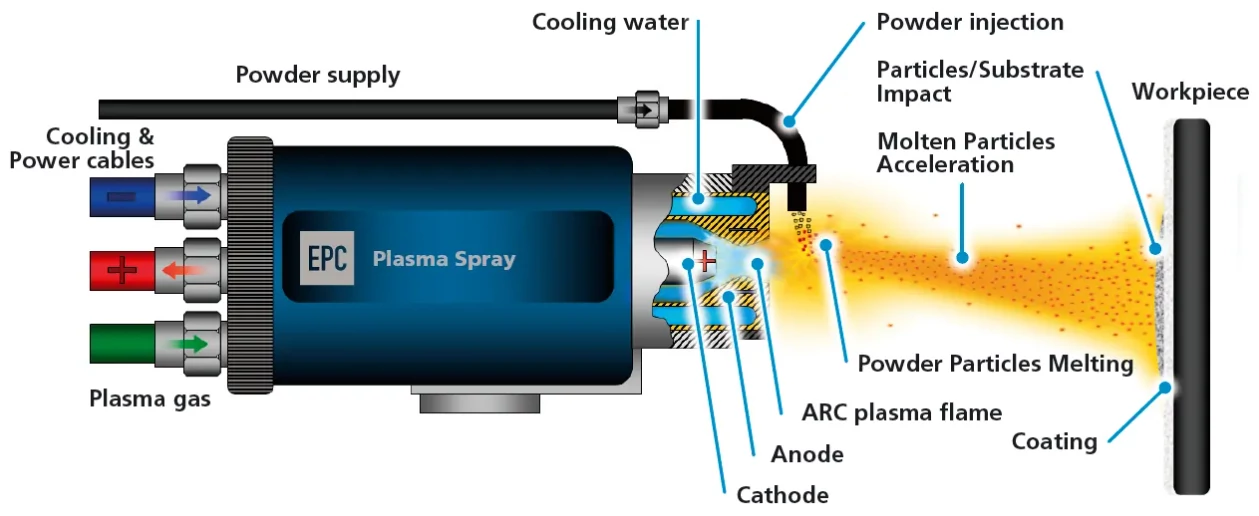
Plasma spraying
High-Velocity Oxy-Fuel (HVOF) Spraying
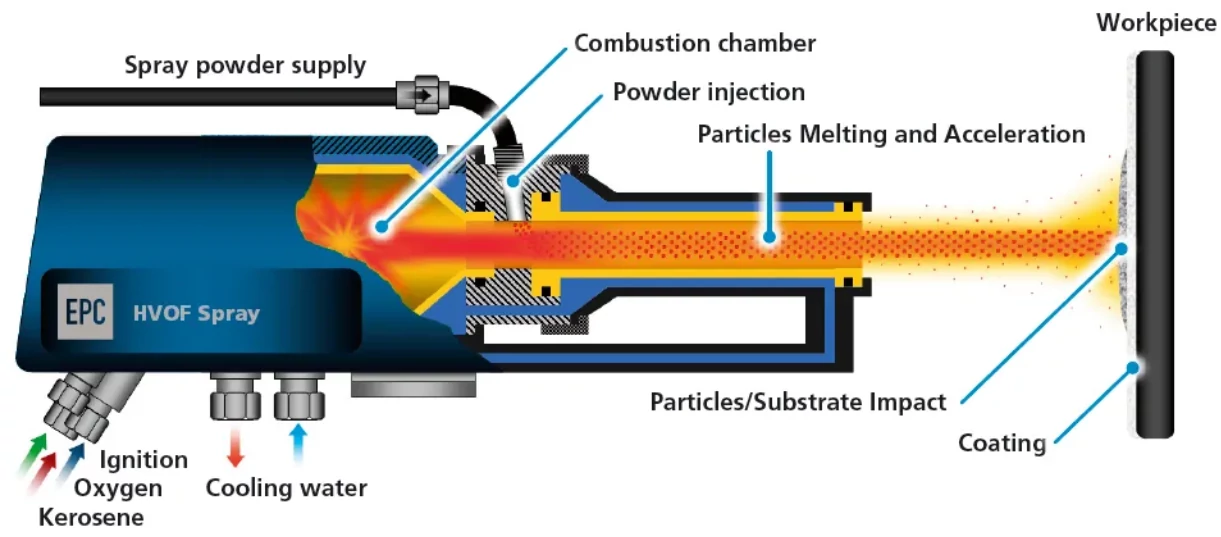
High-Velocity Oxy-Fuel (HVOF) Spraying
4.3 Laser Cladding vs. Conventional Arc Welding and Hard Chrome Plating
Laser Cladding vs. Conventional Arc Welding (TIG and MIG)
Laser cladding can be viewed as a more localized and precisely controlled alternative to conventional arc-based overlay processes in suitable applications.
Its concentrated energy input can reduce the size of the affected region and help limit distortion. It can also provide greater control over dilution and deposited-layer geometry.
However, conventional TIG, MIG, and other arc processes remain highly competitive for many structural repairs, thick sections, large components, and applications where deposition efficiency and cost are the main priorities.
Laser cladding should therefore be considered an application-specific alternative rather than a universal replacement for arc welding.
Laser Cladding vs. Hard Chrome Plating
Hard chrome plating has traditionally been used to provide hardness, wear resistance, and surface protection on components such as hydraulic cylinder rods.
However, conventional chromium electroplating processes involving hexavalent chromium face significant environmental and occupational health restrictions in many jurisdictions because of the toxicity and carcinogenicity of these compounds.
Laser cladding is one potential alternative for selected applications. It can deposit nickel-based, cobalt-based, iron-based, and other suitable alloys to provide wear resistance, corrosion resistance, or dimensional restoration.
Unlike a conventional electroplated layer, laser cladding produces a metallurgical bond with the substrate. Depending on the alloy and processing conditions, the deposited layer may provide advantages in adhesion, load-bearing capacity, or resistance to certain forms of damage.
Nevertheless, laser cladding is not automatically superior to hard chrome plating in every application. Surface finish, dimensional tolerances, friction, fatigue performance, corrosion behavior, processing cost, and service conditions must all be considered.
High-Speed Laser Cladding (HS-LMD) is an important development in this field. By increasing deposition speed and enabling thin, functional layers with controlled thermal input, high-speed processes may improve the economic feasibility of laser cladding for selected applications traditionally served by hard chrome plating.
Comparison of Deposited Samples Produced by PTA, LMD, and GMAW
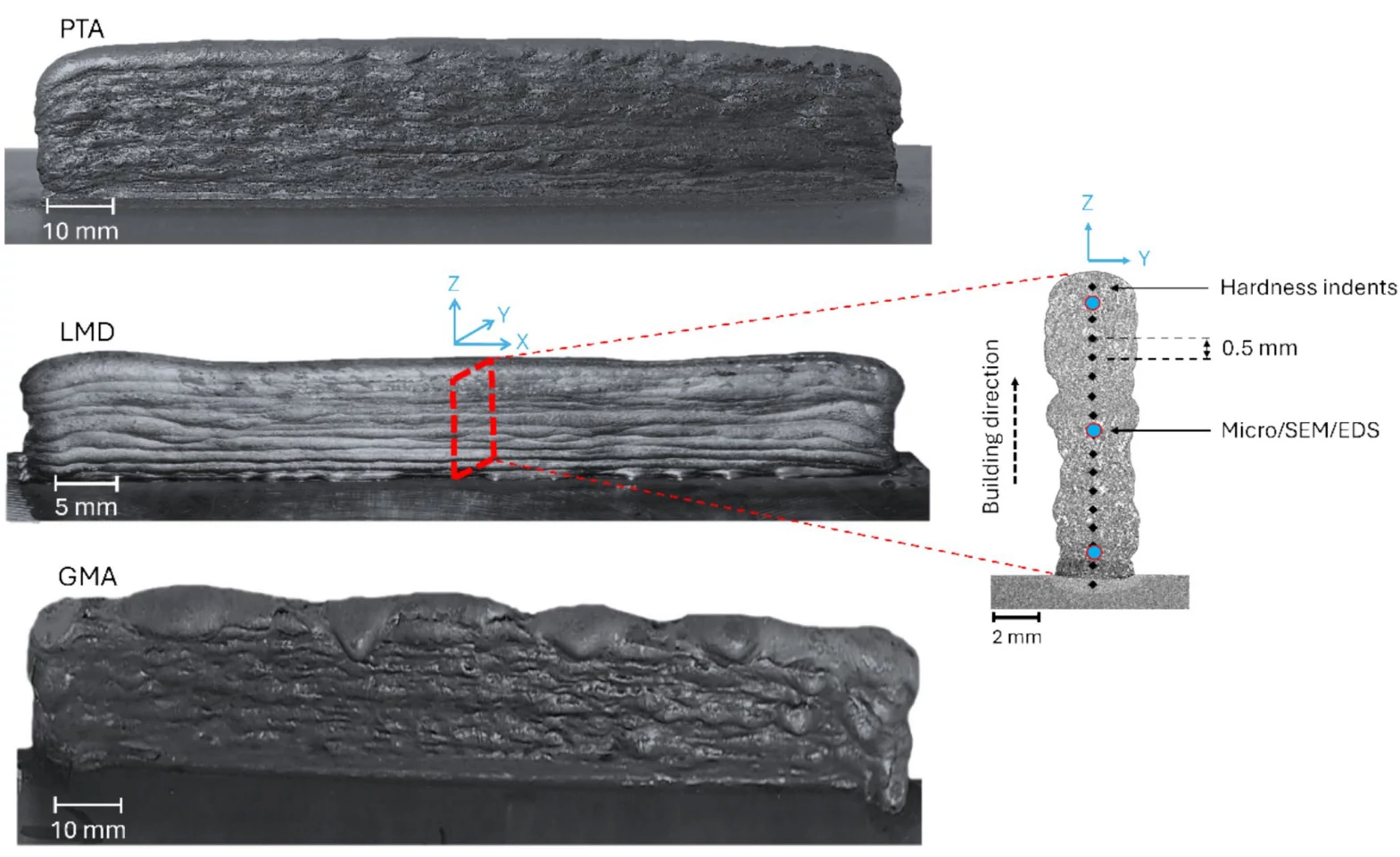
Comparison of Deposited Samples Produced by PTA, LMD, and GMAW
Single-Track Cross-Section Comparison: (a) LMD; (b) GMAW; (c) PTA
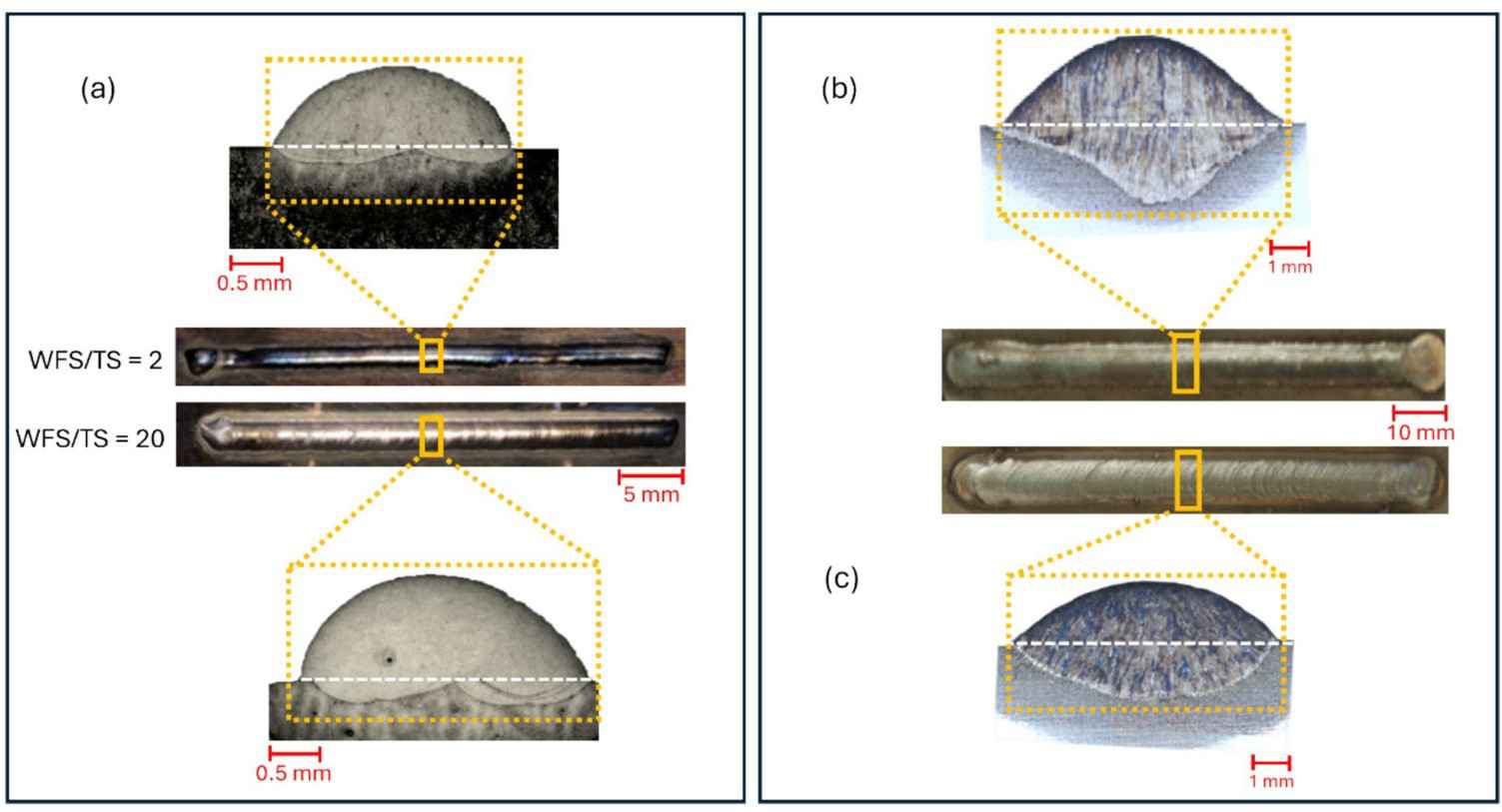
Single-Track Cross-Section Comparison (a) LMD; (b) GMAW; (c) PTA
5. Emerging Developments and Core Challenges
5.1 Emerging Technologies
High-Speed Laser Cladding (HS-LMD / EHLA)
High-speed laser cladding, including Extreme High-Speed Laser Application (EHLA), is an important development in surface coating technology.
A key feature of EHLA is that the powder is heated by the laser while traveling toward the workpiece. Under suitable conditions, the particles can approach the molten state before reaching the surface, reducing the additional energy required to melt and bond the material.
Potential benefits include:
- High Processing Speeds: Certain high-speed cladding systems can achieve processing speeds of several hundred meters per minute under specific conditions.
- Thin Functional Coatings: Coatings in the approximate range of 25–250 μm can be produced in suitable applications.
- Reduced Thermal Exposure: The localized process can limit substrate melting and reduce the depth of the heat-affected region.
These characteristics make high-speed laser cladding a promising option for selected applications involving hydraulic rods, rollers, and other large rotational components, particularly where thin, uniform coatings are required.
Actual coating thickness, processing speed, and heat-affected-zone dimensions depend on the material, equipment, and process parameters.
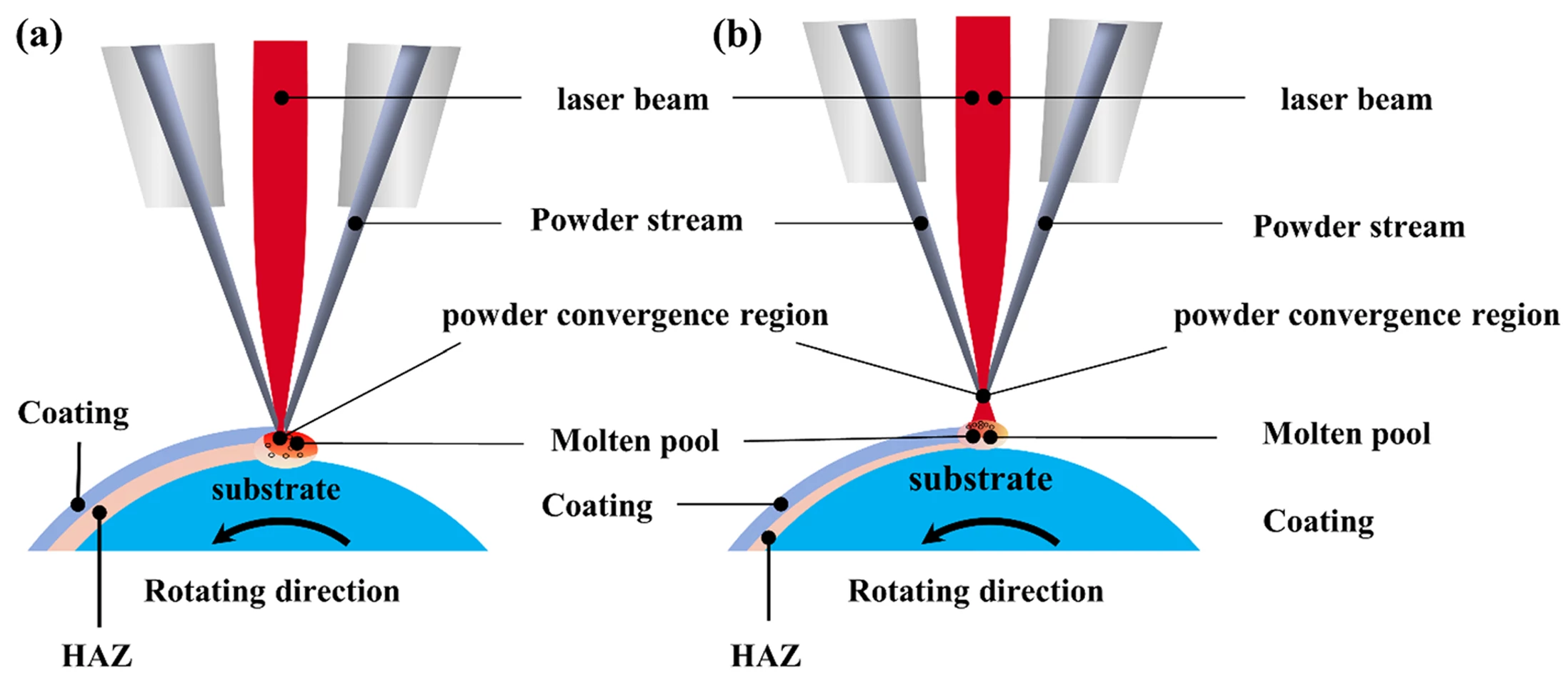
Comparison of Conventional Laser Cladding and High-Speed Laser Cladding
Wire-Based Laser Metal Deposition (Wire-LMD)
Wire-based laser metal deposition can be improved by introducing a hot-wire process. In this approach, electrical resistance heating preheats the wire before it enters the molten pool.
Preheating reduces the additional laser energy required to melt the wire and can increase the deposition rate under suitable conditions. This further improves the potential efficiency and cost-effectiveness of wire-based deposition.
The practical advantages depend on the wire alloy, feed rate, component geometry, and required deposition quality.
Laser Cladding with Specialized Wavelengths
Copper and aluminum are highly reflective to many conventional infrared laser wavelengths, which can make stable processing challenging in certain applications.
Green lasers, typically operating around 515–532 nm, can offer higher absorption in copper and some other reflective materials compared with common near-infrared sources.
This can improve energy coupling and process stability in suitable material combinations, potentially enabling more controlled cladding at lower incident power levels.
The best wavelength depends on the material, surface condition, beam characteristics, and specific processing objective.
5.2 Core Challenges
Residual Stress and Crack Control
Residual stress and cracking remain major challenges in laser cladding, especially when processing large or complex components, crack-sensitive alloys, or dissimilar material combinations.
Managing thermal gradients, material compatibility, and residual stress is essential to reducing the risk of cracking and distortion.
Development of New Materials
Many powders currently used in laser cladding were originally developed for conventional welding or thermal spraying.
However, laser cladding involves distinctive heating and rapid-solidification conditions. Developing alloys specifically tailored to these conditions remains an important area of research.
Such materials can help improve process stability, reduce defects, and expand the range of industrial applications.
[Image: Research and development challenges in laser cladding]
6. Conclusion and Technology Selection
Conclusion
1. Technical Fundamentals
Laser cladding is an advanced process based on localized laser heating and controlled material deposition. Its principal advantages include strong metallurgical bonding, the ability to produce functional alloy layers, and the potential to limit thermal damage and distortion when compared with higher-heat-input processes.
2. Process Fundamentals
Successful laser cladding depends on the coordinated control of laser power, scanning speed, material feed rate, beam characteristics, and other process parameters.
At its core, the process requires a balance between energy input and material delivery to achieve the desired layer geometry, bonding quality, dilution, and final properties.
3. Technology Positioning
Compared with conventional surface engineering methods, laser cladding can offer advantages in localized processing, coating adhesion, dilution control, and dimensional restoration. Its suitability depends on the component, required properties, production rate, and total processing cost.
Technology Selection
1. Move from General Comparisons to Application-Based Decisions
When selecting a surface engineering process, engineers should avoid asking only which technology is best overall. The decision should begin with the specific requirements and limitations of the application.
Is the primary concern thermal distortion? Is strong coating adhesion essential? Is the component exposed to severe wear or corrosion? Or is the main challenge achieving high deposition efficiency at low cost?
If precision, localized processing, and controlled substrate melting are the primary requirements, laser cladding may be a strong candidate.
If the main objective is high-volume deposition over a large area and some additional thermal exposure is acceptable, PTA or another conventional overlay process may be more economical.
If the component cannot tolerate substrate melting, thermal spraying may be more appropriate.
The right technology is the one that best addresses the actual engineering problem.
2. Looking Ahead
Hard chrome replacement is one important example of how environmental requirements and technical developments can influence surface engineering choices.
Conventional hard chrome plating processes that use hexavalent chromium face increasingly strict regulatory and occupational health requirements in many regions. Alternative technologies are therefore receiving greater attention.
High-speed laser cladding may offer an attractive combination of functional coating performance, controlled processing, and improved productivity for selected components traditionally treated by hard chrome plating.
However, successful substitution requires application-specific validation of coating properties, dimensional accuracy, fatigue behavior, corrosion resistance, production cost, and service life.
As high-speed laser processing and specialized cladding materials continue to develop, laser cladding may create new opportunities in industrial maintenance, component remanufacturing, and surface engineering.
The long-term value of the technology lies not simply in replacing an existing process, but in providing a technically sound and economically viable solution to specific industrial challenges.
Automated Welding: Processes, Working Principles, and Automation Challenges