CNC Laser Welding vs Handheld Laser Welding: What Is the Difference?
CNC laser welding vs handheld laser welding is an important comparison for manufacturers choosing a laser welding machine.Both systems use the same basic principle: a laser beam concentrates energy into the welding area to melt and join the workpieces. The major difference is not the laser welding process itself, but how the laser is delivered, how the workpiece is positioned, how the welding path is controlled, and how much of the process is automated.
This guide details the differences between the two to help you choose the right device for you.
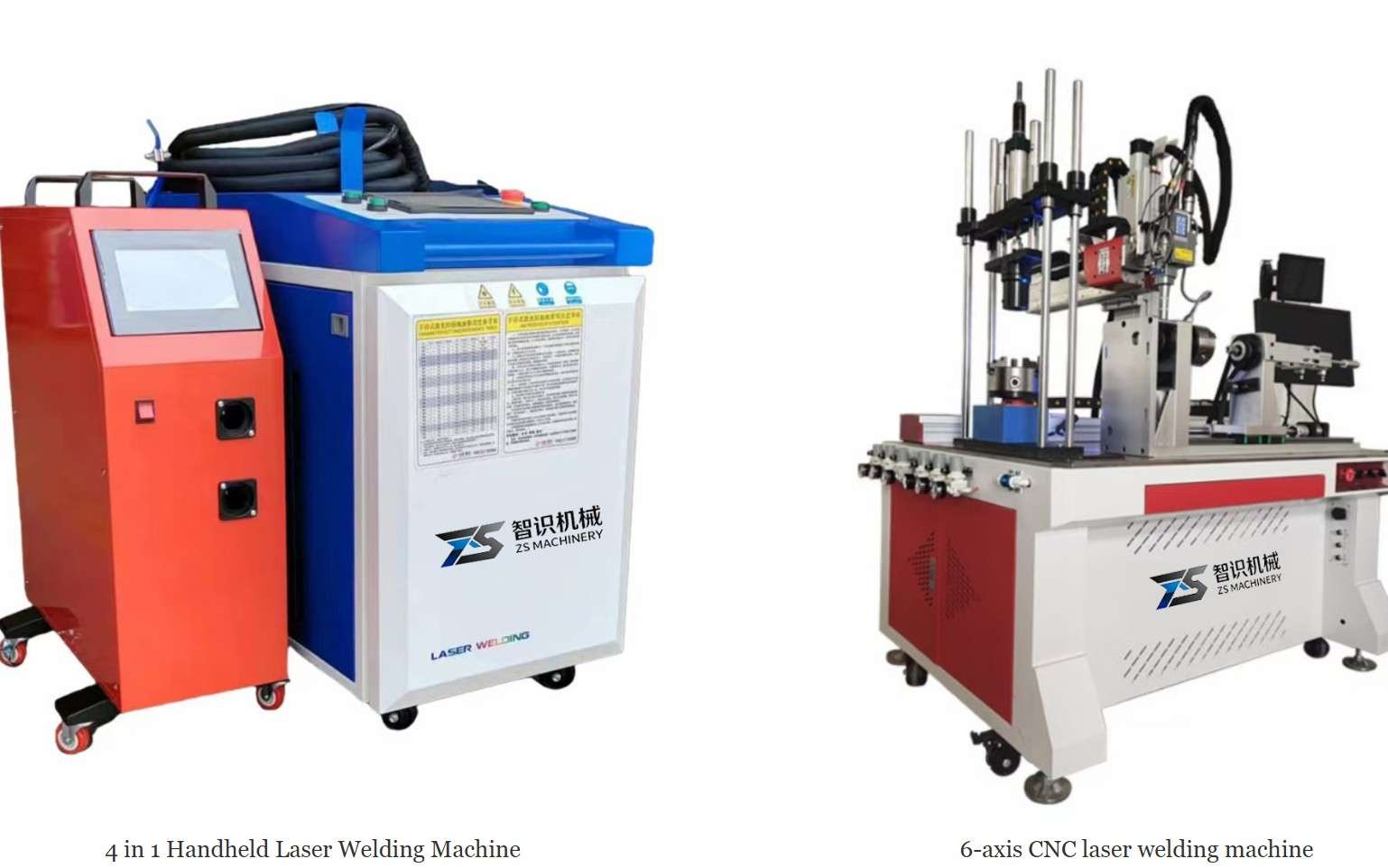
CNC laser welding vs handheld laser welding
What Is Handheld Laser Welding?
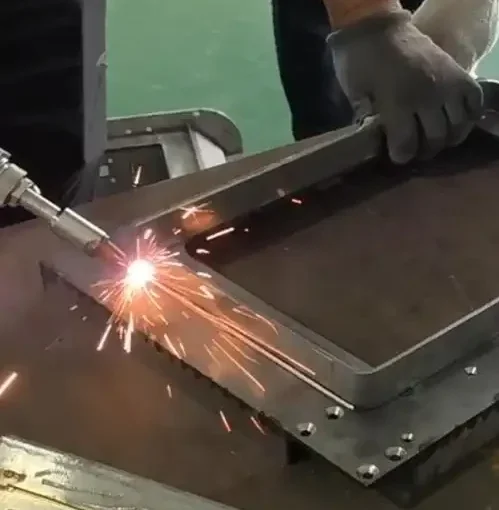
A handheld laser welding machine is designed to give the operator direct control over the welding position.The operator holds the laser welding gun and manually guides it along the joint, similar in concept to conventional handheld welding, but with the advantages of a concentrated laser heat source.Typical handheld laser welding systems include:
- Fiber laser source
- Handheld laser welding gun
- Welding control system
- Water chiller
- Protective gas system
- Optional wire feeder
- Safety system
- Welding nozzles and consumables
Modern handheld systems can also incorporate wobble or beam oscillation functions, preset welding parameters, monitoring functions, and integrated safety features.
The Three Core Components of a Handheld Laser Welder
1. Laser Source
The laser source is the heart of the welding system.Its output power, beam quality, stability, control characteristics, and long-term reliability directly affect the welding process.A good laser source should provide stable output and predictable performance over long operating periods.Common considerations include:
- Laser power
- Beam quality
- Wavelength
- Output stability
- Modulation capability
- Fiber delivery
- Cooling requirements
- Service support
For handheld welding, selecting a reliable laser source from an established manufacturer can eliminate many potential problems before they reach the production floor.Currently, the mainstream welding laser brands on the market, IPG, MAX, and Raycus, occupy more than half of the market share.
2. Handheld Laser Welding Gun
The welding gun is the component that directly delivers the laser beam to the workpiece.It may also integrate:
- Wobble/beam oscillation
- Gas delivery
- Nozzle
- Focus optics
- Protective lens
- Trigger
- Safety interlock
- Parameter controls
- Communication with the control system
The welding gun is therefore more than simply a “torch.”Generally, the welding gun corresponds to the machine’s circuit board, meaning the operating system and welding torch are matched. Therefore, a good welding torch also means a better user interface.
When choosing a welding torch, we recommend several brands such as Super, Ruifa, and Kylin, each with its own advantages and disadvantages. ZS Machinery typically selects the appropriate brand based on the customer’s needs.
3. Water Chiller
The water chiller provides cooling for components that require liquid cooling, depending on the machine configuration.Stable cooling is important because laser sources and other optical components can generate significant heat during operation.A properly selected chiller should provide:
- Appropriate cooling capacity
- Stable temperature control
- Reliable circulation
- Suitable flow protection
- Alarm functions
- Compatibility with the laser source and welding system
For water chillers, the two most widely recognized brands are S&A and Hanli. However, it’s important to note that each brand of laser unit, welding gun, and chiller offers different models, requiring careful selection based on specific needs.
This explains why seemingly identical configurations can have vastly different prices. Reliable suppliers will choose the optimal combination based on customer requirements, while unreliable suppliers may use lower-spec versions to reduce costs.
Handheld laser welding
What Is CNC Laser Welding?
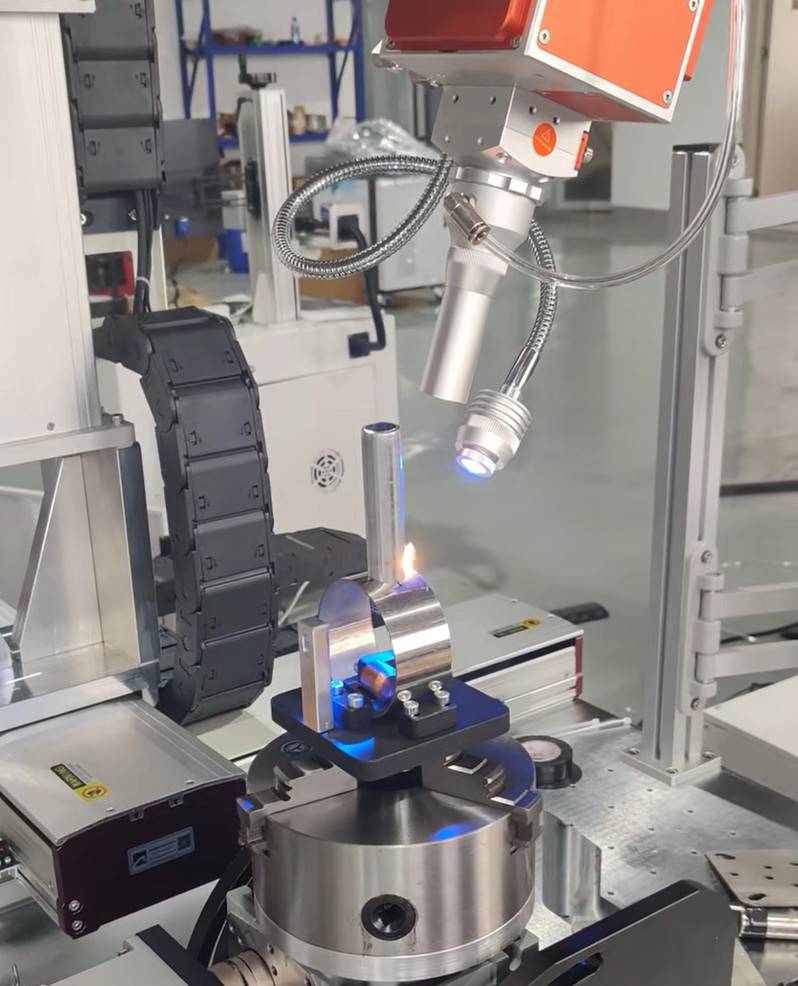
A CNC laser welding machine adds a controlled motion system between the laser welding process and the workpiece.Instead of the operator manually moving the welding gun along the joint, the machine follows a programmed welding path.A typical CNC laser welding system can include:
- Laser source
- Laser welding head
- CNC controller
- X/Y/Z motion axes
- Servo motors
- Servo drives
- Linear guides
- Ball screws or other transmission components
- Worktable
- Fixtures
- Rotary axis when required
- Water chiller
- Shielding gas system
- Safety enclosure
- Vision system
- Process monitoring
- Optional wire feeder
- Automatic loading and unloading
The exact configuration depends on the application.
For example, a simple 3-axis CNC laser welding machine may only need X, Y, and Z movement, while a more advanced system may include a rotary axis, vision alignment, automatic fixtures, or robotic handling.Professional integrated laser welding systems can combine the laser source, beam delivery, motion stages, workholding, vision, and other subsystems into one production system.
Core components of CNC laser welding machines
Unlike a handheld laser welding machine, a CNC laser welding machine is difficult to define around just three core components. The laser source, welding head, and cooling system are certainly important, but they are only part of the complete system.
A CNC laser welding machine must coordinate the laser system, welding head, CNC control system, motion axes, servo motors, transmission components, mechanical structure, fixtures, cooling system, and other auxiliary equipment to complete a welding process accurately and repeatedly.
In other words, the performance of a CNC laser welding machine does not depend on one component alone. It depends on how well multiple systems work together.
A high-quality laser source cannot compensate for poor mechanical positioning. A precise motion system cannot produce a good weld if the laser source or welding head is unsuitable. Similarly, good mechanical components are not enough if the CNC controller, software, servo system, and welding parameters are not properly coordinated.
For this reason, system integration is one of the most important factors when evaluating a CNC laser welding machine.
What About the Other Electrical Components?
The major components of a laser welding machine usually receive the most attention, but the electrical and control components are equally important to the machine’s long-term reliability.
These components include relays, contactors, sensors, power supplies, circuit breakers, control boards, cooling pumps, cooling fans, cables, connectors, and emergency-stop components. They may not be as visible as the laser source or welding gun, but they can be considered the power and control backbone of the machine.
This is also an area where cost-cutting is relatively easy to hide. Compared with a laser source, welding head, or chiller, these electrical components normally represent a relatively small proportion of the total machine cost. However, using lower-quality components can have a real impact on electrical stability, service life, maintenance requirements, and the overall reliability of the machine.
A machine may have a well-known laser source and a good welding gun, but if the supporting electrical system uses unreliable components, the machine can still experience problems during long-term operation.
For this reason, ZS Machinery pays attention not only to the major visible components, but also to the electrical components inside the machine. We select reliable first-tier Chinese brands for key electrical and control components, based on the specific machine configuration.
Handheld vs CNC Laser Welding: Maintenance
The difference is also visible in maintenance.
Handheld Laser Welding Machine
Typical maintenance may focus on:
- Protective lens
- Nozzle
- Welding gun
- Chiller
- Laser source
- Fiber cable
- Cooling water
- Gas system
- Electrical components
The system is relatively compact.When a problem occurs, troubleshooting often starts with the laser source, gun/control system, cooling system, gas, optics, or electrical components.
CNC Laser Welding Machine
Maintenance can include all of the above plus:
- Servo motors
- Servo drives
- Linear guides
- Ball screws
- Couplings
- CNC controller
- Axis sensors
- Limit switches
- Rotary axis
- Fixture
- Vision system
- Industrial PC
- PLC
- Safety circuits
- Pneumatic systems
- Automatic loading equipment
Therefore, maintenance knowledge for a CNC system needs to cover both laser processing and machine automation.
Handheld vs CNC Laser Welding: Which One Is More Reliable?
It would be incorrect to say that handheld laser welding machines are inherently more reliable than CNC machines.A better way to understand the difference is:
A handheld machine has fewer major subsystems, so there are fewer system-level variables to manage.
A CNC machine has more subsystems because it is doing more.
For a simple handheld system, if the laser source, welding gun/control system, and chiller are reliable, the fundamental welding system can be relatively straightforward.For a CNC machine, the laser source can be excellent, but reliable production also depends on:
- Mechanical accuracy
- Servo tuning
- CNC control
- Fixture stability
- Software
- Sensors
- Electrical components
- Safety circuits
- Vision calibration
- System integration
This does not make CNC technology unreliable.It means that the quality of the machine builder and system integration becomes much more important.
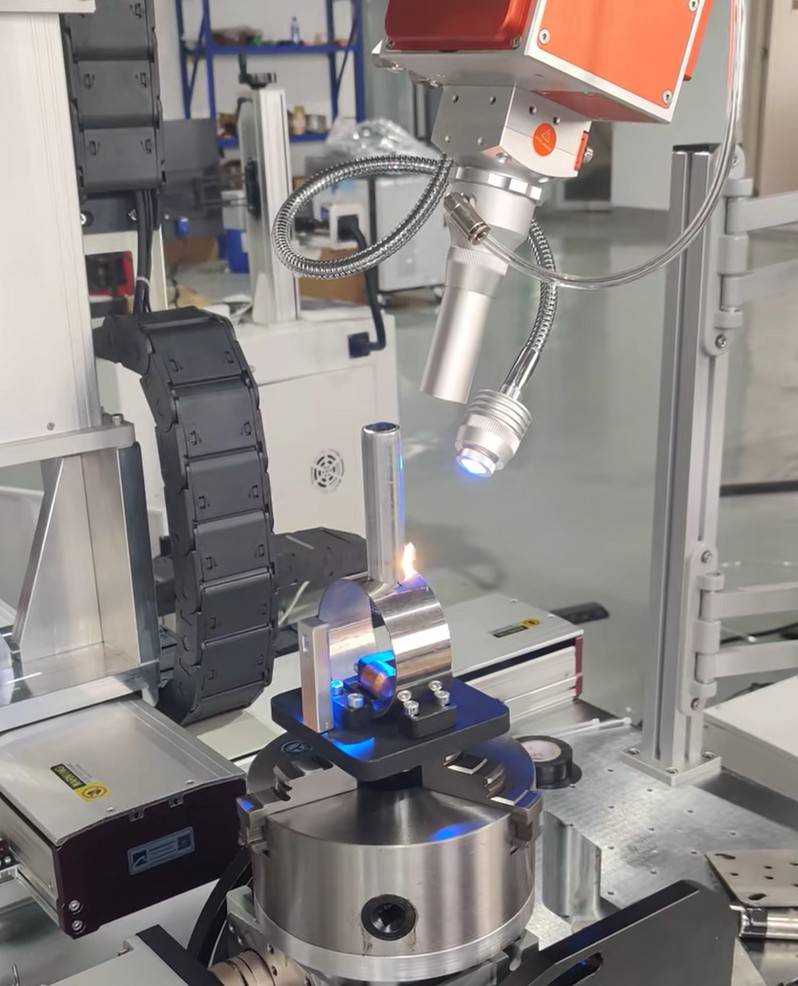
CNC laser welding
Handheld Laser Welding vs CNC Laser Welding: Application Differences
The two systems are designed for different production requirements.
| Factor | Handheld Laser Welding | CNC Laser Welding |
|---|---|---|
| Welding path | Operator controlled | Programmed |
| Flexibility | Very high | High, but program dependent |
| Automation | Low to medium | Medium to high |
| Setup | Relatively simple | More complex |
| Core system | Laser + gun/control + chiller | Laser + motion + CNC + fixtures + other systems |
| Operator skill | Important | Important during setup/programming |
| Repeatability | Depends on operator | High when properly configured |
| Complex 3D parts | Flexible | Requires suitable axes/robot |
| Repetitive production | Possible | Very suitable |
| Fixture requirement | Often simpler | Usually more important |
| Vision integration | Don’t have | Customizable |
| Maintenance | Relatively simple | More comprehensive |
| Large-volume production | Less automated | Better suited |
| Custom one-off work | Very suitable | Can require more setup |
| Welding large/irregular parts | Very flexible | Depends on working envelope |
| Labor dependence | Higher | Lower after setup |
When Should You Choose Handheld Laser Welding?
Handheld laser welding is often a practical choice when flexibility is more important than full automation.Typical applications include:
- Sheet-metal fabrication
- Stainless steel products
- Kitchen equipment
- Metal cabinets
- Doors and windows
- Machinery components
- General fabrication
- Repair and maintenance
- Small-batch production
- Different workpieces in the same production area
It is particularly useful when the operator needs to reach different areas of a large or irregular workpiece.For these applications, building a highly automated CNC system may not provide enough additional value to justify the additional complexity.
When Should You Choose CNC Laser Welding?
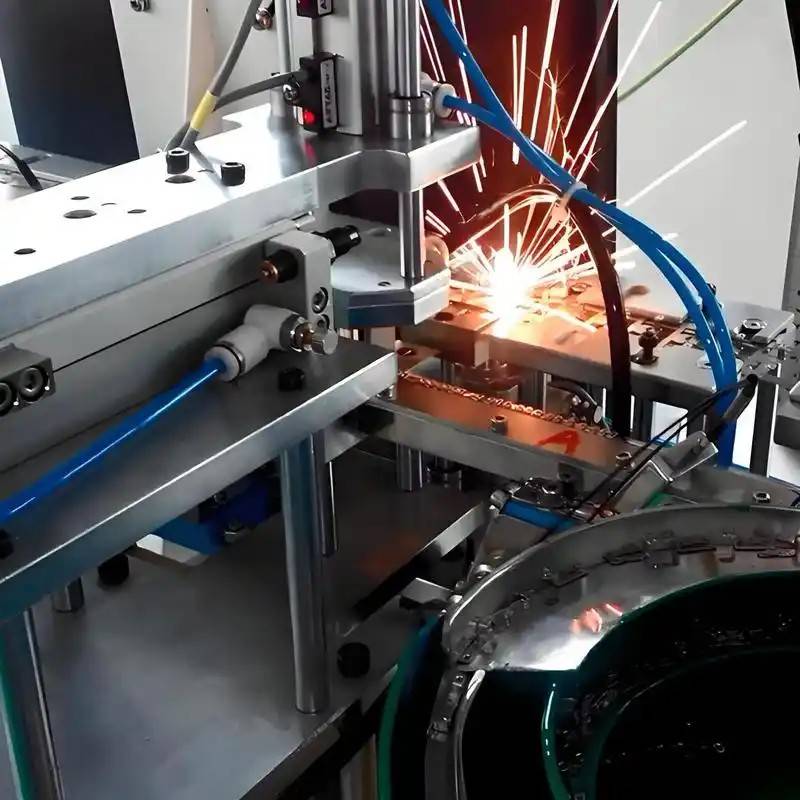
CNC laser welding becomes more attractive when the same welding operation needs to be repeated accurately.Typical applications include:
- Repetitive production
- Precision components
- Electronic housings
- Sensor housings
- Electrical connectors
- Copper busbars
- Tubes and cylindrical components
- Automotive components
- Battery components
- Industrial components
- Components requiring programmed welding paths
CNC is particularly useful when the manufacturer needs consistent welding paths rather than relying on the operator to reproduce the same movement manually.
CNC Laser Welding Does Not Always Mean Fully Automatic
Another common misunderstanding is that CNC automatically means “unattended production.”
It does not.
A basic CNC laser welding machine may still require an operator to:
- Load the workpiece
- Position it in the fixture
- Select the program
- Start the machine
- Remove the finished part
The CNC system controls the welding movement, but loading and unloading can still be manual.
Higher levels of automation can add:
- Automatic loading
- Automatic unloading
- Robotic handling
- Vision inspection
- Automatic fixtures
- Part identification
- Inline quality monitoring
Therefore, it is useful to distinguish between:
CNC-controlled welding
and
Fully automated laser welding production.
They are not necessarily the same thing.
Which Machine Is Easier to Operate?
Handheld laser welding is generally easier to understand at the machine-operation level.The operator learns:
- How to hold the gun
- How to position the nozzle
- How to control travel speed
- How to select welding parameters
- How to use filler wire when required
- How to maintain the correct working distance
Modern handheld systems can also provide preset parameters to reduce the learning curve.
CNC laser welding requires a different skill set.The operator or technician may need to understand:
- CNC programs
- Coordinate systems
- Welding paths
- Axis movement
- Fixtures
- Laser parameters
- Servo systems
- Sensors
- Machine alarms
- Program changes
For this reason, CNC welding generally requires more setup and programming knowledge.
Ask these questions before selecting a machine
1. How many different parts do you weld?
If every part is different, handheld welding may provide greater flexibility.
If the same part is produced repeatedly, CNC becomes more attractive.
2. How repetitive is the welding path?
Simple, repetitive welds are excellent candidates for CNC automation.
Highly variable welding paths may favor handheld operation.
3. How important is repeatability?
If the same weld must be reproduced accurately hundreds or thousands of times, CNC provides an important advantage.
4. Does the workpiece require complex positioning?
If the part requires multiple welding angles, a rotary axis, 5-axis system, or robot may be required.
5. How large is the workpiece?
A handheld operator can physically move around a large workpiece.
A CNC machine is limited by its working envelope unless the system is specifically designed for large parts.
6. Do you need automatic loading and unloading?
If yes, the machine will likely need additional automation beyond a basic CNC platform.
7. Does the application require vision or inspection?
Precision production may benefit from vision alignment or process monitoring.
8. What level of production consistency is required?
The higher the requirement for repeatable production, the more attractive a programmed CNC process becomes.
A Practical Way to Think About the Two Technologies
The easiest way to understand the difference is to imagine two operators.
With a handheld laser welding machine:The machine controls the laser. The operator controls the welding path.
With a CNC laser welding machine:The machine controls both the laser process and the welding path.
With a fully automated laser welding cell:The system controls the laser, welding path, workpiece positioning, inspection, and potentially loading and unloading.
This represents three different levels of manufacturing automation rather than three completely different welding technologies.
Conclusion
The difference between CNC laser welding and handheld laser welding is mainly the level of motion control, automation, system integration, and operator involvement.
For flexible fabrication, repair, maintenance, small-batch production, and frequently changing workpieces, a handheld laser welding machine can be a practical solution. It provides direct operator control and allows the welding process to be adapted quickly to different workpieces and joint conditions.
For repetitive production, precision components, programmed welding paths, electronic and electrical components, automotive parts, busbars, housings, and other applications requiring consistent positioning, a CNC laser welding machine can provide a higher level of process control and repeatability.
At ZS Machinery, we provide different laser welding solutions for different production needs, including
handheld laser welding machines
3-axis CNC laser welding machines,
rotary-axis CNC systems
multi-axis laser welding machines, robotic laser welding systems,
and customized laser welding solutions
Our approach is to select the laser source, welding head, CNC system, motion components, electrical components, cooling system, fixtures, and other equipment according to the actual application rather than simply adding unnecessary configurations.
Whether the requirement is flexible manual welding or a highly repeatable CNC production system, our goal is the same: supply reliable laser welding solution that delivers stable performance and fits the way the customer actually manufactures.