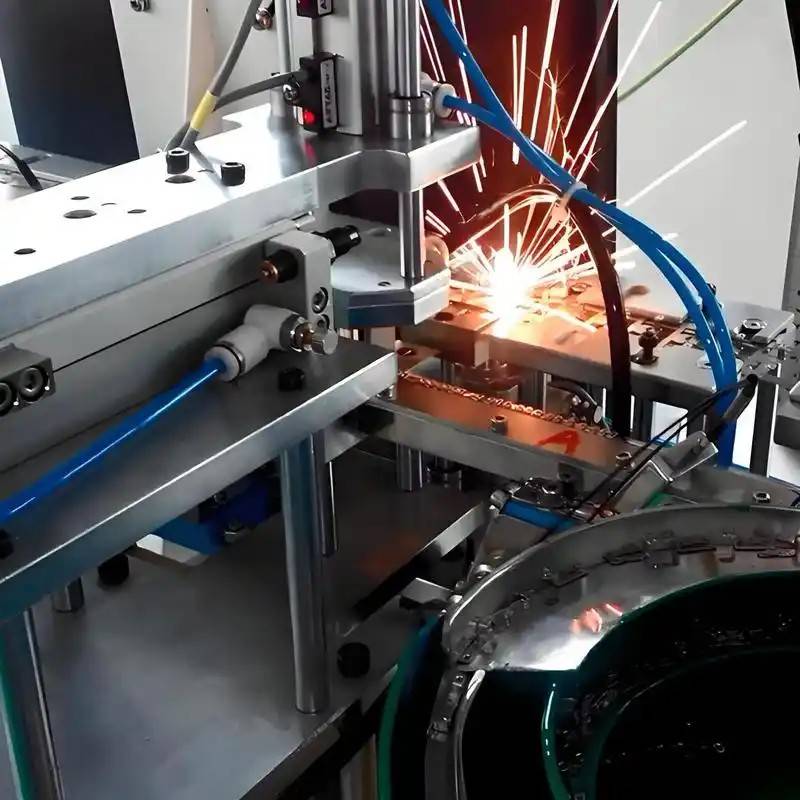
Fiber Laser Welder: Types, Applications, Power Selection, and Automation Solutions
A fiber laser welder is an industrial welding machine that uses a fiber laser source to generate a concentrated beam of energy for joining metal components. It is widely used in metal fabrication, machinery manufacturing, automotive components, sheet metal processing, and other industrial applications where controlled heat input and repeatable welding results are important.
Fiber laser welding equipment is available in different configurations, including handheld laser welders, CNC laser welding machines, robotic laser welding systems, and customized automatic welding equipment. Each configuration serves different production requirements, from flexible manual welding to fully programmed welding operations for batch manufacturing.
Choosing the right fiber laser welder involves more than selecting a laser power rating. Material type, workpiece thickness, joint design, welding speed, fixture arrangement, and production volume all influence the final equipment configuration.For manufacturers looking to automate repetitive welding tasks, CNC and robotic fiber laser welding systems can help reduce manual positioning, improve process consistency, and establish a more repeatable production workflow.
This guide explains how fiber laser welders work, the main equipment types, suitable materials and applications, how to select laser power, and what to consider when investing in an industrial fiber laser welding solution.
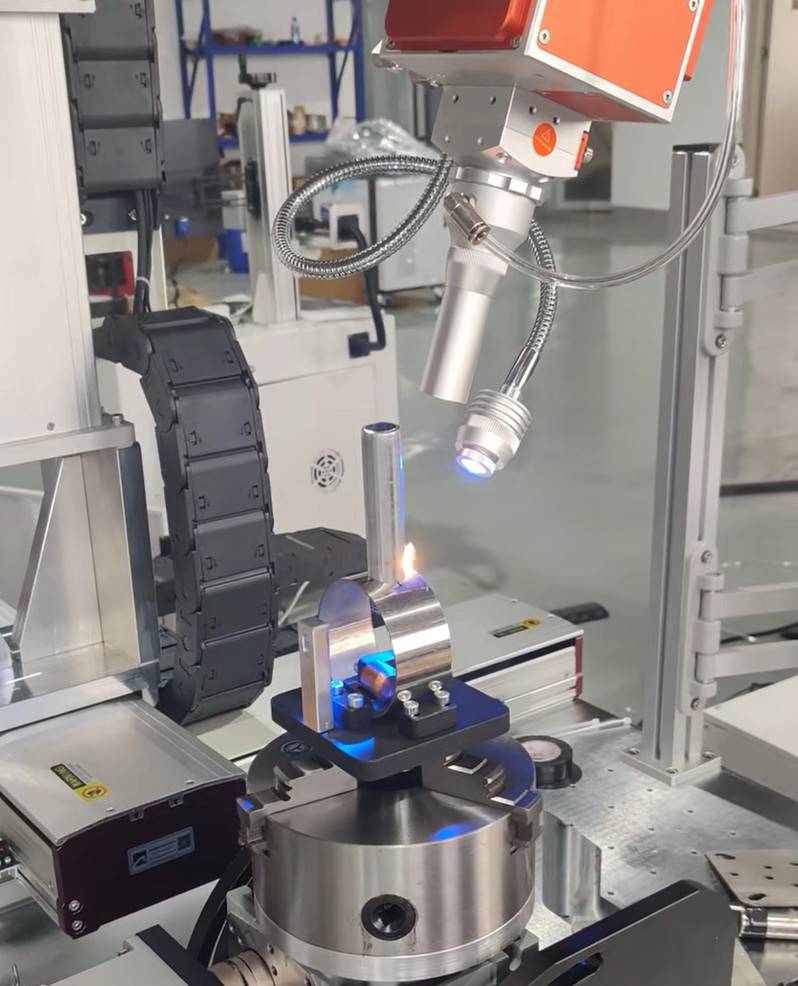
CNC laser welding machine
1. What Is a Fiber Laser Welder?
A fiber laser welder is a welding system that uses a fiber laser source(The typical wavelength is 1064 nanometers) to deliver concentrated laser energy to a workpiece. The energy heats the material at the joint, creating a molten pool that solidifies to form a welded connection.
Compared with conventional arc welding processes, laser welding delivers energy to a relatively concentrated area. Under suitable conditions, this allows manufacturers to achieve high welding speeds, controlled heat input, and narrow weld seams.However, the final welding performance depends on the complete process, including the laser source, welding head, optical configuration, workpiece positioning, joint preparation, and process parameters.
1.1 How Does a Fiber Laser Welder Work?
A typical fiber laser welding process involves several stages.
Step 1: Laser generation
The fiber laser source generates laser radiation and delivers it through an optical fiber to the welding head.
Step 2: Beam delivery and focusing
The welding head directs and focuses the laser beam onto the target area of the workpiece. The optical configuration determines the focal position and energy distribution.
Step 3: Localized heating
When the laser beam interacts with the material, the absorbed energy heats the joint area. Depending on the laser power density and process parameters, the material may melt through heat conduction or form a deeper keyhole during welding.
Step 4: Weld pool formation
The molten material forms a weld pool at the joint. As the laser moves along the programmed path or the workpiece moves relative to the beam, the molten zone progresses along the seam.
Step 5: Solidification
After the laser passes, the molten material cools and solidifies, creating the welded joint.
The quality of the final weld depends on laser power, welding speed, focal position, material properties, joint gap, shielding gas where required, and other process conditions.
For production applications, these parameters must be established for the specific workpiece rather than selected according to laser power alone.
1.2 Main Components of a Fiber Laser Welder
Although equipment configurations vary, a fiber laser welding system generally includes several important components.
Fiber laser source
The laser source provides the energy required for welding. Its power, beam characteristics, and operating stability influence the available process window.
Laser welding head
The welding head delivers and focuses the laser beam onto the workpiece. Depending on the application, the system may use a handheld head, a head mounted on a CNC motion system, or a head integrated with an industrial robot.
Motion control system
The motion system determines how the laser head or workpiece moves during welding. It may consist of manual movement, CNC-controlled axes, an industrial robot, or a dedicated automatic mechanism.
Cooling system
Depending on the laser source and equipment design, a cooling system may be required to maintain suitable operating temperatures.Cooling systems generally come in two types: air-cooled and water-cooled.
Workholding fixture
The fixture positions and secures the workpiece. Proper clamping is especially important in automated welding because movement, gaps, or misalignment can affect weld quality.
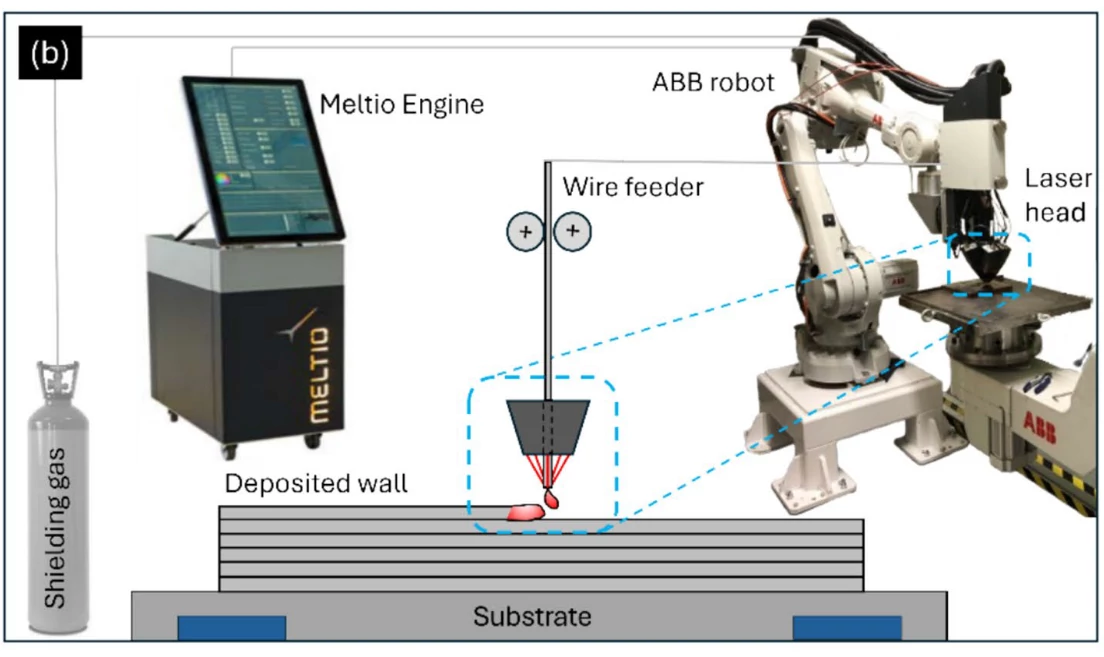
Wire feeding system
Some applications require filler wire to accommodate joint gaps, modify the weld composition, or meet specific joint requirements. Other applications can be completed without filler material when the joint design and process conditions permit.
Safety system
Industrial laser welding equipment requires appropriate laser protection, interlocks, operator procedures, and other safeguards according to the machine design and applicable safety requirements.
The exact configuration depends on whether the equipment is designed for handheld operation, CNC welding, robotic welding, or a specialized production line.
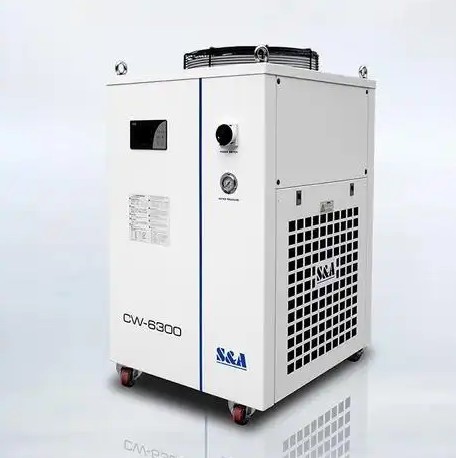
Laser Welding Machinery Cooling system
2. Types of Fiber Laser Welders
Fiber laser welders can be classified according to how the welding head and workpiece are positioned and controlled.The most suitable configuration depends on the workpiece geometry, welding path, production volume, and level of automation required.
2.1 Handheld Fiber Laser Welder
A handheld fiber laser welder allows the operator to guide the welding head manually along the joint.It is commonly considered for metal fabrication applications involving different workpieces, relatively short production runs, or welding positions that require frequent manual adjustment.
The main advantage of a handheld fiber laser welder is operational flexibility. The operator can adjust the welding path and position according to the actual workpiece without programming a complete CNC trajectory.However, the welding result remains influenced by operator technique, workpiece preparation, joint consistency, and process settings.
For manufacturers producing large quantities of the same component, manual welding may introduce challenges in cycle time, repeated positioning, and consistency between operators. In these cases, automated laser welding may provide a more suitable production approach.
2.2 CNC Fiber Laser Welder
A CNC fiber laser welder uses a programmable motion control system to move the welding head, the workpiece, or both along a predefined path.
The operator establishes the welding program and relevant process parameters. Once the workpiece is secured and the program is started, the machine executes the programmed motion sequence without requiring the operator to manually control the welding head’s movement throughout the process.
CNC laser welding machines are particularly suitable for repeatable production tasks where the welding path and workpiece geometry can be defined in advance.
Depending on the application, CNC laser welding machines require different systems. Generally, five-axis and below systems use the Syntec system, while machines with more than five axes, that is, more than five motion dimensions, need to use the Syntec master control system, which can control six axes and more motion dimensions.
If you want to know more about the difference of axis,you can refer to 3-Axis vs. 4-Axis vs. 5-Axis vs. 6-Axis
Specialized fixtures can provide additional flexibility.To achieve more functions with better rotary shaft tooling, ZS Machinery designed a multi-functional tooling that can rotate both horizontally and vertically, and can be adapted to welding various parts.
The main advantage of CNC fiber laser welding is repeatability. Once the program, fixture arrangement, and process parameters have been established, the system can perform the same welding sequence across multiple production cycles.For manufacturers producing the same or similar components in batches, this can reduce repetitive manual positioning and help maintain consistent operating conditions.
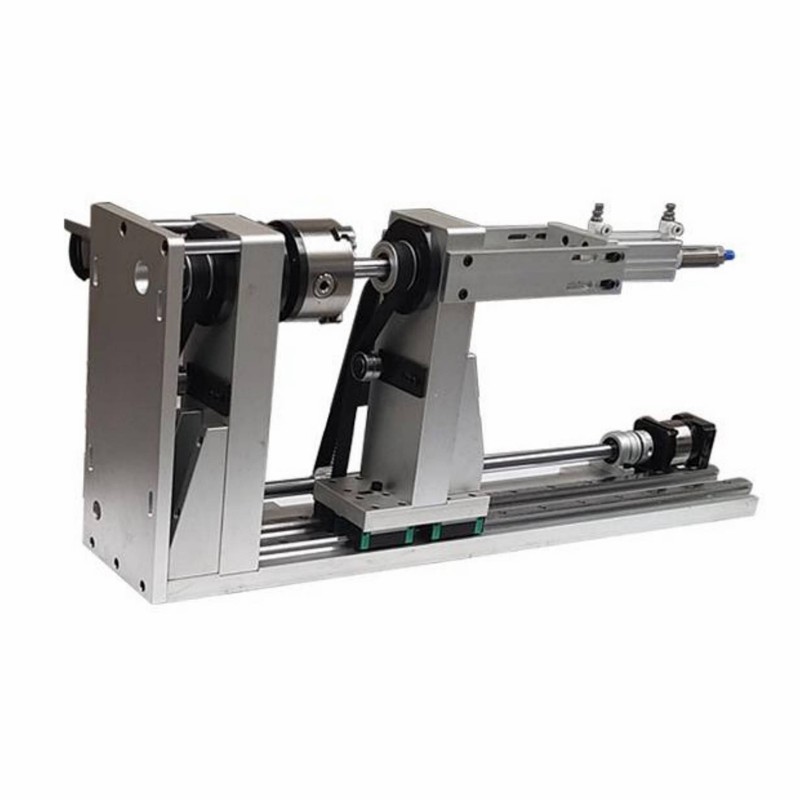
Multifunctional welding fixture
2.3 Robotic Fiber Laser Welder
A robotic fiber laser welder integrates a fiber laser source and welding head with an industrial robot.The robot moves the laser welding head along a programmed trajectory, allowing the system to reach different welding positions and orientations within its working envelope.
Robotic laser welding is particularly useful when workpieces are large, welding paths are three-dimensional, or joints are distributed across multiple surfaces.Compared with a fixed CNC platform, an industrial robot generally offers a wider working range and greater flexibility in tool orientation. The actual reach, payload, positioning performance, and accessible welding area depend on the robot model and cell configuration.
A robotic welding system may also integrate positioners, customized fixtures, safety enclosures, sensors, and automatic loading or unloading equipment.For batch production, robotic laser welding can combine programmed movement with the flexibility needed to process complex parts.
2.4 Customized Automatic Fiber Laser Welding Machines
Some products are best processed using dedicated automatic laser welding equipment designed around a specific workpiece or manufacturing process.Instead of relying entirely on a general-purpose robot or standard CNC platform, a customized system may use specialized fixtures, rotary mechanisms, linear slides, and other motion components.
For example, there are plastic laser welding machines specifically designed for automotive headlights, laser cladding equipment for parts repair, and other special-shaped machines. In short, customized fiber laser welding machines are designed to integrate multiple different functions based on specific application scenarios, which places higher demands on the supplier’s design capabilities and project coordination experience.
3. What Materials Can a Fiber Laser Welder Weld?
Fiber laser welding is widely used for metal joining, but the suitability of each material depends on its physical properties, composition, thickness, joint geometry, and the required weld quality.
3.1 Stainless Steel
Stainless steel is a common material for fiber laser welding because many stainless steel grades can be processed effectively under suitable conditions.
Typical applications include:
- Stainless steel pipes and fittings
- Kitchen equipment and cookware components
- Metal cabinets and enclosures
- Sheet metal assemblies
- Stainless steel housings
- Industrial equipment components
Laser welding can produce relatively narrow welds and controlled heat input when the process is properly configured.For automated applications, consistent workpiece positioning and joint preparation are important for maintaining repeatable results.
3.2 Carbon Steel
Carbon steel is widely used in industrial manufacturing and can be welded using fiber laser systems.Potential applications include metal frames, machinery components, sheet metal assemblies, and structural parts.
The welding process should account for material composition, thickness, joint geometry, and the required mechanical properties.For some applications, surface preparation and control of the joint gap are important to achieving stable weld quality.
However, proper adjustments are necessary when using laser welding on carbon steel. Metals with high carbon content are prone to welding cracks. Therefore, for medium or high carbon steel, sample testing is generally required. It is best to have the manufacturer adjust the parameters to the appropriate level before purchasing.
3.3 Aluminum
Aluminum and its alloys can be laser welded, but the process may require more careful optimization than some common steel applications.Aluminum has high thermal conductivity and can exhibit significant laser reflectivity, particularly depending on the alloy, surface condition, and laser wavelength.
Potential applications include selected aluminum housings, sheet metal components, industrial enclosures, and other aluminum assemblies.The appropriate laser power and welding parameters depend on the specific alloy, thickness, joint design, and required weld quality.
When choosing a laser welding machine to weld aluminum, ZS Machinery generally recommends selecting one power level higher. For example, 1500W power is sufficient for welding 2mm aluminum, but for more stable results, we generally recommend a 2000W machine.
3.4 Copper and Other Metals
Copper and certain other metals present additional process challenges because of their optical and thermal properties.Copper, for example, can reflect a substantial portion of incident laser energy under some conditions and conducts heat efficiently. These characteristics can make stable welding more demanding.
Therefore, when selecting a laser welding machine for welding copper, it’s essential to allow for some margin and choose a power level higher to ensure better welding results.
4. How to Choose the Right Fiber Laser Welder Power
Laser power is an important consideration when selecting a fiber laser welder, but it should not be the only selection criterion.
A higher-power laser can provide greater energy input and may enable higher welding speeds or deeper penetration under suitable conditions. However, the final result depends on how the laser interacts with the material and how the complete welding process is configured.
The required power should be evaluated together with material type, thickness, joint geometry, welding speed, and quality requirements.
4.1 1000W Fiber Laser Welder
A 1000W fiber laser welder may be suitable for selected thin-metal welding applications and components where the required penetration and production speed fall within the capabilities of the process.
Potential applications include certain thin stainless steel components, light metal fabrication, and small industrial parts.
However, ZS Machinery doesn’t generally recommend the 1000W unit, as it’s similarly priced to the 1500W unit, but the 1500W unit has a wider range of applications.
4.2 1500W Fiber Laser Welder
This is the entry-level power for laser equipment.A 1500W fiber laser welder may be considered for a range of industrial metal welding applications involving thin and medium-thickness components.
The suitable operating range depends on the material, joint preparation, welding speed, and whether filler wire is required.
Under normal circumstances, a 1500W power supply can weld stainless steel to a thickness of about 3mm, and carbon steel and aluminum to a thickness of about 2mm.
4.3 2000W Fiber Laser Welder
A 2000W fiber laser welder can provide additional process flexibility for applications requiring higher energy input or greater welding productivity.It may be evaluated for stainless steel, carbon steel, aluminum, and other compatible materials, subject to process validation.
Based on ZS Machinery’s project experience, a 2000W full-power welding machine can typically weld stainless steel to a thickness of 4mm, and carbon steel and aluminum to around 3mm. Of course, when selecting equipment, backward compatibility is recommended.
4.4 3000W Fiber Laser Welder
A 3000W fiber laser welder may be suitable for applications that require higher laser power, increased welding productivity, or specific penetration requirements.Potential applications include selected industrial components, heavier metal assemblies, and production tasks where a higher-power process has been validated.
A 3000W full-power laser device can handle a wider range of applications, welding stainless steel to approximately 6mm thick and carbon steel and aluminum to approximately 4mm thick.
Please note that the above power and thickness references are for preliminary selection only. The specific welding thickness should be determined based on the actual workpiece.
4.5 What Determines the Required Laser Power?
When selecting a fiber laser welder, consider the following factors:
Material type: Different metals absorb laser energy and conduct heat differently.
Material thickness: Greater thickness may require more energy or a different joint design.
Joint configuration: Butt joints, lap joints, fillet joints, and circumferential joints have different process requirements.
Welding speed: Higher production speeds can require different laser power and parameter combinations.
Required penetration: The required weld depth depends on the joint’s functional and mechanical requirements.
Workpiece tolerance: Gaps, misalignment, and variations in component dimensions can affect process stability.
Production volume: A machine intended for continuous batch production may require a different configuration from one used for occasional repairs or small batches.
The most reliable way to select laser power is to evaluate the actual workpiece and establish a suitable process window.
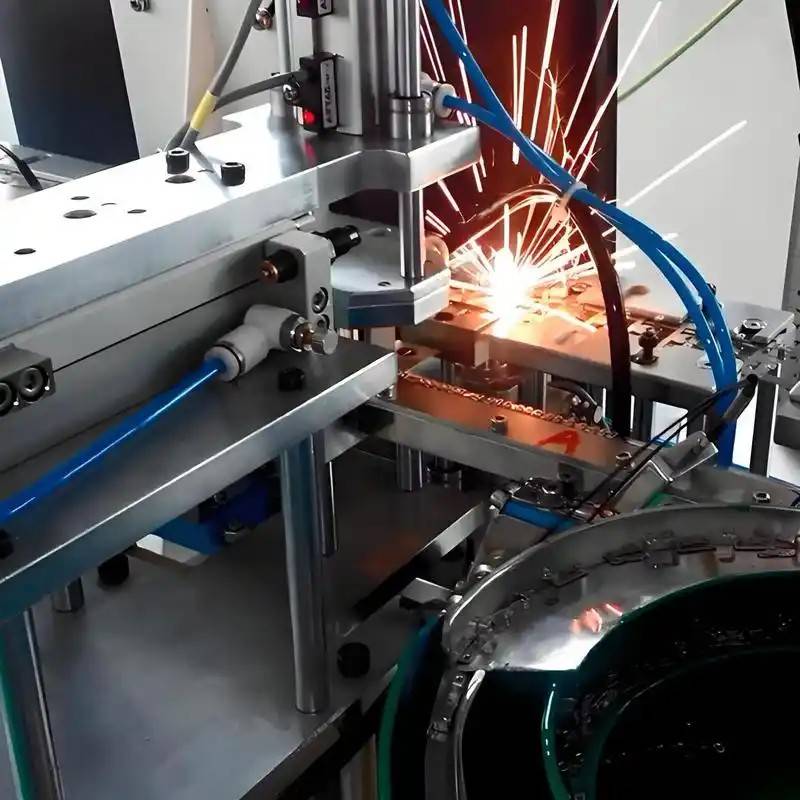
Fully automatic laser welding
5. Fiber Laser Welder for Batch Production
For manufacturers producing the same or similar components repeatedly, the main challenge is not simply generating a weld. It is producing acceptable welds consistently at the required production rate.Manual welding may require operators to repeatedly position the welding head, adjust their movements, and compensate for variations in workpiece alignment.
When the welding path is repeatable and the workpiece can be positioned consistently, automation can reduce the need for continuous manual control.This is where CNC and robotic fiber laser welding systems become particularly valuable.
How to Select Between CNC and Robotic Laser Welding
CNC and robotic fiber laser welding systems both support automated production, but they address different motion requirements.
| Selection Factor | CNC Fiber Laser Welding | Robotic Fiber Laser Welding |
|---|---|---|
| Typical workpiece | Parts with defined and repeatable welding paths | Parts with complex geometries or multiple welding positions |
| Motion arrangement | Defined linear and rotary axes | Robot-controlled multi-axis movement |
| Workpiece positioning | Often based on dedicated fixtures | May require customized fixtures, positioners, or additional axes |
| Welding path | Suitable for predictable programmed trajectories | Suitable for complex three-dimensional trajectories |
| Flexibility | Depends on the CNC axis configuration | Generally offers flexible tool orientation within the working envelope |
| Integration requirements | CNC programming, workholding, and motion coordination | Robot programming, reach assessment, workholding, and cell integration |
| Suitable production scenarios | Repeatable batch production of compatible parts | Batch production involving complex or larger components |
Neither configuration is automatically better for every application.
A CNC system may be the more practical option when the workpiece geometry and welding path are predictable. A robotic system may be preferable when the welding head must reach multiple surfaces or follow complex three-dimensional paths.
The right choice should be based on the actual workpiece and production requirements.
6. Fiber Laser Welder vs. Traditional Welding Methods
Fiber laser welding is one of several technologies used in industrial metal joining. MIG/MAG welding and TIG welding remain important processes because they offer different capabilities and may be more appropriate for certain applications.
The best welding method depends on the material, joint design, production rate, required quality, and available equipment.
| Comparison Factor | Fiber Laser Welding | MIG/MAG Welding | TIG Welding |
|---|---|---|---|
| Heat source | Focused laser beam | Electric arc | Electric arc |
| Energy concentration | High energy density in a localized area | Depends on arc and process parameters | Depends on arc and process parameters |
| Welding speed | Can be high in suitable applications | Varies with material and process | Often selected for controlled, precision-oriented work |
| Filler material | Optional when joint conditions permit | Commonly uses filler wire | May use filler material or autogenous welding |
| Heat input | Can be concentrated and controlled through process parameters | Depends on current, voltage, travel speed, and other factors | Depends on current, travel speed, and other factors |
| Automation options | CNC, robots, and dedicated automatic systems | CNC, robots, and dedicated automatic systems | CNC, robots, and dedicated automatic systems |
| Main considerations | Joint gap, alignment, process window, laser safety | Consumable handling, arc parameters, spatter, and joint preparation | Welding speed, operator skill, heat input, and process control |
When Is Fiber Laser Welding a Good Choice?
Fiber laser welding is worth evaluating when a manufacturer needs a concentrated heat source, controlled welding paths, or integration with CNC and robotic motion systems.It can be particularly attractive for repeatable production where the workpiece geometry and joint conditions can be controlled.
However, laser welding is not necessarily the best choice for every joint. MIG/MAG or TIG may be more practical for some applications because of their established processes, joint tolerance, equipment requirements, or overall production economics.
A process comparison should consider the complete manufacturing operation rather than only welding speed.
7. How Much Does a Fiber Laser Welder Cost?
The price of a fiber laser welder varies significantly according to the laser source, machine configuration, power rating, motion system, and level of automation.
A handheld welding machine and a customized robotic laser welding cell are fundamentally different equipment investments. Even two CNC laser welding machines may have substantially different prices because their motion axes, fixtures, safety systems, and control configurations are not the same.
7.1 Factors Affecting Fiber Laser Welder Price
Laser power and source configuration
Choosing the right laser source involves more than just power; brand and model are also crucial. Top-tier brands like IPG, MAX, and Raycus offer lasers at full power, while some off-brand lasers may have lower actual power, such as a advertised 3000W laser that only delivers 2500W.
Even different models from the same brand can vary, which can be difficult for consumers to distinguish. This is why choosing a reliable supplier is essential.
Machine type
Handheld equipment, CNC platforms, robotic systems, and dedicated automatic machines have different mechanical and control requirements.
Motion system
The number and type of motion axes, drive components, rotary mechanisms, and motion-control functions influence the machine configuration.
Welding head and accessories
The welding head, wire feeding system, cooling equipment, and other process accessories may affect the final cost.
Fixtures and tooling
Customized fixtures can be a significant part of an automated welding project, particularly when the workpiece has complex geometry or requires repeatable positioning.
Safety and enclosure
Enclosures, interlocks, protective devices, and other safety provisions depend on the machine design and intended operating environment.
Automation integration
Robots, positioners, loading and unloading equipment, sensors, and production-line integration can increase the overall investment but may be necessary to achieve the required production workflow.
7.2 Standard Machine vs. Customized Automation System
A standard fiber laser welding machine may be suitable when the application matches the machine’s existing configuration.
A customized CNC or robotic system may require additional engineering, fixture design, motion programming, safety integration, and process validation.
For batch production, the purchase decision should consider more than the initial equipment price. Relevant factors include cycle time, operator involvement, changeover time, maintenance, consumables, quality requirements, and the expected production volume.
The most cost-effective solution is the one that meets the actual manufacturing requirements without introducing unnecessary complexity.
8. How to Choose a Reliable Fiber Laser Welder Manufacturer
Selecting a suitable manufacturer involves evaluating both the equipment and the supplier’s ability to support the intended application.
8.1 Evaluate the Equipment Configuration
Review the laser source, welding head, motion system, cooling configuration, control system, and safety provisions.
For automated equipment, confirm that the mechanical configuration and control architecture are suitable for the required welding path.
8.2 Check Application Experience
A supplier should understand the relationship between material properties, joint design, workpiece positioning, laser parameters, and welding results.
For CNC and robotic applications, experience with fixtures, motion planning, and production integration is also important.
8.3 Request Sample Testing When Necessary
If the material, joint design, or required weld quality presents uncertainty, representative sample testing can help establish feasibility.
Testing should use workpieces and joint conditions that reflect the actual production application as closely as practical.
8.4 Consider Technical Support
Industrial welding equipment may require installation, parameter development, operator training, maintenance, and troubleshooting.
Before purchasing, clarify the supplier’s technical support arrangements and the information required to diagnose production problems.
8.5 Assess the Complete Production Process
For batch production, evaluate the entire operation rather than the welding machine alone.
Workpiece loading, fixture positioning, welding, unloading, inspection, and changeover all contribute to the overall cycle time.
A suitable equipment configuration should support the required production workflow and quality standards.
9. Why Choose ZS Machinery for Fiber Laser Welding?
With more than ten years experience,ZS Machinery focuses on industrial laser welding equipment and customized automation solutions, with an emphasis on CNC laser welding machines and robotic laser welding systems for batch production.
Different products require different motion arrangements, fixture designs, and welding processes. Our approach is to evaluate the workpiece and production requirements before determining the appropriate equipment configuration.
CNC Laser Welding Machines
Our CNC laser welding solutions are designed for applications involving programmable motion and repeatable welding paths.Depending on the workpiece, the system can be configured with suitable linear axes, rotary mechanisms, and customized fixtures to support automated welding operations.
Potential applications include tubular components, shafts, rings, flanges, housings, and other compatible metal parts.
Robotic Laser Welding Systems
Robotic laser welding solutions are suitable for applications requiring a larger working range, complex three-dimensional trajectories, or access to multiple welding positions.
The configuration can be evaluated according to the workpiece dimensions, joint accessibility, robot reach, and production requirements.
Customized Fixtures and Motion Configurations
The workholding arrangement is an important part of an automated laser welding solution.Depending on the application, customized fixtures may incorporate rotary movement, linear sliding, or alternative mounting arrangements to support different workpiece geometries.
The objective is to establish a reliable combination of workpiece positioning, motion control, and welding parameters that supports repeatable batch production.
Application-Based Equipment Selection
Before recommending a solution, it is important to understand what the manufacturer needs to weld and how the product will be produced.
Workpiece drawings, photographs, material specifications, joint details, and production targets can help determine whether a CNC platform, robotic system, or customized automatic machine is the most appropriate option.
ZS Machinery can evaluate these requirements and discuss a suitable equipment configuration for the application.
10. Contact ZS Machinery for a Fiber Laser Welder
Looking for a fiber laser welder for metal fabrication or automated batch production?
ZS Machinery provides CNC laser welding machines, robotic laser welding systems, and customized fixture solutions for manufacturers seeking a more repeatable welding process.
Whether you need to automate circumferential welding, improve the consistency of repetitive welding tasks, or process complex components using a robotic system, the first step is to evaluate the actual workpiece and production requirements.
To help us assess your application, please provide the following information where available:
- Workpiece drawings or photographs: Show the product geometry and welding locations.
- Material and thickness: Identify the material grade and thickness to be welded.
- Joint design: Describe the joint type, weld position, and required penetration or appearance.
- Production volume: Explain the expected daily or monthly output.
- Current welding process: Tell us how the product is currently welded and what challenges you want to solve.
- Automation requirements: Indicate whether you need CNC-controlled welding, robotic welding, rotary-axis welding, or a customized automatic system.
Based on this information, we can discuss process feasibility, equipment configuration, fixture requirements, and whether sample testing is recommended.
Contact ZS Machinery to discuss your fiber laser welding application and find a suitable solution for your production needs.