Laser Welding Device: Types, Applications, and How to Choose the Right System
A laser welding device uses a concentrated laser beam to join materials by melting and fusing the joining surfaces. In modern manufacturing, laser welding equipment ranges from portable handheld systems for metal fabrication to CNC-controlled machines, robotic welding cells, precision plastic welding systems, and specialized laser cladding equipment.
However, these devices are not all designed for the same purpose. A handheld laser welder is intended for flexible manual operation, while a CNC laser welding machine controls the welding path automatically. A robotic laser welding system uses an industrial robot to reach complex joints, and a plastic laser welding machine is designed around the optical and thermal properties of thermoplastic materials.
Understanding these differences is essential when selecting a laser welding device for industrial production.This guide explains the main types of laser welding equipment, their working principles, typical applications, and the factors manufacturers should consider before purchasing a system.
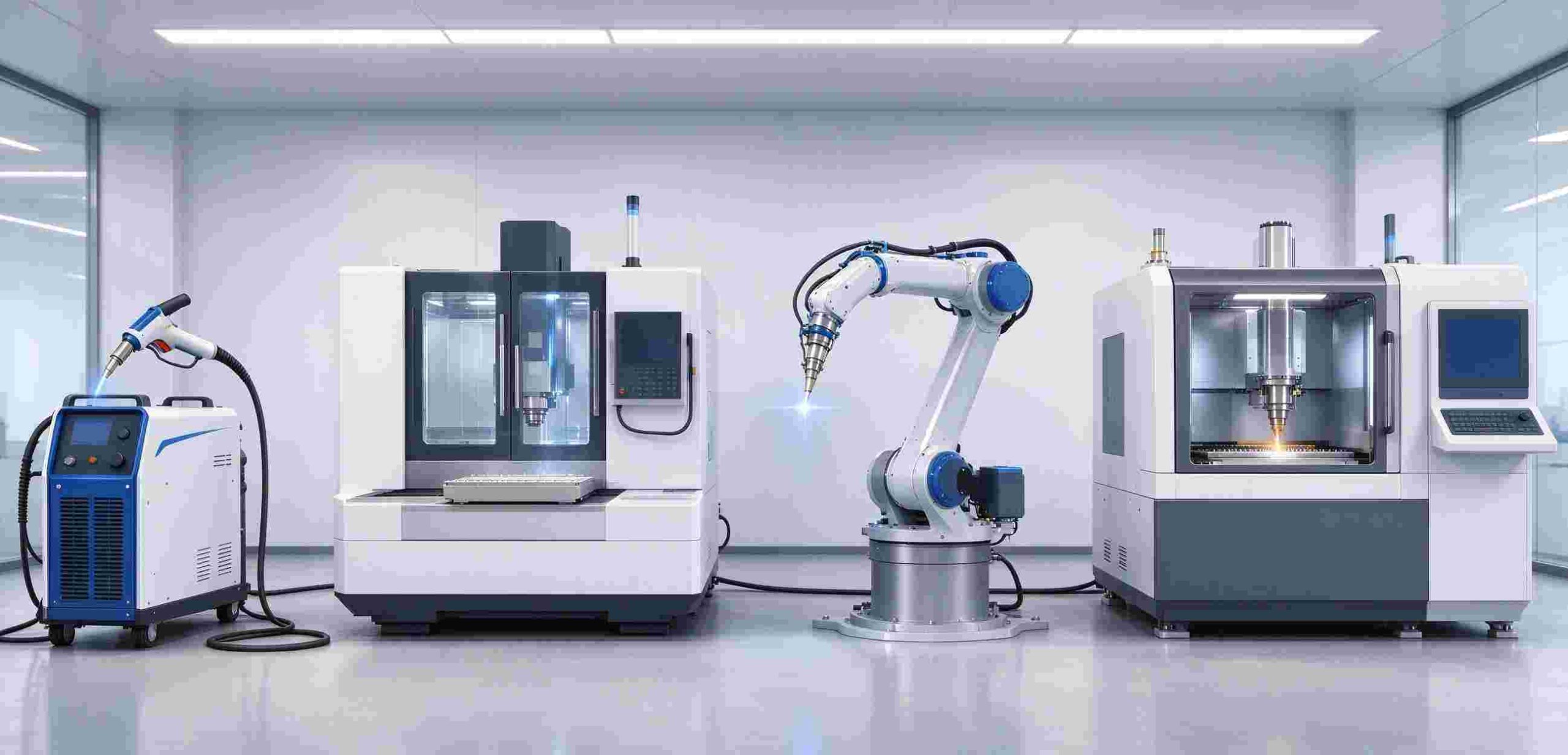
Types of laser welding devices
What Is a Laser Welding Device?
A laser welding device is an industrial system that delivers laser energy to a joint to melt and join compatible materials. Depending on the application, it may be operated manually or integrated into an automated production process.
A typical laser welding system includes several components:
- Laser source: Generates the laser beam with the required wavelength, power, and output characteristics.
- Welding head or optics: Focuses and delivers the laser energy to the joint.
- Motion or positioning system: Guides the welding head or moves the workpiece along the welding path.
- Control system: Manages laser output, motion, welding sequences, and relevant process parameters.
- Cooling system: Removes heat from components that require thermal management.
- Fixture or clamping system: Holds the workpiece in the correct position during welding.
Additional components may include a wire feeder, shielding gas supply, vision system, seam tracking, safety enclosure, and automatic loading and unloading equipment.
The configuration depends on the material, joint geometry, production volume, and required level of automation.
Main Types of Laser Welding Devices
Laser welding equipment can be classified in several ways, including operating method, welding material, automation platform, laser source, and process.For practical equipment selection, the most useful starting point is the intended application and the way the welding process is performed.
1. Handheld Laser Welding Device
A handheld laser welding device allows an operator to guide the welding head along the joint manually. The laser source and control system are usually integrated into a compact machine cabinet, with the welding head connected through a delivery cable and associated service lines.
Handheld laser welding is commonly used for metal fabrication, repair work, and small-batch manufacturing where workpieces vary in size or shape.
Typical applications include:
- Stainless steel sheet metal fabrication
- Carbon steel components
- Metal cabinets and enclosures
- Kitchen equipment
- Metal furniture and frames
- Machinery manufacturing and maintenance
- Selected aluminum and copper-alloy components
Handheld laser welding equipment can be further divided into the following two types according to its cooling method:
Air-Cooled Handheld Laser Welding Device
An air-cooled handheld laser welder uses an air-based thermal management system rather than a conventional separate water chiller.Its main advantage is portability. The overall equipment can be more compact and easier to move between workstations, making it attractive for workshops with limited floor space or applications requiring frequent equipment relocation.
Potential advantages include:
- Compact equipment configuration
- Convenient movement between work areas
- Reduced need for a separate external chiller
- Suitable for selected light-duty and general fabrication tasks
The available output power, duty cycle, ambient operating conditions, and cooling capacity must be checked for the specific model. Air-cooled equipment is not automatically suitable for every welding task simply because it is portable.
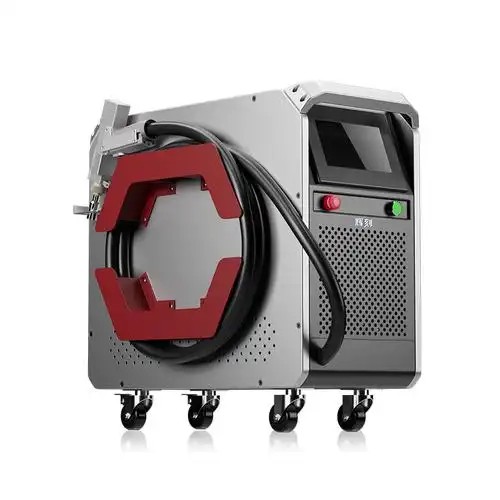
Air cooled handheld laser welding machine
Water-Cooled Handheld Laser Welding Device
A water-cooled handheld laser welder uses a liquid cooling circuit to remove heat from the laser source and other components that require cooling.Water-cooled configurations are commonly available for higher-power handheld metal welding systems and applications involving sustained production.
Typical applications include:
- Stainless steel fabrication
- Carbon steel sheet metal
- Metal equipment housings
- Industrial frames and brackets
- Repetitive workshop welding
- Selected aluminum welding applications
The choice between air-cooled and water-cooled equipment should be based on the required output, duty cycle, operating environment, portability, and thermal management requirements.
Important: Air-cooled and water-cooled are cooling configurations, not different welding processes. Both types can use laser energy to fuse compatible metal materials.
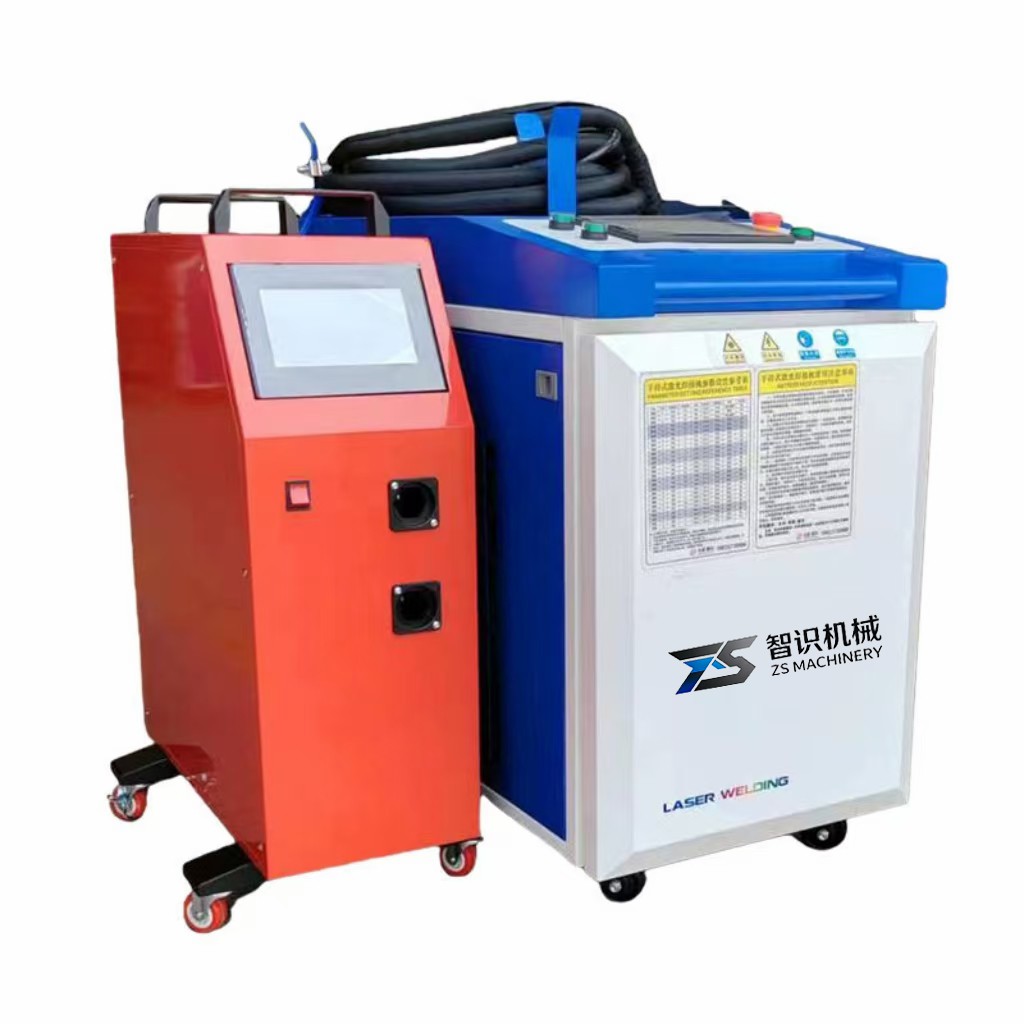
Water cooled laser welding machine
2. Automated CNC Laser Welding Device for Metal
An automated CNC laser welding device uses a computer-controlled motion system to guide the welding head or position the workpiece. Instead of relying entirely on an operator to follow the joint manually, the system executes a programmed welding path.
For metal welding, fiber lasers are widely used because of their efficiency, beam delivery characteristics, and suitability for many industrial metals.Depending on the machine design, a CNC laser welding system may use a fixed worktable, linear axes, rotary fixtures, tilting mechanisms, or other controlled movements.
Typical applications include:
- Sheet metal enclosures
- Electrical and control cabinets
- Machine frames and covers
- Metal boxes and brackets
- Tubes, fittings, and selected cylindrical components
- Precision metal assemblies
- Repetitive industrial components
CNC laser welding is particularly useful when the same or similar parts must be welded repeatedly with controlled positioning and consistent motion.Based on the degrees of freedom of motion, there are generally the following types:
4 Axis CNC Laser Welding Machine
A 4-axis CNC laser welding machine typically combines X, Y, and Z movement with an additional rotary axis.
This configuration is suitable for workpieces that require rotary positioning during welding, such as cylindrical parts, tubes, rings, and selected housings.
The exact meaning of the fourth axis depends on the machine design. In this configuration, the additional axis is a rotary workpiece axis.
5 Axis CNC Laser Welding Machine
A 5-axis CNC laser welding machine may combine XYZ movement, a rotary workpiece axis, and a welding-head swing axis.
The rotary axis positions the workpiece, while the swing axis changes the orientation of the welding head. This arrangement can improve access to joints located on different surfaces or at different angles.
6 Axis CNC Laser Welding Machine
A 6-axis CNC laser welding machine provides additional rotary movement for more complex positioning requirements.It may be suitable for three-dimensional components that require welding from multiple directions or around different surfaces.
The term “6-axis” does not describe one universal machine structure. Buyers should confirm which axes move the workpiece, which orient the welding head, and how much travel is available on each axis.
Gantry-Type Laser Welding Device
A gantry-type laser welding device uses a bridge or gantry structure to move the welding head across a working area.This configuration can be useful for large flat or extended workpieces, long welding seams, and components that require a relatively large working envelope.
A gantry is a mechanical platform, not a separate welding process. It can be combined with different axis configurations according to the required movement.
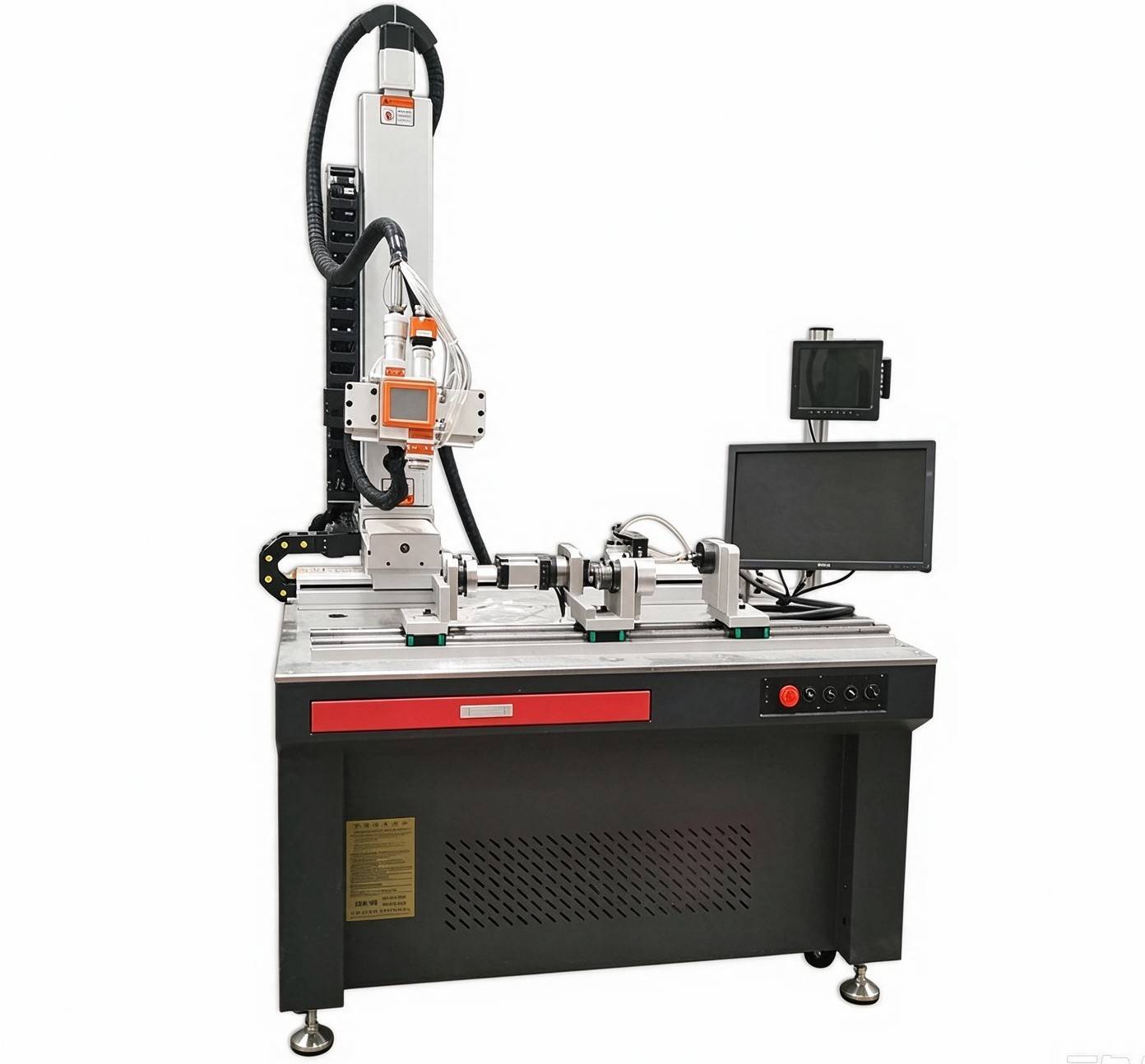
5 axis cnc laser welding machine
3. Automatic Laser Welding Device for Plastic
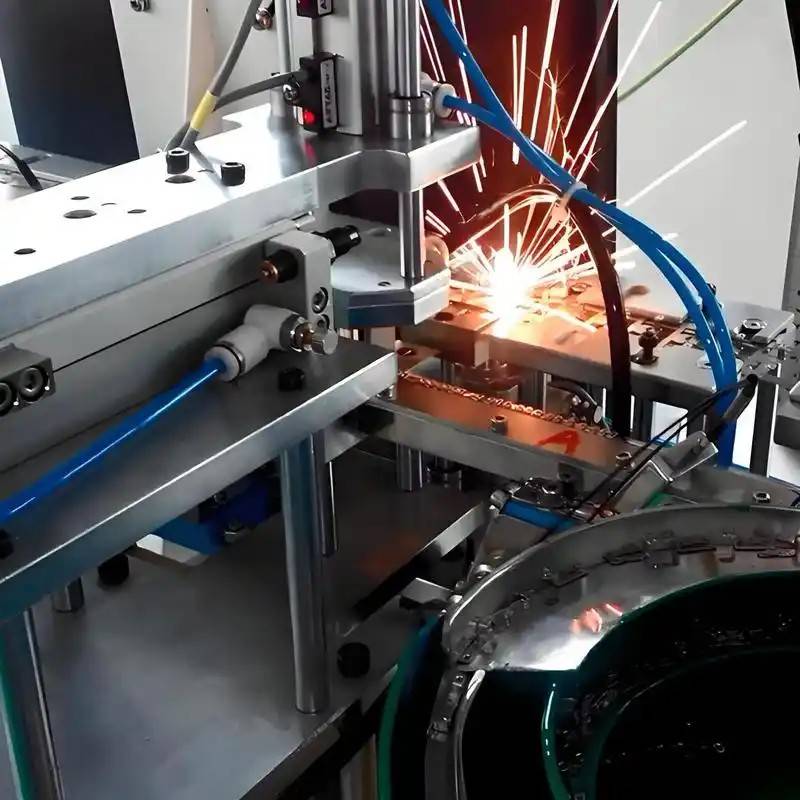
Plastic laser welding is a different application from conventional metal laser welding. It joins compatible thermoplastic components by generating heat at the interface between the parts.
In a common method known as transmission laser welding, one component transmits the selected laser wavelength while the other absorbs it. The laser heats the interface, and the components are held together under controlled pressure as the joint forms.
Semiconductor diode lasers are widely used for plastic welding, although fiber, Nd, and other laser sources can also be suitable for specific polymer materials and process designs. The correct source depends on wavelength, material absorption, joint geometry, and process requirements.
Typical applications include:
- Automotive lighting components
- Automotive sensor housings
- Electronic enclosures
- Medical device housings
- Fluid-handling components
- Plastic control modules
- Selected molded industrial components
Plastic laser welding can produce a controlled joining seam with limited external marking when the material combination and process are properly designed.
However, not every plastic is laser-weldable. The polymer grade, colorants, fillers, optical transmission, joint design, and clamping arrangement must all be considered.
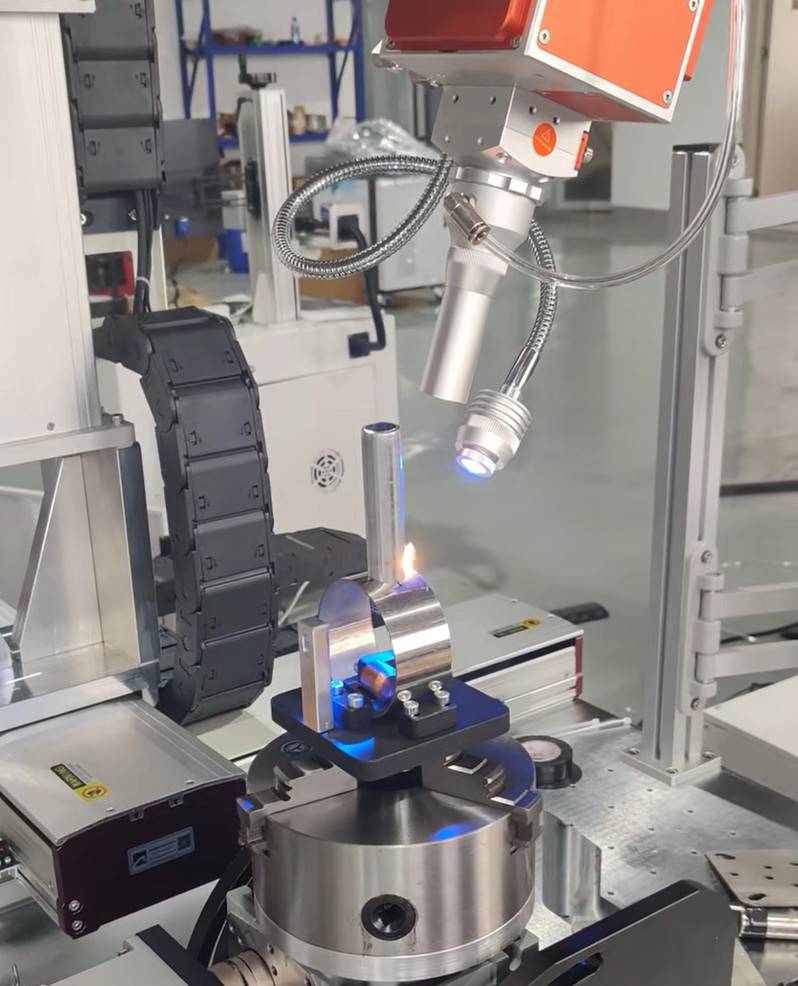
CNC plastic laser welding machines can also be classified by their degrees of freedom of motion into three-axis, four-axis, five-axis, six-axis, and gantry-type machines. The main differences between them and metal laser welding machines lie in the laser, welding head, and heat control.
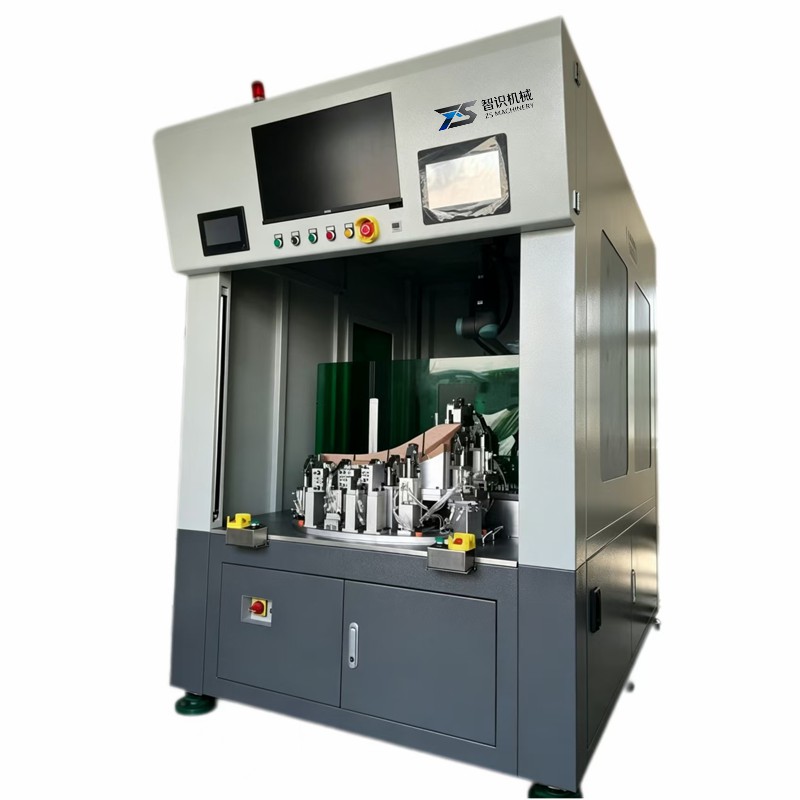
Plastic Laser Welding Machine
4. Robotic Laser Welding Device
A robotic laser welding device integrates a laser welding process with a robotic motion platform, most commonly a six-axis industrial robotic arm.
The robot moves the welding head along the programmed path and can approach workpieces from multiple directions. It is simply a type of welding equipment; it utilizes a robotic arm with higher degrees of freedom, capable of multi-axis motion. Furthermore, it can be configured for metal welding or plastic welding, and can be integrated with welding fixtures, rotary tables, and other components for coordinated operation.
Robot, CNC, and Gantry: What Is the Difference?
These terms describe the motion platform rather than the material being welded.
- CNC platform: Uses programmed machine axes to control the welding path.
- Gantry platform: Uses a bridge structure to move across an extended working area.
- Robotic platform: Uses a robotic arm to reach multiple positions and orientations.
All three can be configured for suitable welding applications, but the correct choice depends on workpiece size, joint accessibility, motion requirements, and production objectives.
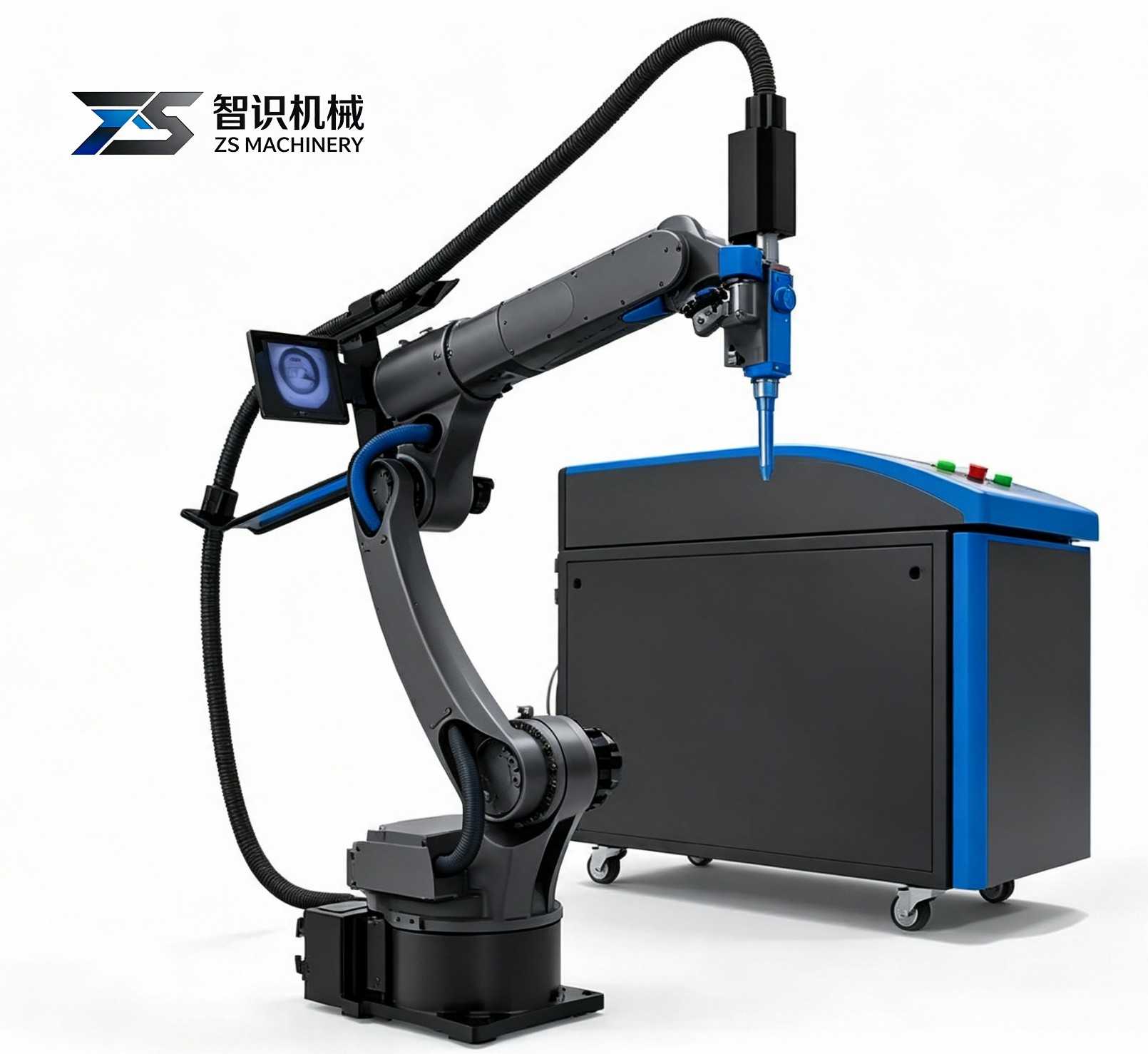
6 axis robot laser welding machine
5. Laser Cladding Device
A laser cladding device uses a laser to create a molten region on a component surface while adding material, commonly in the form of metal powder or wire. The deposited material forms a metallurgical bond with the substrate.Laser cladding is related to laser welding because both processes use laser energy to produce localized melting and metallurgical bonding. However, they serve different primary purposes.
Conventional laser welding mainly joins components or sections of material. Laser cladding primarily deposits a functional layer onto a surface.Typical applications include:
- Repairing worn shafts
- Restoring selected mechanical components
- Wear-resistant surface layers
- Corrosion-resistant coatings
- Repairing selected molds and dies
- Rebuilding dimensional features
- Surface enhancement of industrial components
A laser cladding system commonly includes a laser source, cladding head, material feeding system, motion platform, and process control. Powder-fed systems and wire-fed systems have different equipment requirements.
Fiber lasers are commonly used in laser cladding, and some systems use coupled laser sources or other configurations selected for the required deposition process.For complex components, the cladding head can be mounted on a CNC platform, gantry, or industrial robot.
Laser cladding should be treated as a related laser processing category, rather than simply another type of conventional laser welding machine.
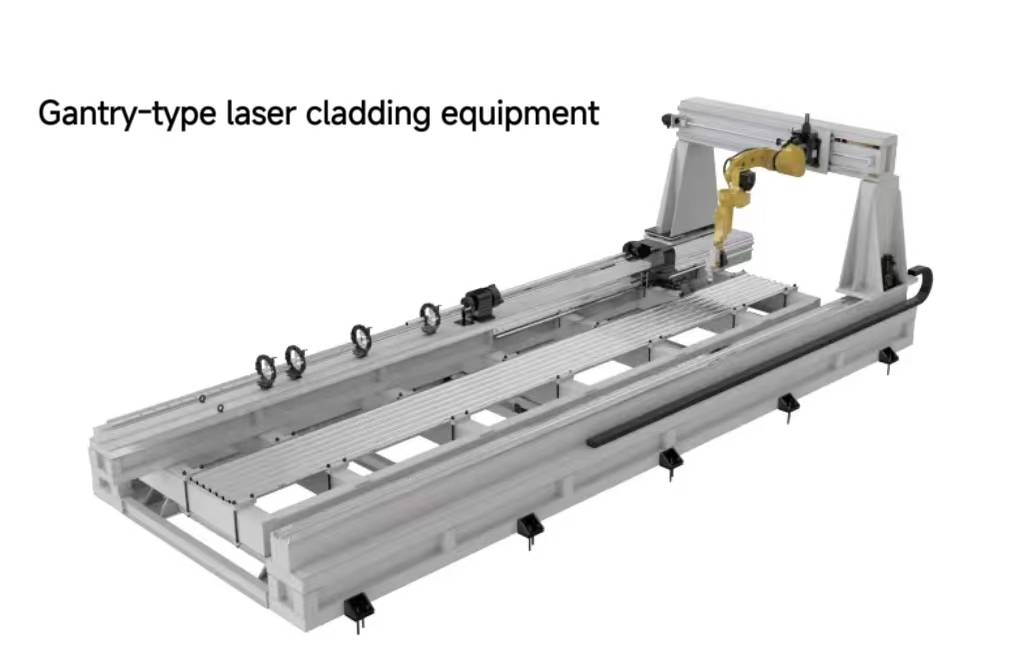
Gantry laser cladding equipment
Laser Welding Devices by Laser Source
The laser source is another important classification dimension. It should not be confused with the machine’s motion structure or operating method.
Fiber Laser Welding Device
Fiber laser systems are widely used for industrial metal welding. They can be integrated into handheld machines, CNC systems, gantry platforms, and robotic welding cells.
Typical applications include stainless steel, carbon steel, aluminum, and selected copper or other metal components. Material reflectivity, thickness, joint geometry, and the required welding process all affect suitability.
Semiconductor Diode Laser Welding Device
Semiconductor diode lasers are widely used in plastic welding because their wavelength can be selected to match the optical properties of compatible thermoplastic materials.
They can also be used in certain metal processing applications, including specialized joining and cladding configurations.
The key selection factor is not simply whether the laser is a diode laser, but whether its wavelength, beam characteristics, power, and optics meet the process requirements.
Other Laser Sources
Other laser sources, including Nd and certain other solid-state lasers, may be used for specialized metal welding, plastic welding, and precision joining applications.
CO₂ lasers are also used in some polymer processing applications, but their wavelength and beam-delivery characteristics make them different from the fiber-delivered near-infrared systems commonly used for metal welding.
The laser source should be selected according to the material and welding process rather than choosing a machine based on the source name alone.
How to Choose the Right Laser Welding Device
Choosing a laser welding device starts with the application, not the machine category.
1. Identify the Material
Determine whether the workpiece is metal or plastic and identify the actual material grade or polymer formulation.
Different materials absorb laser energy differently. Reflectivity, thermal conductivity, additives, pigments, and material combinations can affect weldability.
2. Define the Joint Geometry
Consider whether the joint is a straight seam, corner joint, lap joint, circumferential seam, or complex three-dimensional contour.
The joint geometry helps determine whether a handheld system, CNC platform, rotary axis, gantry, or robot is appropriate.
3. Consider Workpiece Size
Small and medium-sized components may be suitable for a compact CNC system or a dedicated welding station.
Large structures may require a gantry or robotic system with a suitable working envelope.
4. Determine the Production Volume
Handheld equipment can be practical for flexible fabrication, repair work, and low-volume production.
CNC and robotic systems are worth considering when the same welding path must be repeated consistently across many components.
5. Evaluate Quality Requirements
Define the required weld strength, penetration, appearance, dimensional tolerance, sealing performance, and inspection requirements.
Pressure-containing components, safety-critical parts, and regulated products may require specific process qualifications and testing.
6. Confirm the Need for Automation
Determine whether the project requires automatic loading, unloading, part rotation, vision positioning, seam tracking, or integrated production-line controls.
Automation should be designed around the product and production process rather than added simply to increase the machine’s complexity.
7. Conduct Sample Testing
When material compatibility or weld quality is uncertain, sample testing can help establish the laser source, power range, optics, motion system, fixture design, and process parameters required for the application.
Laser Welding Devices from ZS Machinery
ZS Machinery provides laser welding equipment for different industrial applications, including handheld metal laser welding machines, CNC laser welding machines, robotic laser welding systems, plastic laser welding machines, and customized welding solutions.
Depending on the project, equipment can be configured with different laser sources, motion platforms, fixtures, rotary axes, and automation components.
For applications involving surface restoration or protective layers, laser cladding equipment can also be evaluated as a separate processing solution.The final configuration depends on the material, joint geometry, workpiece dimensions, production volume, and required quality level.
Conclusion
Laser welding devices cover a broad range of equipment, from handheld metal welders to automated CNC machines, plastic laser welding systems, and robotic welding cells. Laser cladding is a closely related process that uses laser energy to deposit material onto a surface, but it serves a different primary purpose from conventional welding.
The most useful way to classify these systems is to consider their application first, then evaluate the laser source, cooling method, motion platform, and level of automation.
By understanding these differences, manufacturers can select a laser welding device that matches their material, product geometry, production requirements, and quality objectives.
Contact ZS Machinery
Looking for a laser welding device for your manufacturing application?
Contact ZS Machinery with your material, workpiece dimensions, joint requirements, and expected production volume. We can help evaluate a suitable handheld, CNC, robotic, plastic laser welding, or related laser processing solution.
Laser Cladding Guide: Process Overview,Core Principles, Key Parameters And Technology Selection